
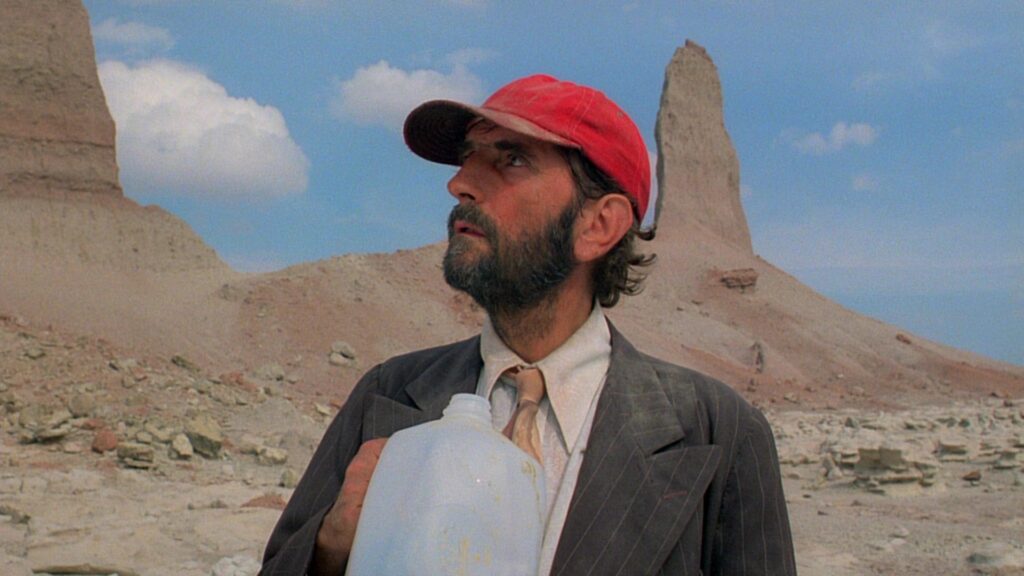
There are films that tell you a story. And then there are films that find you — right in that specific, quiet part of yourself you don’t usually talk about. Paris, Texas (1984), directed by Wim Wenders, is the second kind. It’s slow, it’s lonely, it’s gorgeous, and by the time it ends, you might not fully understand why you feel the way you do. But you’ll feel it. Hard. More than four decades later, Paris, Texas remains one of cinema’s most celebrated road movies, remembered for its unforgettable cinematography and emotionally devastating storytelling.
The Basics
- Title: Paris, Texas
- Year: 1984
- Director: Wim Wenders
- Producer: Don Guest, Anatole Dauman
- Screenplay: Sam Shepard (with L.M. Kit Carson)
- Stars: Harry Dean Stanton, Nastassja Kinski, Dean Stockwell, Aurore Clément, Hunter Carson
- Cinematography: Robby Müller
- Music: Ry Cooder
- Runtime: 147 minutes
- Genre: Drama / Road Movie
- Country: West Germany / France / UK / USA
- Studio: Road Movies / Argos Films
Source: IMDB
What Is Paris, Texas (1984) About?
A man named Travis Henderson (Harry Dean Stanton) walks out of the Texan desert — sunburned, silent, completely gone inside. He hasn’t spoken in four years. Nobody knows where he’s been.
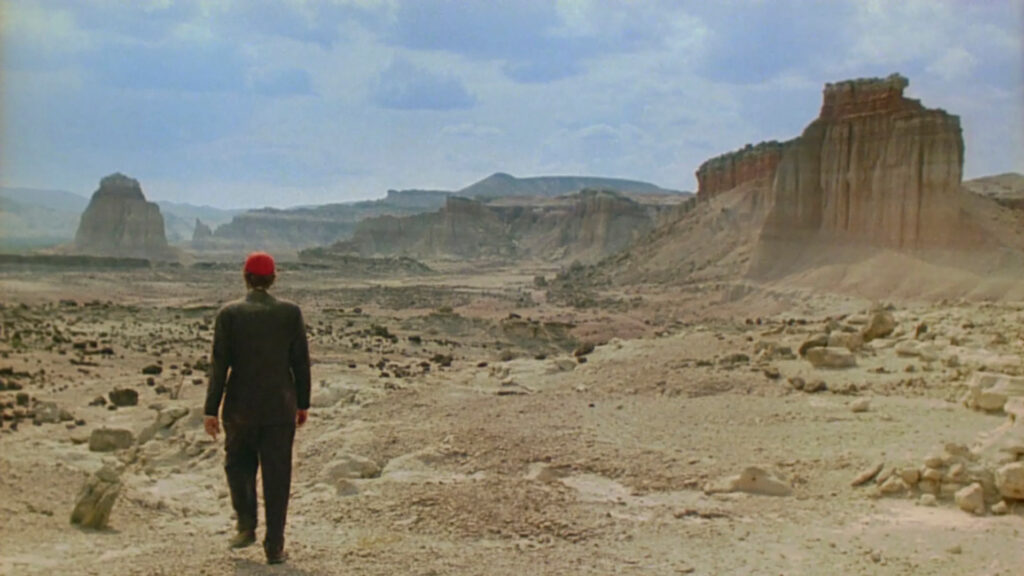
His brother Walt (Dean Stockwell) tracks him down and slowly, painfully, brings him back to Los Angeles where Travis’s young son Hunter has been living with Walt and his wife.
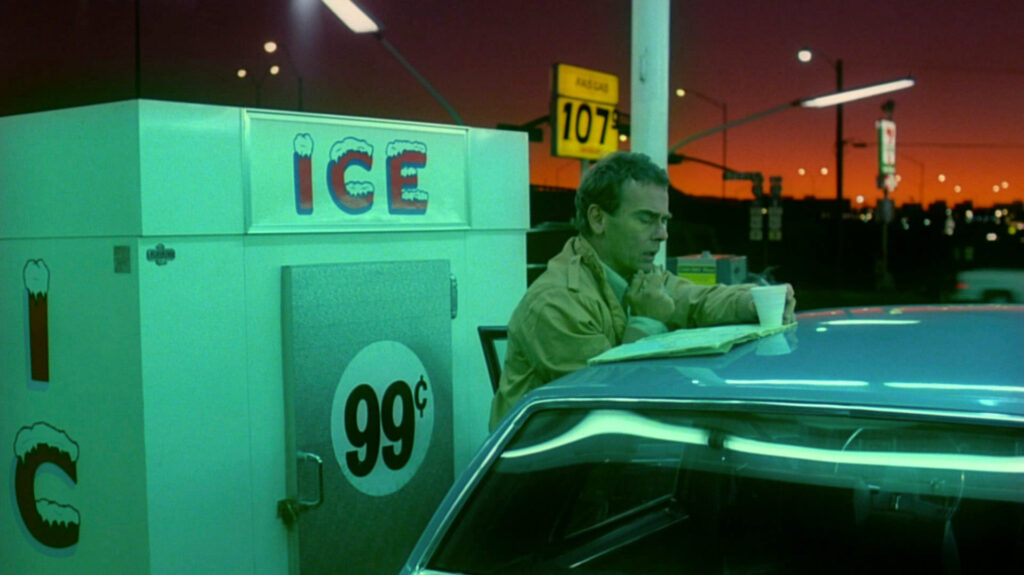
Travis and Hunter barely know each other. But they start to rebuild something — quietly, awkwardly, beautifully — through long drives and small moments. And then Travis decides he needs to do one more thing: find Jane (Nastassja Kinski), Hunter’s mother and Travis’s estranged wife, who disappeared into her own kind of lost.
What follows is one of the most emotionally devastating third acts in cinema history, set inside a peep show booth in Houston, with a one-way mirror between two people who have everything to say to each other and no idea how to say it.
That’s the film. A man trying to find his way back — to people, to himself, to something he broke a long time ago.
Why Paris, Texas (1984) Gets to You
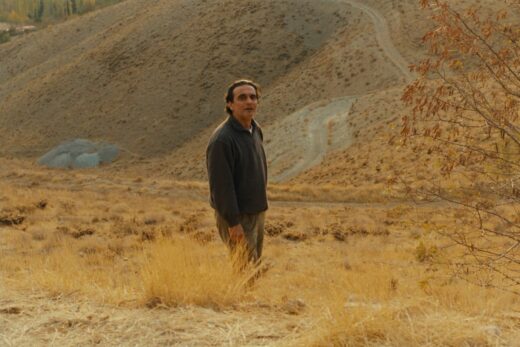
Harry Dean Stanton carries the whole thing on his back. And he does it almost entirely without words for the first stretch of the film. His face, his posture, the way he moves through space — Travis feels like a man whose inner life is so enormous and so damaged that language just stopped working for him. Stanton was already in his late 50s when he made this film and had spent decades as a character actor in smaller roles. Paris, Texas was his moment, and he absolutely nailed it. It remains one of the great screen performances.
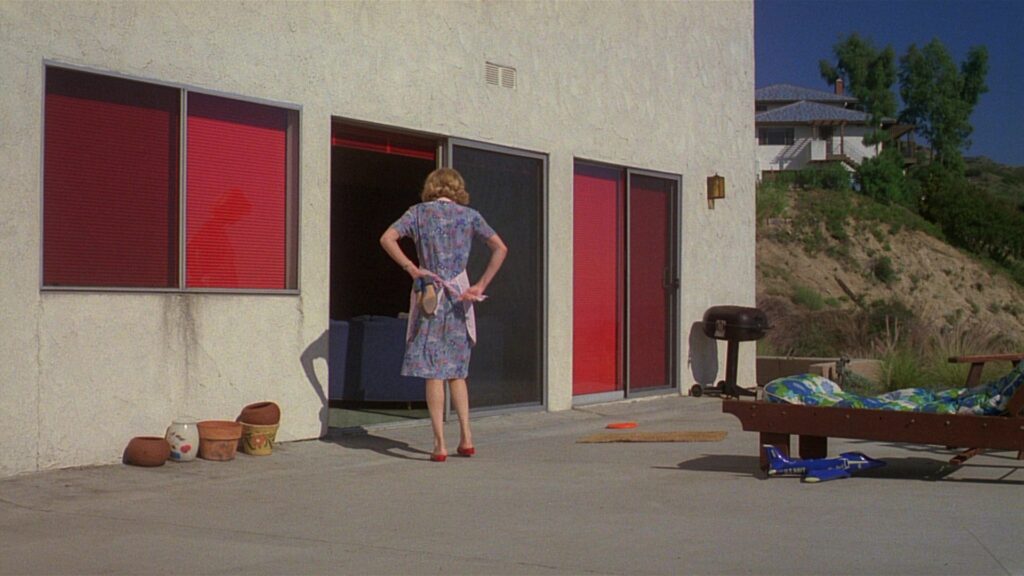
Ry Cooder’s slide guitar score is doing something supernatural. The music is minimal — mostly just Cooder’s lonely, dusty guitar drifting in and out. It sounds like the American Southwest feels: wide open, melancholic, and slightly haunted. It doesn’t tell you how to feel. It just sits with you the same way the landscape does.
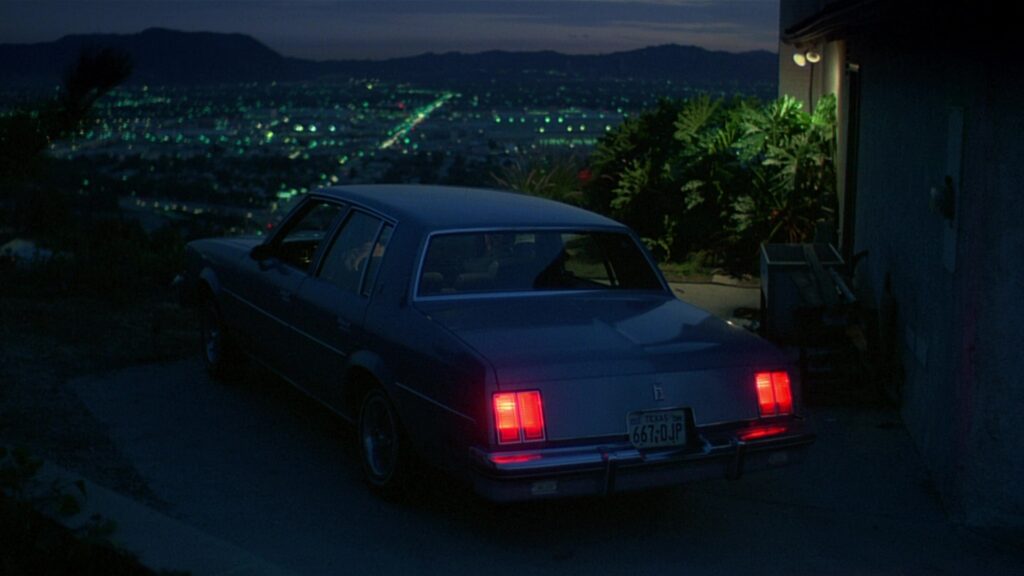
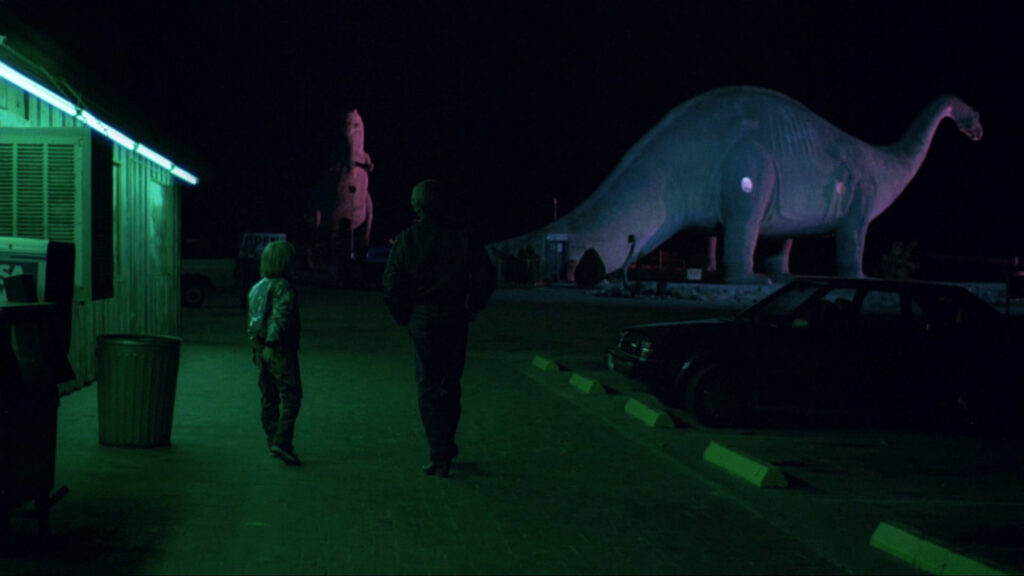
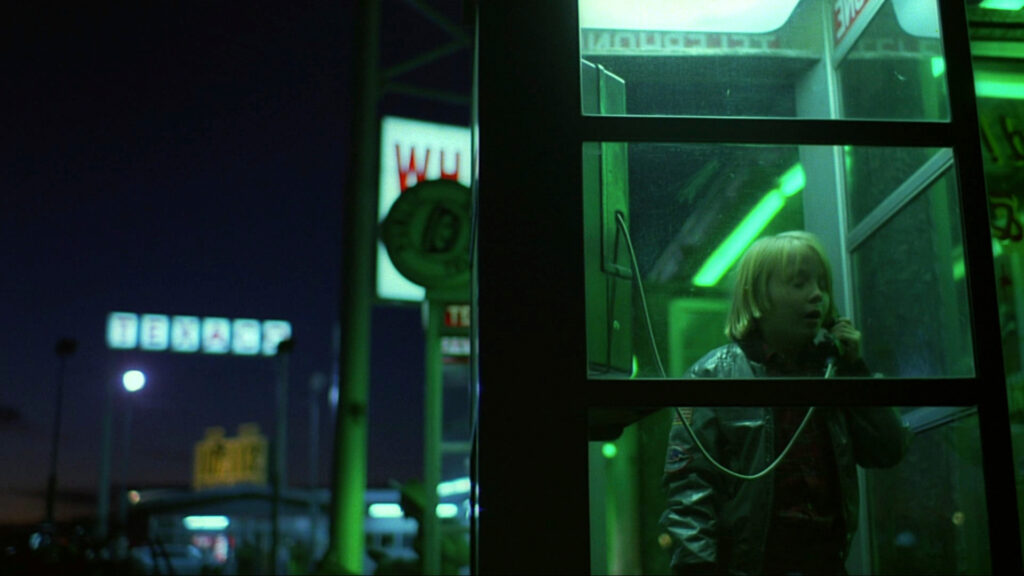
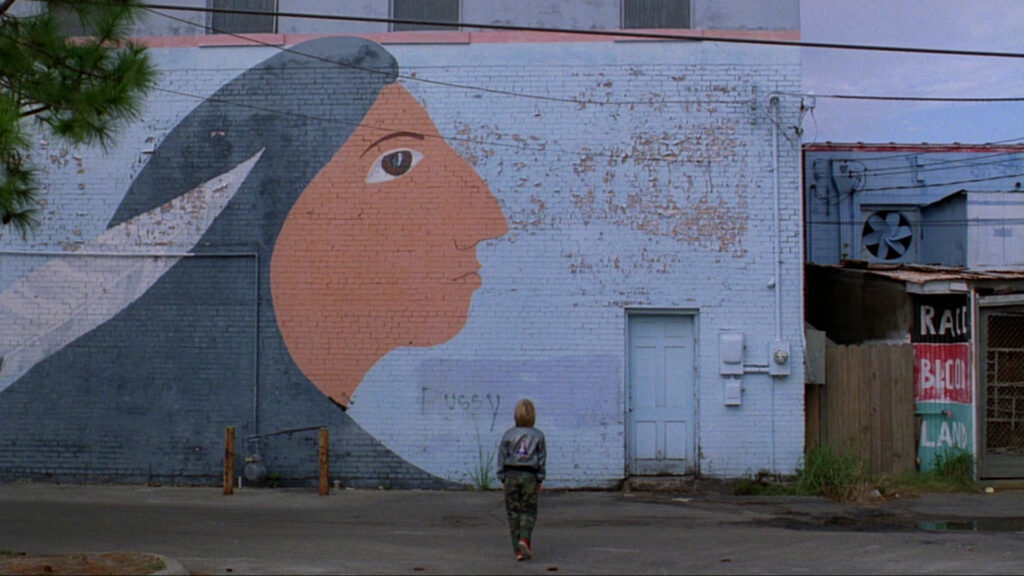
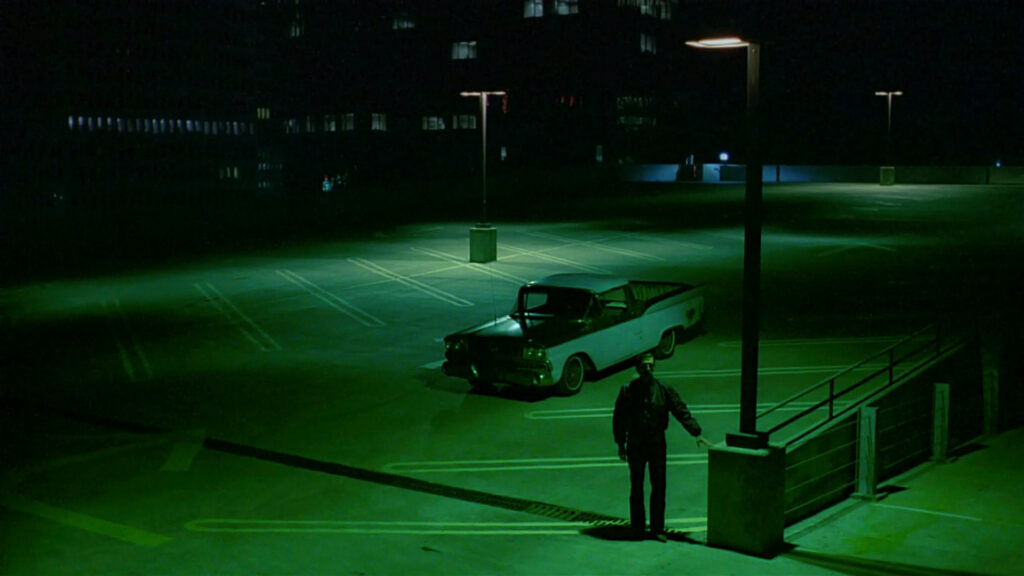
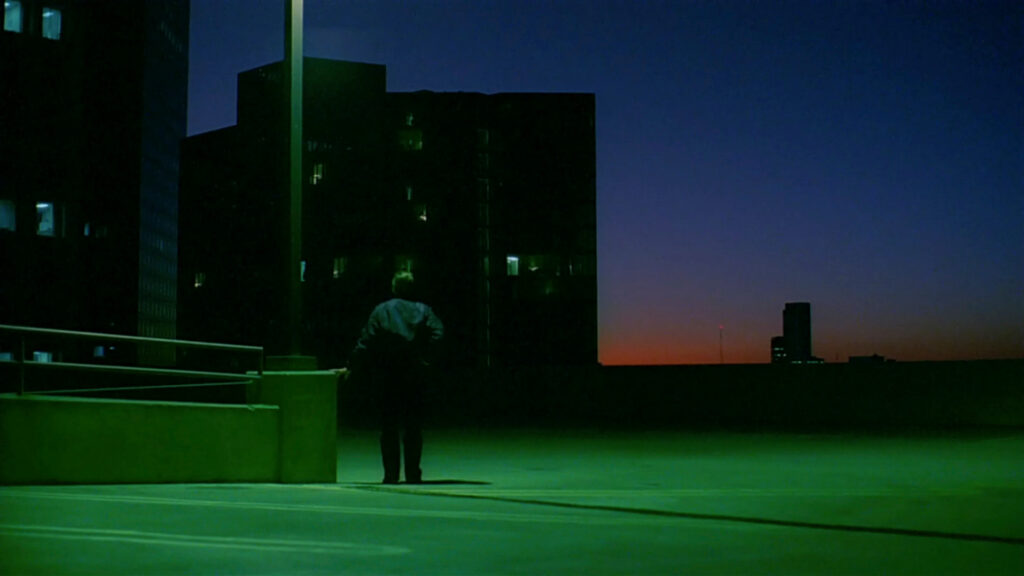
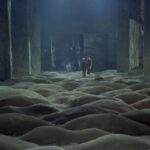
Robby Müller’s cinematography in Paris, Texas will make your jaw drop. The Texan and Californian landscapes are shot with this incredible eye for color and light — neon signs reflecting on wet streets, endless highways disappearing into the horizon, motels glowing against a dark sky. Every frame is a photograph you’d want to hang on your wall. Müller and Wenders understood that in a film about emotional emptiness, the landscape has to do a lot of the talking.
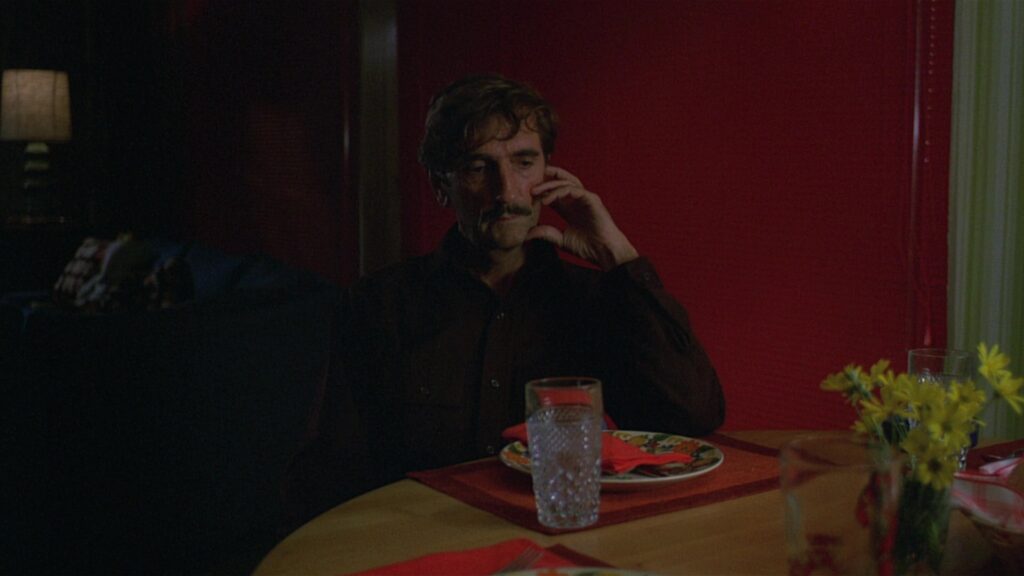
The peep show scene is one for the ages. You know a movie scene is special when people are still writing about it 40 years later. Without giving too much away — Travis and Jane talk through a one-way mirror. She can’t see him. He can see her. And what gets said in that room, after all those years of silence, is heartbreaking in a way that feels almost unbearably real. Sam Shepard’s writing here is just extraordinary.
Wim Wenders was the perfect person to make this film. A German filmmaker making a deeply American road movie — there’s something about being an outsider looking at the American landscape that gives Paris, Texas this particular clarity. Wenders sees the myth of America — the open road, the wide spaces, the neon loneliness of motels and diners — with fresh eyes, and he renders it both beautiful and sad. Few road movies capture the loneliness of the American landscape as beautifully as Paris, Texas.
The Reception
Paris, Texas won the Palme d’Or at Cannes in 1984 — the top prize, the biggest deal in world cinema. It also won the BAFTA Award for Best Direction. Critics were blown away. The film was embraced as an instant masterpiece and remains one of the most critically lauded films of the 1980s.
It holds a 98% on Rotten Tomatoes to this day and appears regularly on “greatest films ever made” lists from critics all over the world. Roger Ebert gave it four stars and called it one of the best films of the decade. The Sight & Sound poll consistently ranks it among the top films of its era.
Commercially it wasn’t a massive blockbuster — this was never that kind of film — but it found its audience, and that audience has been passing it down ever since. Today, Paris, Texas is widely regarded as one of the greatest road movies ever made and a landmark of visual storytelling.
The Legacy
Paris, Texas quietly became one of those films that filmmakers, photographers, musicians, and writers point to as a major influence. The color palette, the road movie DNA, the way it treats silence as meaningful, Robby Müller’s cinematography continues to inspire filmmakers, photographers, and lovers of movie stills around the world.— you can feel its fingerprints on everything from Brokeback Mountain to Nomadland to countless indie dramas in between.
It also cemented Wim Wenders as one of the essential European directors of his generation, alongside Wings of Desire (1987) as his other towering achievement.
Harry Dean Stanton never quite got another role like this — he went back to being the guy you loved in smaller parts in other people’s movies. Which is a bit sad, honestly. Because what he does here is something special.
And the title itself — Paris, Texas — is a piece of poetry on its own. It’s a real place: a small town in northeast Texas, population not-that-many. Travis owns a plot of land there. He keeps a photo of it. There’s something in that idea — a place that sounds like somewhere romantic and grand, but is really just a flat, quiet patch of Texas earth. Just like the dream of a perfect life that turns out to be something much smaller, much more complicated, much more human. If you enjoy meditative cinema that explores memory, grief, and family dynamics with breathtaking cinematography, don’t miss our review of Terrence Malick’s The Tree of Life (2011).
Should You Watch It?
If you have the patience for a slow film — and I mean genuinely slow, deliberately slow, the-silences-mean-something slow — then yes, absolutely watch it. For anyone interested in cinematography, Paris, Texas remains one of cinema’s great visual achievements.
Don’t put it on while you’re doing something else. Don’t check your phone. This is a film that asks for your full attention, and it rewards you for giving it. By the time you get to that conversation through the one-way mirror, you’ll be completely invested. And then it’ll break your heart just a little bit, in that clean, necessary way that only great films can.
It’s the kind of movie that makes you want to call someone you haven’t spoken to in a while. Or take a long drive with no destination. Or just sit quietly with yourself for a moment.
Which, honestly? Might be exactly what you needed.
“I knew these two people… They were in love with each other. The man… he loved her more than he could say.”
— Travis Henderson, Paris, Texas









3 Responses
[…] an eerily accurate prediction of internet culture decades before it became universal. Like Paris, Texas (1984), the film understands that loneliness isn’t always loud—it often exists quietly beneath […]
[…] It doesn’t really have a traditional plot, and that’s the point. Malick is famous for abandoning conventional storytelling — voiceover whispers, fragmented memories, scenes that drift rather than connect logically. This isn’t a film you “follow.” It’s a film you feel your way through, almost like sifting through someone’s actual memories, which are never neat and linear anyway. If you’re drawn to films that feel more like memories than traditional stories, you may also enjoy our look at Paris, Texas (1984). […]
[…] Indiana Jones became a cultural icon. The fedora, the whip, the leather jacket — instantly recognizable. There’s even a running joke that Indy is technically irrelevant to the plot (the Nazis would’ve found the Ark anyway, and it destroys itself in the end), but that’s kind of the point — it’s about the journey, not the outcome. If you love timeless classics from the 1980s that redefine their genres through unforgettable visual storytelling, don’t miss our breakdown of Wim Wenders’ Paris, Texas (1984). […]