

Some movies are about plot. Some are about feeling. All About Lily Chou-Chou is the second kind, and honestly, it’s one of the most accurate, devastating, beautifully shot portraits of adolescent isolation ever put on screen. If you were a teenager who ever felt like the world was too loud, too cruel, and too much — this film already knows you. Released in 2001, Shunji Iwai’s film remains one of the most visually striking works in Japanese cinema and one of the most unforgettable coming-of-age dramas ever made.
The Basics
- Title: All About Lily Chou-Chou (リリイ・シュシュのすべて / Riri Shushu no Subete)
- Year: 2001
- Director: Shunji Iwai
- Producer: Shunji Iwai
- Screenplay: Shunji Iwai
- Stars: Hayato Ichihara, Shugo Oshinari, Ayumi Itō, Yū Aoi
- Cinematography: Noboru Shinoda
- Music: Takeshi Kobayashi (with original songs by Salyu, performing as the fictional “Lily Chou-Chou”)
- Runtime: 146 minutes
- Genre: Drama
- Country: Japan
- Studio: Rockwell Eyes
What Is All About Lily Chou-Chou About?
The film centers on Yūichi Hasumi, a quiet middle school kid in rural Japan whose only real source of comfort is the music of a fictional pop star named Lily Chou-Chou. He spends his time on online forums dedicated to her music, finding a strange kind of peace and connection with strangers in chat rooms — something he can’t seem to find anywhere else in his actual life.
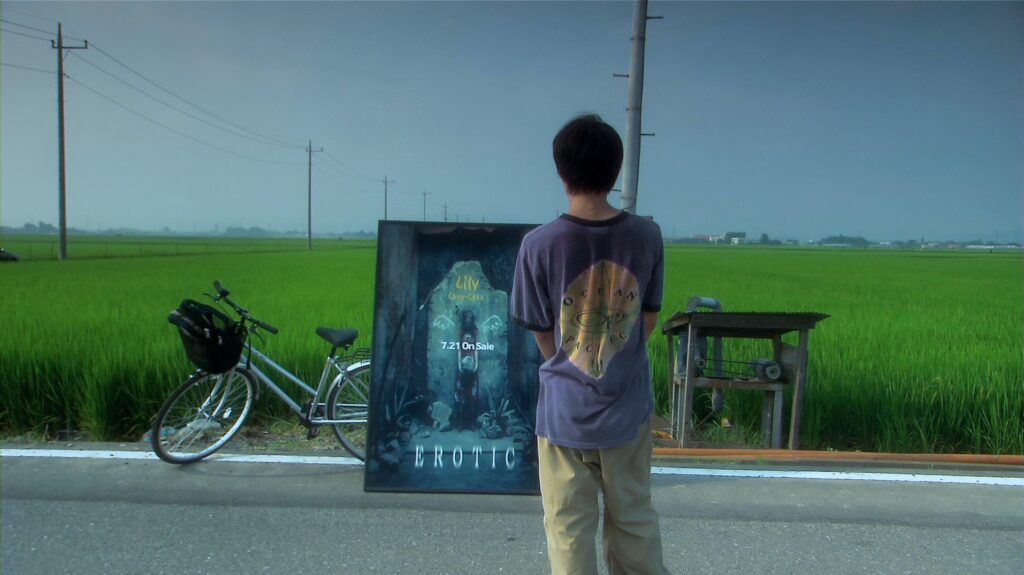
His real-world friendship with his classmate Hoshino used to be the good kind of normal — biking around, listening to music, being kids together. But things change. Hoshino comes back from a trip abroad a completely different person, and what follows is a slow, sickening descent into bullying, extortion, and cruelty that ripples out and touches everyone around them.
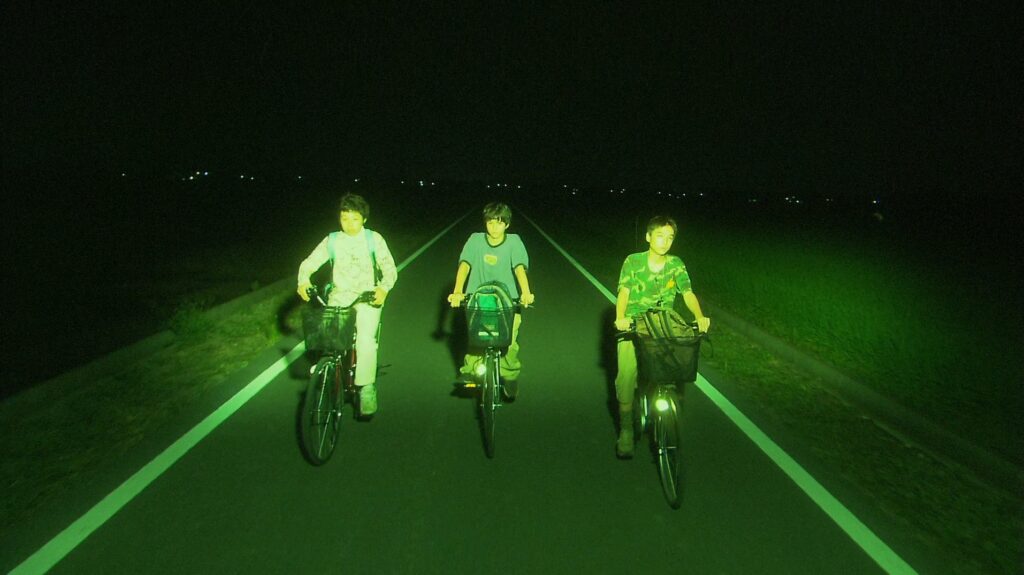
The story jumps around in time — between an idyllic “before” and a brutal “after” — and stitches together a fractured, fragmented picture of what happened to these kids and why. It’s less a traditional narrative and more an emotional mosaic, told through music, internet chat text floating across the screen, and long, quiet shots of empty fields under grey skies.
Why All About Lily Chou-Chou Hits So Differently
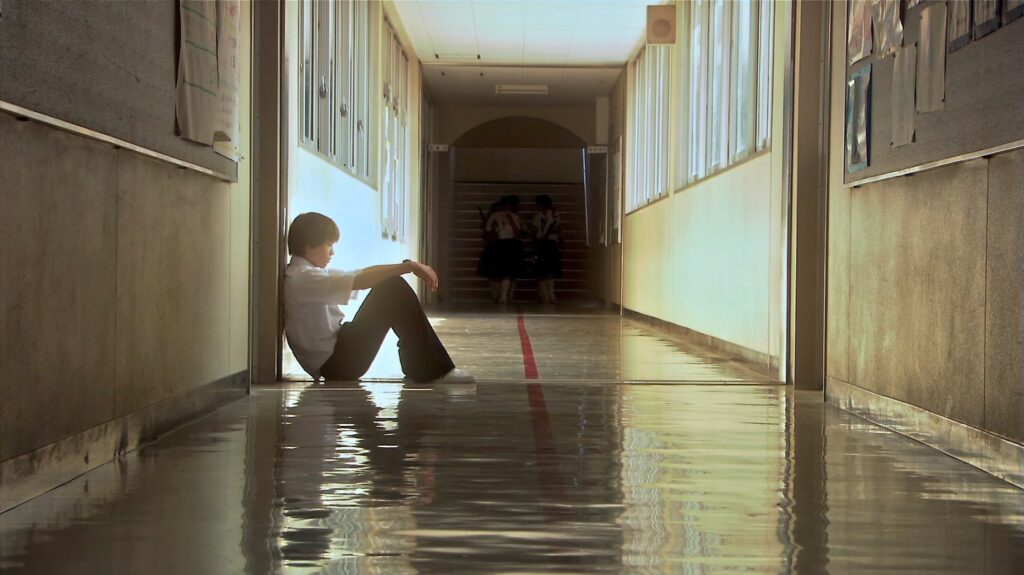
It captures teenage cruelty without sanitizing it. A lot of films about bullying soften the edges or wrap things up neatly. This one doesn’t. The bullying here is sustained, ugly, and completely believable — the kind of slow social rot that builds without any single dramatic moment, just countless small cruelties piling up until something breaks. It’s hard to watch at times. It’s supposed to be.
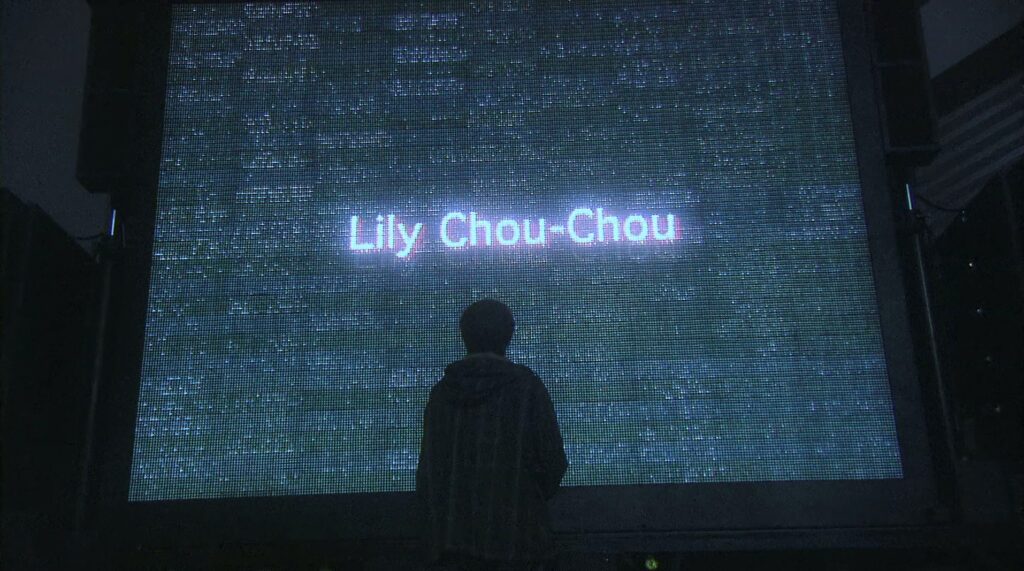
The internet forum sequences feel oddly ahead of their time. Released in 2001, before social media as we know it even existed, this film already understood something true about online life: that anonymous strangers discussing the same obsession can create a strange intimacy — sometimes more honest and comforting than real-world relationships. Text from the Lily Chou-Chou fan forum literally appears typed across the screen throughout the film, voiced in flat, disembodied narration. It’s an eerily accurate prediction of internet culture decades before it became universal. Like Paris, Texas (1984), the film understands that loneliness isn’t always loud—it often exists quietly beneath everyday life.
Shunji Iwai shoots beauty and brutality side by side. The cinematography by Noboru Shinoda is stunning — wide green fields, soft natural light, kids riding bikes against open sky. And then, in the same visual language, you get scenes of real violence and despair. The contrast is deliberate. It makes the ugliness hit even harder because it’s framed with the same tenderness as everything beautiful. Its cinematography turns rice fields, classrooms, and empty skies into something unforgettable.
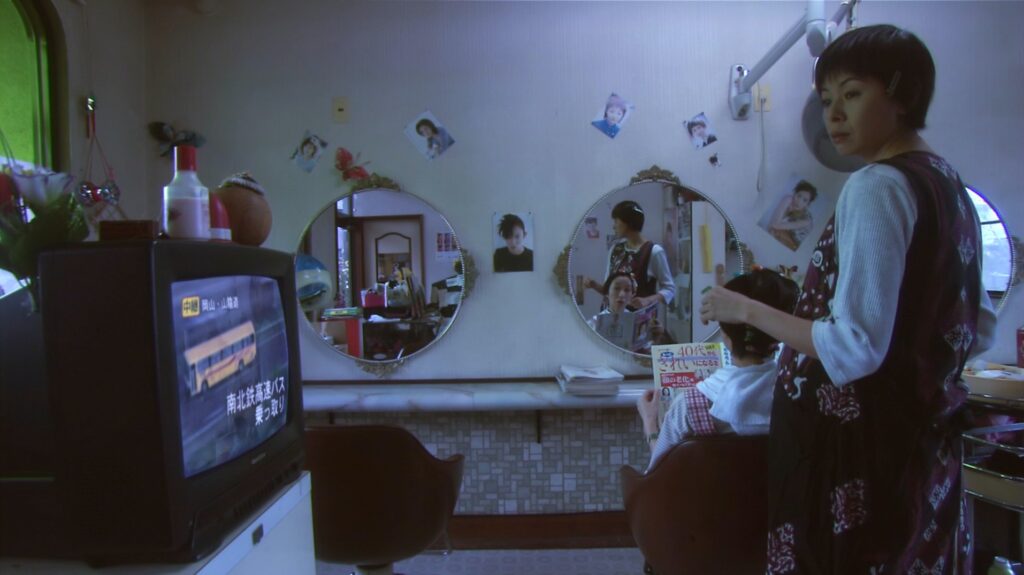
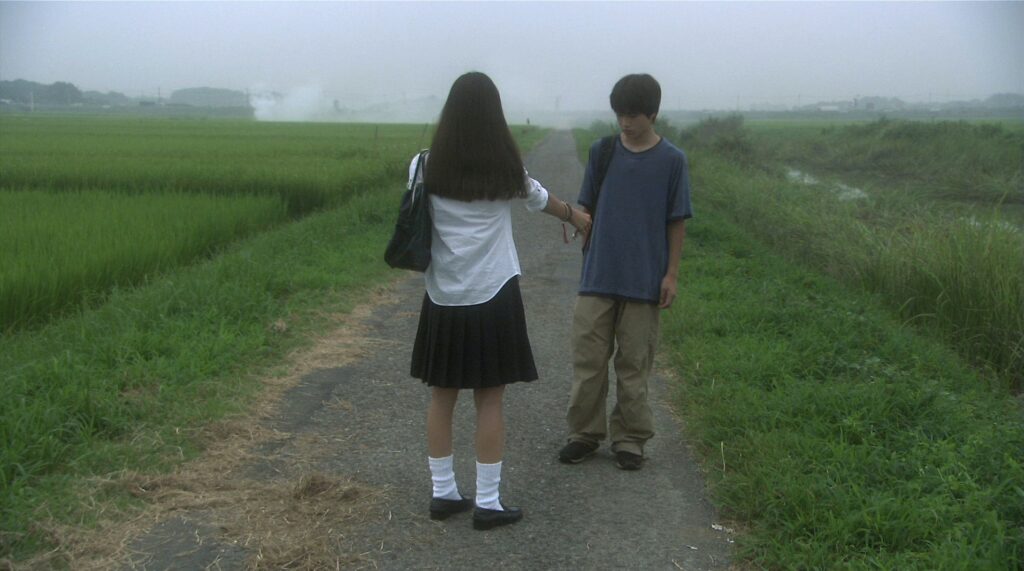
The music isn’t just a soundtrack — it’s a character. Lily Chou-Chou doesn’t actually exist, but her music (performed by the singer Salyu) feels completely real, ethereal and aching. The concept of “Ether” — a fictional life force that Lily’s music is said to channel — becomes this almost spiritual idea throughout the film: something kids cling to when everything else feels unbearable. It’s a clever, melancholic way of representing how music can feel like a lifeline during the worst parts of growing up.
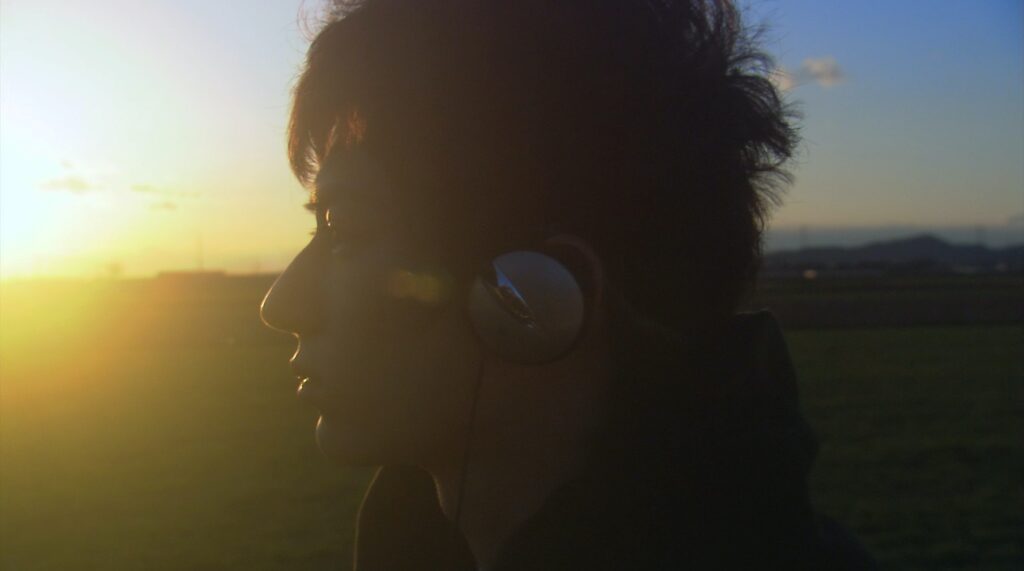
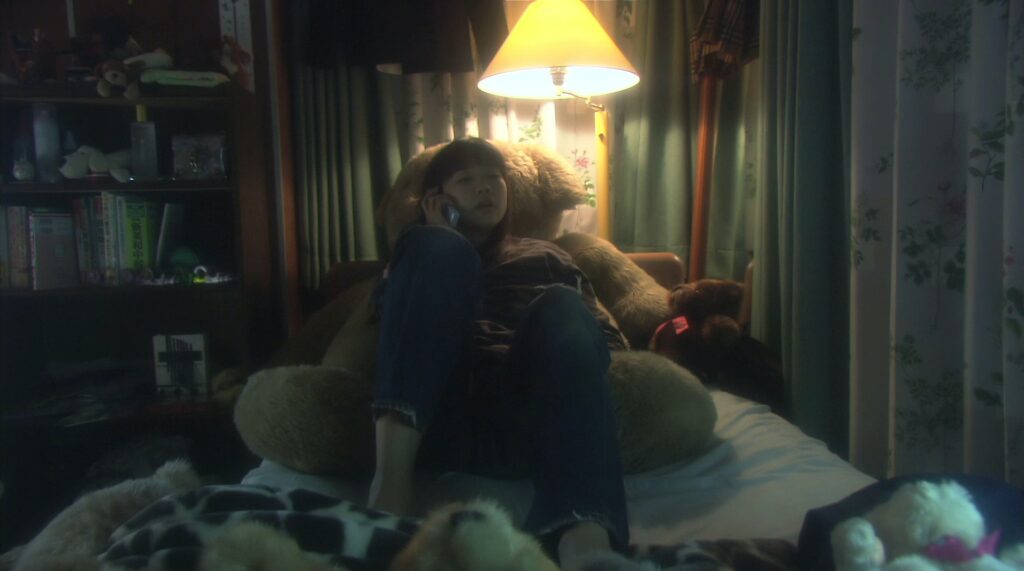
Yū Aoi’s performance is unforgettable. In one of her earliest roles, she plays a classmate caught in the orbit of the central tragedy, and she brings a quiet devastation to her scenes that’s hard to shake. Keep an eye out — she went on to become one of Japan’s most respected actresses.
The Reception
All About Lily Chou-Chou premiered to a strong critical response in Japan and gradually built an international cult following, particularly through film festival circuits and word-of-mouth among fans of Japanese cinema. It’s often cited as one of Shunji Iwai’s defining works, standing alongside his other beloved films like Love Letter (1995) and Hana and Alice (2004). Today, All About Lily Chou-Chou remains highly regarded among cinephiles and continues to attract new audiences through platforms like IMDb and online film communities.
It doesn’t have the mainstream household-name status of some other films from this era, but among people who’ve seen it, it tends to leave a lasting mark. It’s frequently discussed in conversations about the best Japanese coming-of-age films and the best films dealing with bullying and teenage alienation — genuinely hard subject matter handled with real care and craft.
The film also had an interesting marketing approach at the time — Iwai promoted the fictional Lily Chou-Chou as if she were a real pop idol, with an official site and even released “her” music, blurring the line between the film’s fiction and reality in a way that felt ahead of its time. Today, the film is widely regarded as a cult classic of Japanese cinema and an essential coming-of-age story.
The Legacy
This film occupies a particular space in Japanese cinema as one of the rawest, most unflinching depictions of how isolation and cruelty fester among teenagers — especially boys — when adults aren’t paying close enough attention. It resonates strongly with anyone who experienced bullying, social exclusion, or just felt fundamentally disconnected during adolescence.
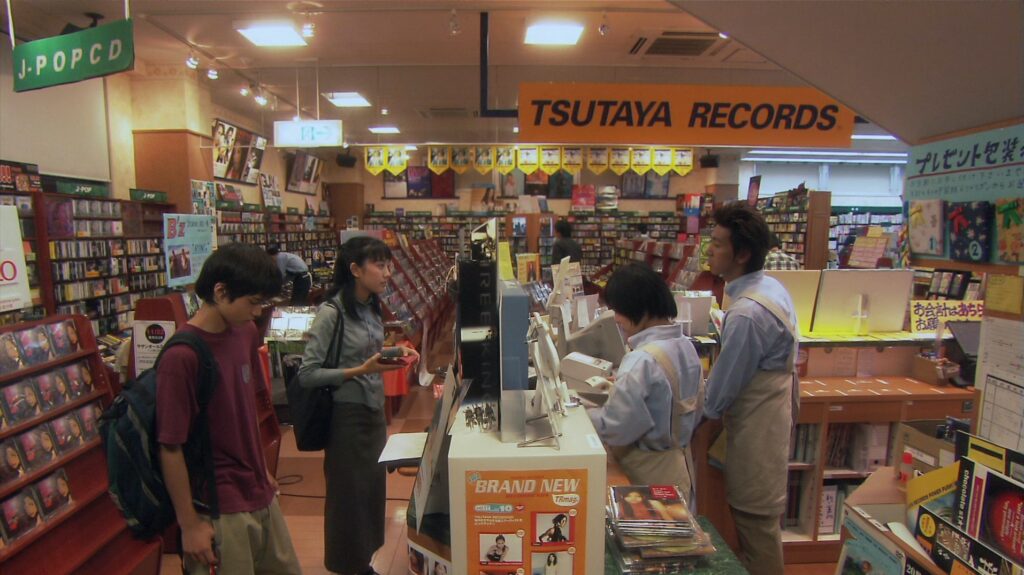
It’s also become something of a touchstone for discussions about internet culture and parasocial connection, since the forum sequences feel eerily prophetic about how people would eventually relate to celebrities, strangers, and each other online.
Decades later, it’s still being rediscovered by new audiences, often through recommendations in online film communities — which feels fitting, given the film’s own obsession with how strangers online can form real bonds around something they love.
Should You Watch It?
This one comes with a fair warning: it’s heavy. Genuinely heavy. The bullying and abuse depicted are not stylized or softened, and there are scenes that are difficult to sit through. If you’re sensitive to depictions of self-harm, sexual violence, or sustained psychological cruelty toward children, go in prepared, or maybe skip it.
But if you can handle that weight, All About Lily Chou-Chou offers something rare: an honest, aching, beautifully made film about what it feels like to be young, isolated, and desperately searching for something — anything — to hold onto. It doesn’t offer easy comfort. But it offers truth, and sometimes that matters more.
Put it on with the lights off, headphones in, and give it your full attention. It’s slow, it’s sad, and it lingers.
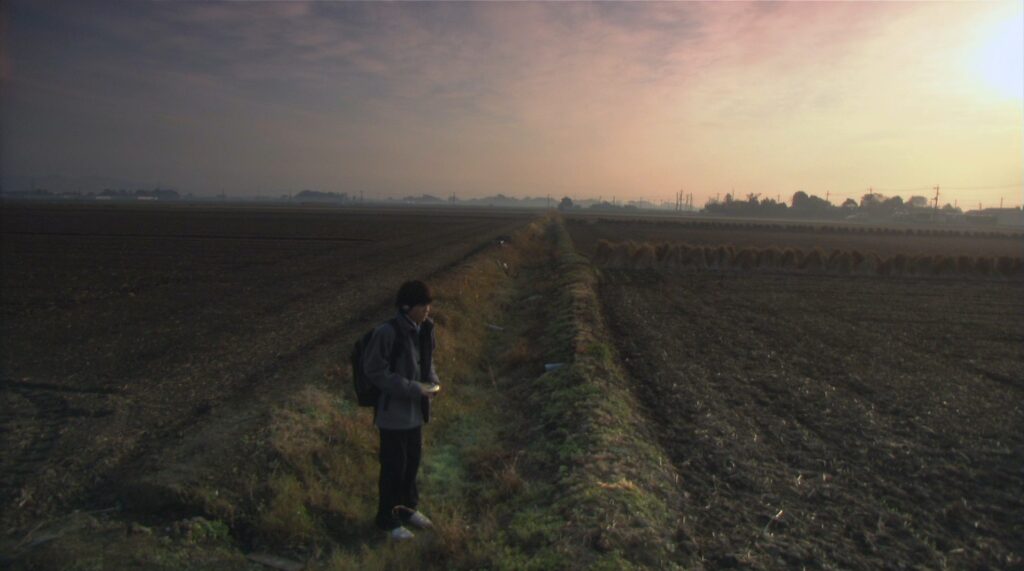
“Ether exists everywhere. Even in the most ordinary lives.”
— from the Lily Chou-Chou online forum, All About Lily Chou-Chou














2 Responses
[…] For another film that captures how technology can become an emotional lifeline for the isolated, All About Lily Chou-Chou (2001) is worth seeking […]
[…] The film is a time capsule of a Hong Kong that no longer exists, shot with a nostalgia for the past that feels almost physical. Wong Kar-wai grew up in Shanghai and moved to Hong Kong as a child, and there’s something deeply personal in how he captures that world — the cramped apartments, the rice noodles in takeaway containers, the humid nights, the neighbors who know too much about your business. If you are captivated by hypnotic, atmospheric cinema that captures raw human emotion through unforgettable music and visuals, be sure to read our review of Shunji Iwai’s All About Lily Chou-Chou (2001). […]