
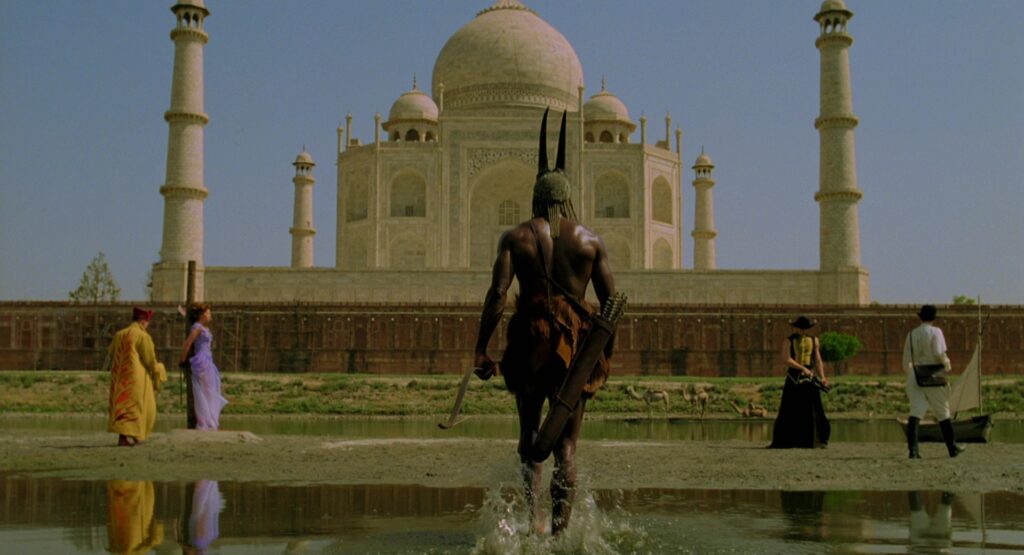
Here’s how you know The Fall (2006) is something special: director Tarsem Singh spent four years and his own money filming it across 24 countries, with no studio backing, no guarantee it would ever be released, and zero compromise on the visuals. The result is one of the most breathtakingly beautiful films ever made — a feast of color and landscape and costume that somehow also manages to be deeply, unexpectedly emotional. This one flew under the radar when it came out, and it still doesn’t get nearly enough attention. That changes today.
The Basics
- Title: The Fall
- Year: 2006 (limited release) / 2008 (wider release)
- Director: Tarsem Singh
- Producer: Tarsem Singh, David Fincher, Spike Jonze, Russell Smith
- Screenplay: Dan Gilroy, Nico Soultanakis, Tarsem Singh, based on the 1981 Bulgarian film Yo Ho Ho by Valeri Petrov
- Stars: Lee Pace, Catinca Untaru
- Cinematography: Colin Watkinson
- Runtime: 117 minutes
- Genre: Fantasy / Drama / Adventure
- Country: India / UK / USA (filmed across 24 countries)
- Studio: Roadside Attractions / Googly Films
Source: IMDB
What Is The Fall (2006) About?
A hospital in 1920s Los Angeles. A young Romanian girl named Alexandria (Catinca Untaru), maybe five or six years old, is recovering from a broken arm she got falling off a tree while working as a fruit picker. She wanders the wards with a bright, curious energy, befriending patients and staff alike.
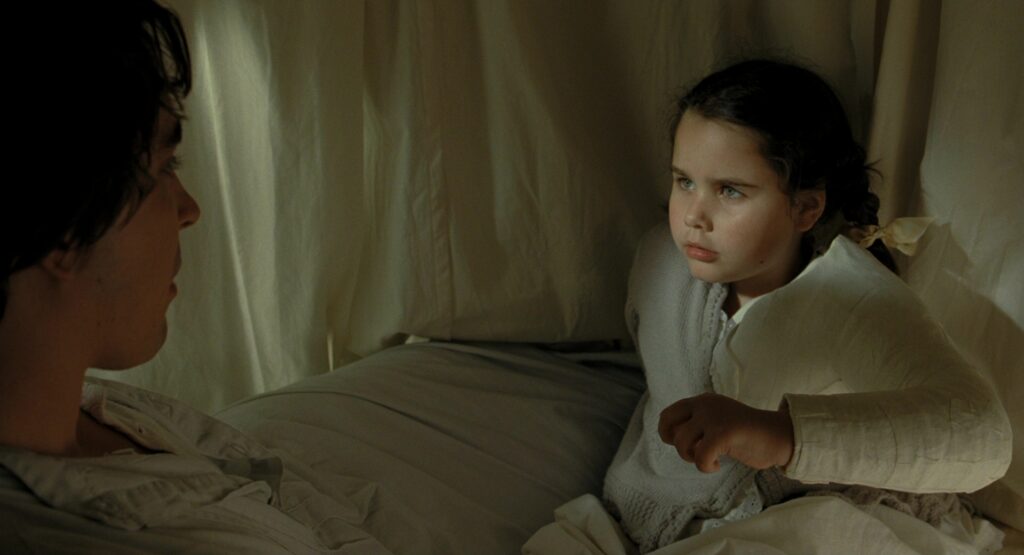
She meets Roy Walker (Lee Pace), a stuntman who broke his back and his heart in the same accident — the woman he loved left him for the leading actor while Roy was doing the dangerous work. He’s bedridden, depressed, and quietly falling apart inside.
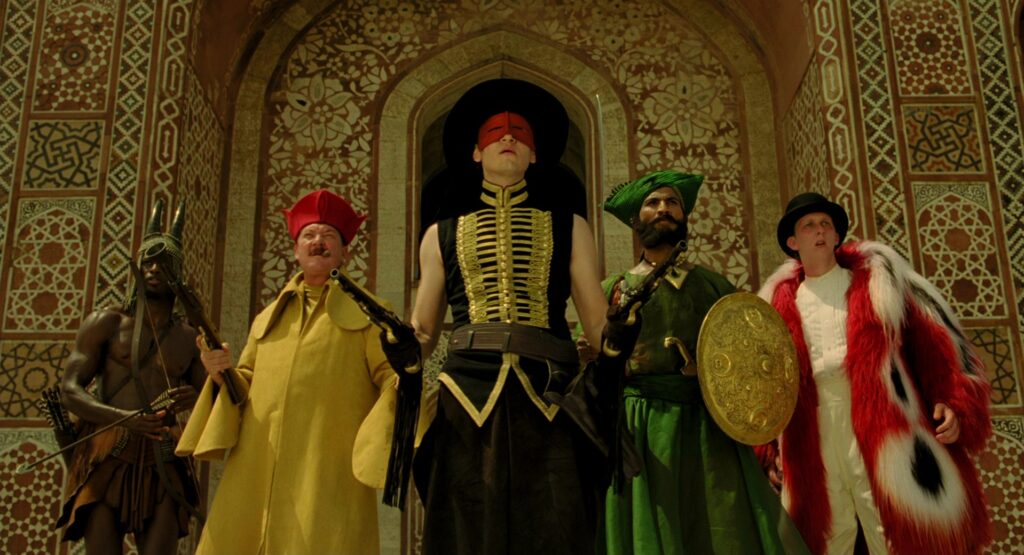
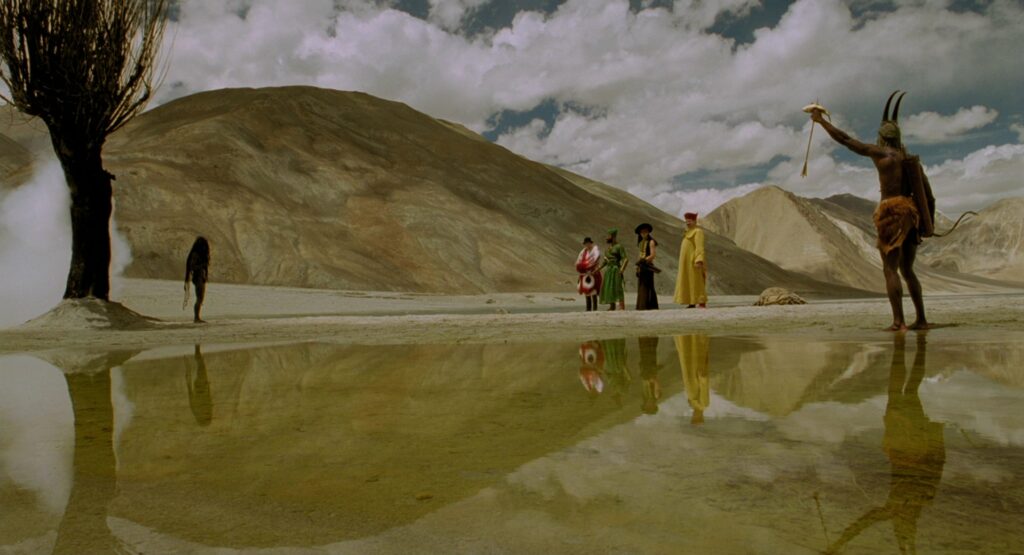
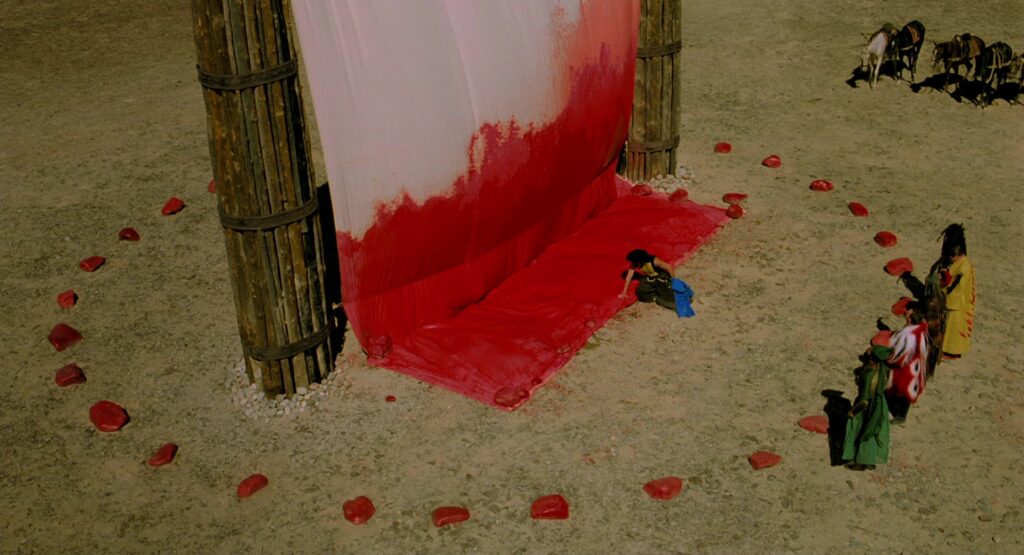
Roy starts telling Alexandria a story — an epic, sprawling adventure about five heroes banded together for revenge against the evil Governor Odious. Alexandria listens, wide-eyed and completely invested, adding her own imagination to the tale as Roy narrates. The fantasy world they build together is the most visually astonishing thing in the film — ancient ruins, salt flats, painted deserts, elaborate costumes, landscapes so extraordinary they don’t look like they belong on Earth.
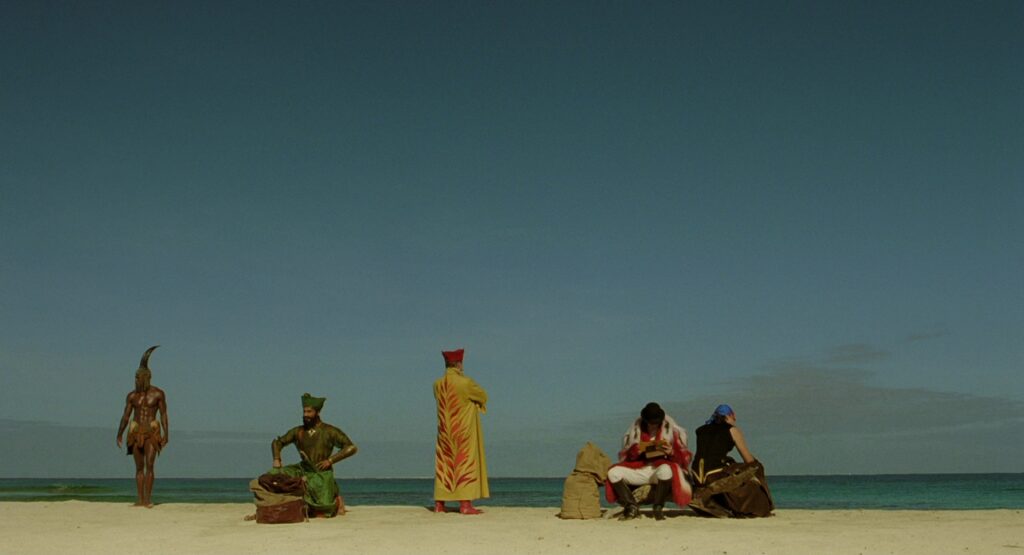
But Roy has an ulterior motive for telling the story. He needs Alexandria to steal morphine from the hospital pharmacy for him. And as his mental state deteriorates and the story darkens, Alexandria starts to realize that something is very wrong with her friend — and that the fate of his heroes might be tied to something far more serious than she understands.
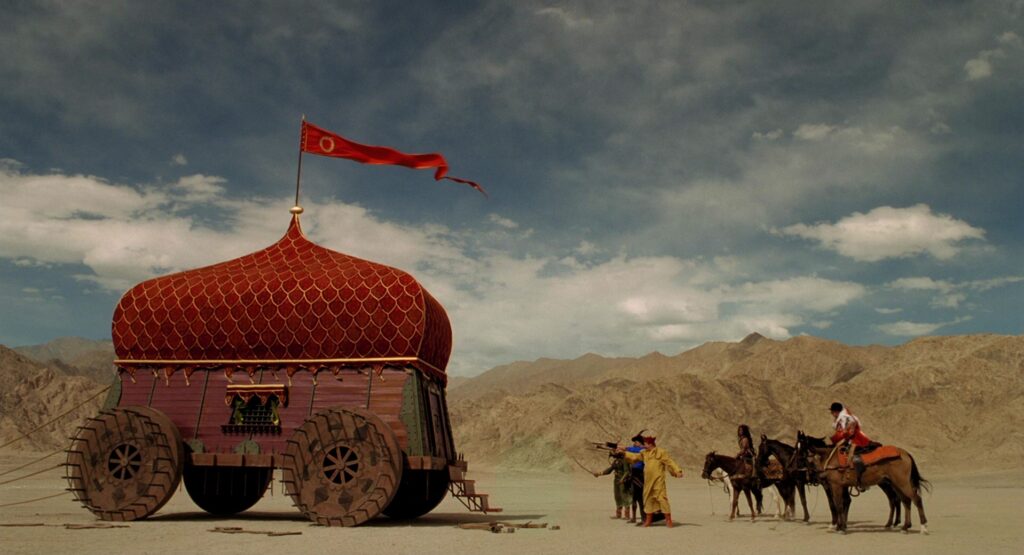
It’s a fairy tale about storytelling itself. About how stories can save lives, or end them. About the line between the world we imagine and the world we have to live in.
Why The Fall (2006) Is So Extraordinary
The visuals are genuinely unlike anything else in cinema. Tarsem didn’t build sets or use CGI to create the fantasy sequences — he traveled to 24 countries over four years and found locations that look so otherworldly they barely need embellishment. The Jodhpur fort in India. The Bolivian salt flats. The ruins of Bagan in Myanmar. The clay architecture of Iran. The beaches of Fiji. Each location is shot with such reverence and scale that the fantasy world feels simultaneously ancient and impossible — like something a child might dream up if they had access to every landscape on Earth.
Catinca Untaru’s performance is one of the most natural child performances ever captured on film. There’s a story behind this: Tarsem cast Untaru — a real child, not a trained actress — and kept her partially unaware of the full script during filming so her reactions would be genuine. Her conversations with Lee Pace in the hospital are sometimes improvised, and her confusion, delight, and eventual heartbreak feel completely, entirely real. In one of the film’s most devastating scenes, she’s genuinely crying — not acting. When you know that going in, it hits differently.
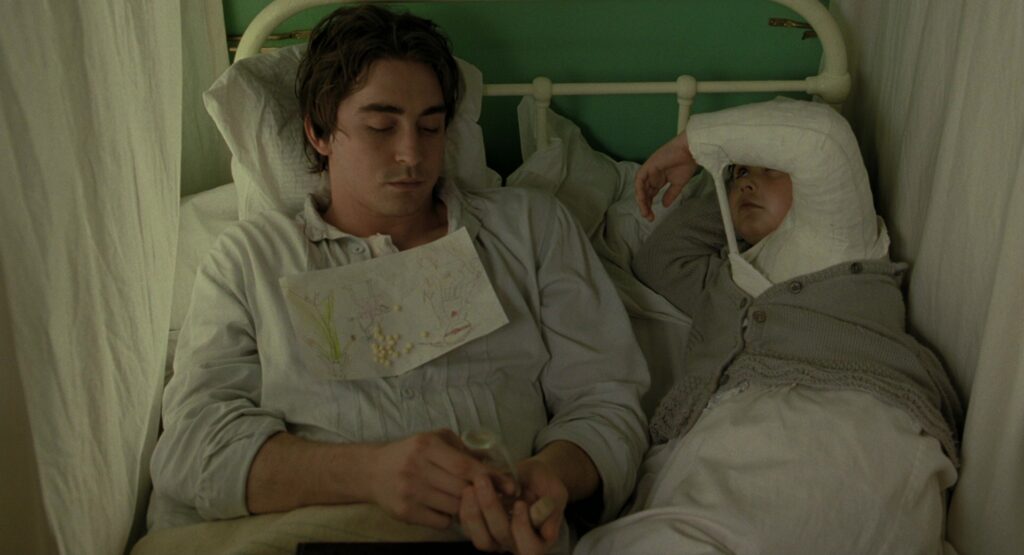
Lee Pace is extraordinary in a role that requires enormous range. He’s playing a man who is charming and funny and engaging on the surface while being consumed by suicidal despair underneath, and he manages to make you genuinely like Roy even as you understand how manipulative and self-destructive he’s being. The chemistry between Pace and Untaru — this broken adult and this completely unguarded child — is the emotional core that makes everything else work.
The film is genuinely, carefully constructed as a meditation on storytelling. The fantasy world changes depending on Roy’s emotional state — when he’s darker, the story gets darker. When Alexandria misunderstands his descriptions, the fantasy world reshapes itself around her misunderstanding (a “masked bandit” becomes whatever she pictures, not what Roy intended). The story is literally a collaboration between their two imaginations, and watching those imaginations diverge and collide is one of the film’s most quietly brilliant ideas.
David Fincher and Spike Jonze believed in it enough to executive produce. Two of the most visually inventive directors in Hollywood attached their names to this film, helping it eventually find distribution. That endorsement matters — these are filmmakers with very high standards for visual craft, and their support says something real about what The Fall achieves.
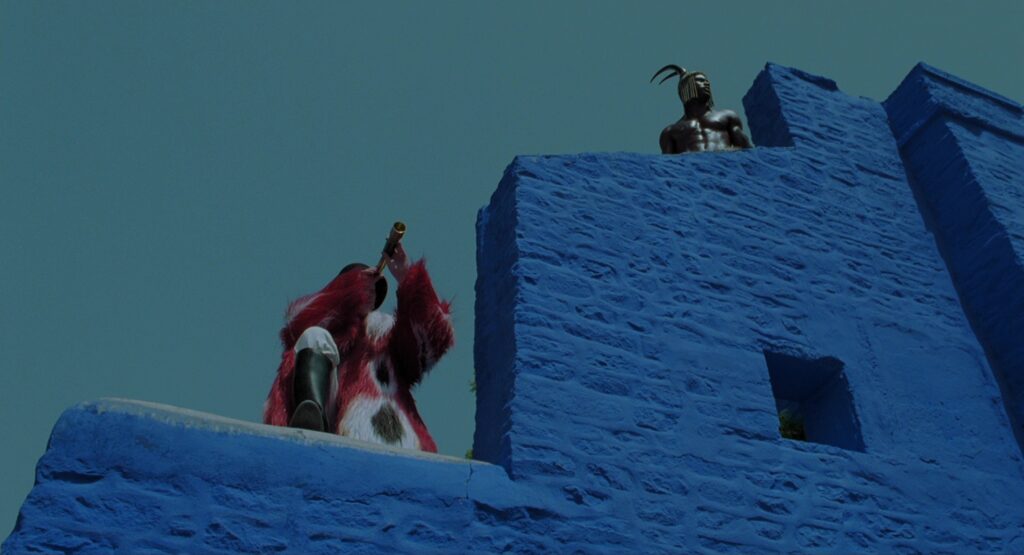
It earns its emotional gut-punch. The last act of this film is genuinely hard to watch — not in a horror sense, but in a “this is breaking my heart” sense. The story that began as a charming bedside fairy tale becomes something much more desperate and urgent, and the way the film resolves it — through Alexandria’s fierce, stubborn love for her friend — is one of the most affecting endings of any film in the 2000s.
The Reception
The Fall had an unusual journey to audiences. It was completed in 2006 but sat without distribution for a while before finally getting a limited release in 2008, helped along by the involvement of Fincher and Jonze. Even then, it was never given a wide theatrical push, and many people who love it now discovered it on DVD or streaming years after the fact.
Critically, the response was warm but somewhat split — most critics praised the visuals effusively while some felt the story didn’t quite match the spectacle. Over time, that split has resolved significantly in the film’s favor. Audiences who find it tend to love it deeply, and it has built a devoted following among people who care about visual filmmaking, fantasy cinema, and stories about storytelling.
It’s one of those films that consistently shows up on “most underrated” and “hidden gem” lists, which feels both accurate and slightly sad — because this is a film that deserves to be widely known, not just quietly cherished by the people lucky enough to have stumbled onto it.
The Legacy
The Fall is most often discussed as the definitive artistic statement from Tarsem Singh, a director who came from music videos and advertising (he directed R.E.M.’s “Losing My Religion”) and brought that background’s obsession with striking single images to feature filmmaking. His later films — Immortals (2011) and Mirror Mirror (2012) — showed flashes of the same visual instinct but never quite matched the emotional weight that The Fall achieves when visuals and story actually align.
If The Fall’s marriage of overwhelming visuals and raw emotion speaks to you, The Tree of Life (2011) takes a similarly ambitious, image-driven approach to storytelling.
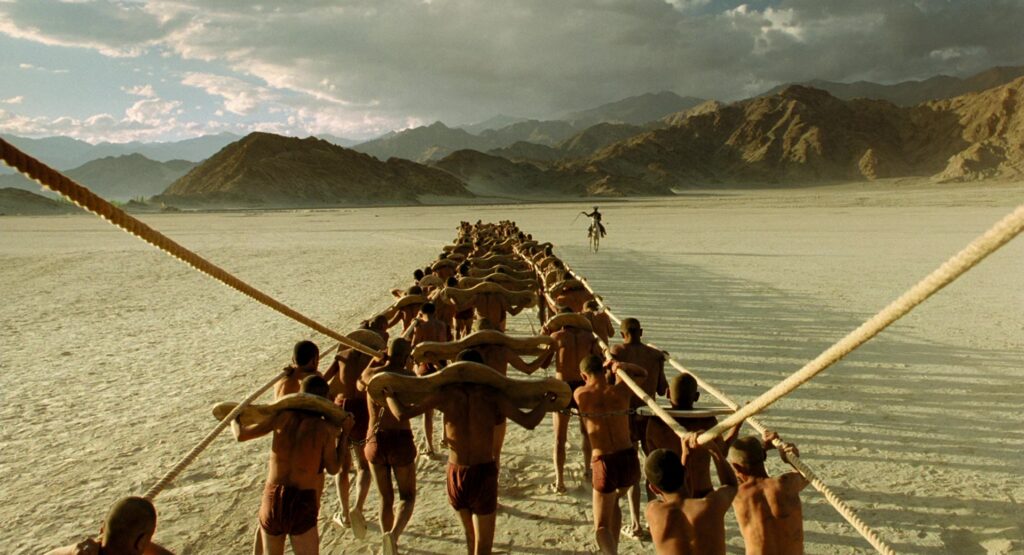
The film is also frequently cited in discussions about the use of real locations in fantasy filmmaking — as a counterpoint to the now-dominant CGI approach, and as proof that the real world, shot with enough imagination and patience, contains landscapes that no computer has yet managed to convincingly replicate.
Should You Watch It?
Yes. Absolutely, urgently, yes. This is one of those films that feels like a genuine secret — something you want to press into people’s hands and say “just watch it, trust me.” It’s not a perfect film; the pacing in the middle stretch can be uneven, and some viewers find the fantasy sequences more interesting to look at than to follow narratively. But the emotional payoff it builds toward is real, and the visual experience is genuinely unmatched.
Watch it on the biggest, best screen you have. Let the landscapes take over. And pay attention to the little girl — because she’s the one who ends up carrying the whole film on her tiny, completely unaware shoulders.
“Are you sad? I can change the story.”
— Alexandria, The Fall




1 Response
[…] fans would notice and love. If you love films that treat every frame like a painting, The Fall (2006) takes that idea even […]