
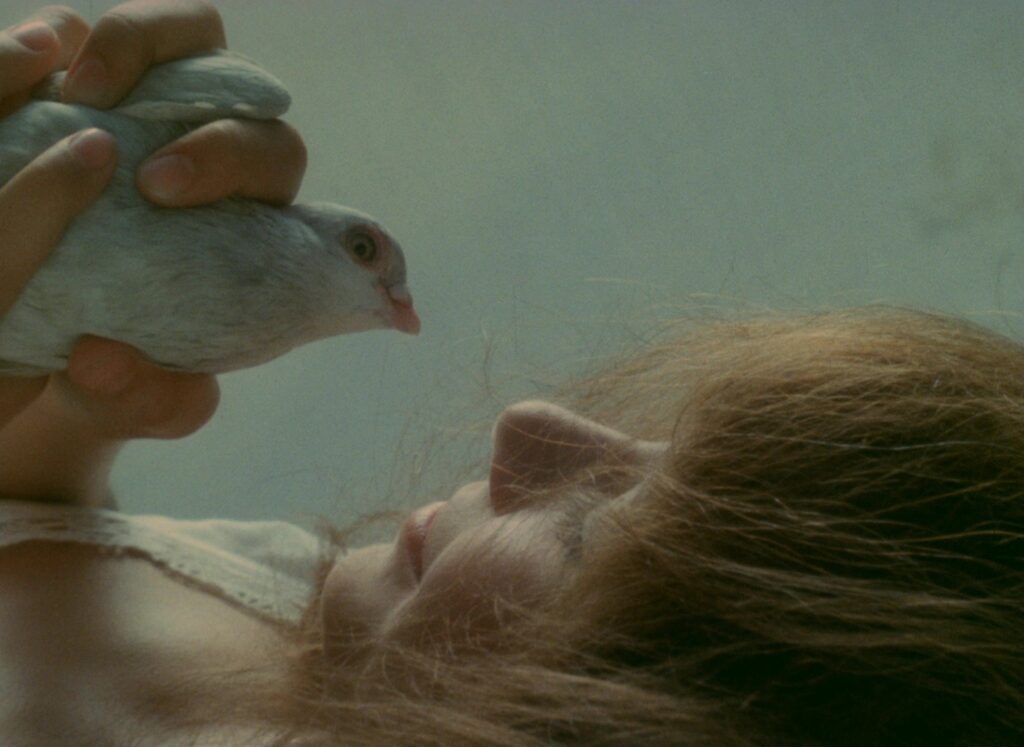
Some movies feel like they were made by someone half-remembering a dream they had as a kid — all blurry logic, strange symbols, and images that don’t quite make sense but somehow stick with you forever. Valerie and Her Week of Wonders is exactly that kind of film. It’s one of the strangest, most visually gorgeous pieces of Czech New Wave cinema, and it’s been quietly influencing dreamy, gothic, fairy-tale aesthetics in film and fashion ever since.
The Basics
- Title: Valerie and Her Week of Wonders (Valerie a týden divů)
- Year: 1970
- Director: Jaromil Jireš
- Screenplay: Jaromil Jireš and Ester Krumbachová, based on the novel by Vítězslav Nezval
- Stars: Jaroslava Schallerová, Helena Anýzová, Petr Kopřiva, Jiří Prýmek
- Cinematography: Jan Čuřík
- Music: Luboš Fišer, Jan Klusák
- Runtime: 73–77 minutes
- Genre: Surrealist Fantasy / Horror / Fairy Tale
- Country: Czechoslovakia
What Is Valerie and Her Week of Wonders (1970) About?
The film follows Valerie, a young girl living in a small, strange village, as she navigates a dreamlike week filled with vampires, witches, masked figures, a mysterious “Polecat” who may or may not be a demon, and family secrets that twist and tangle the closer you look at them. Characters reappear in different roles, identities shift, and the line between her grandmother, her mother, and other women in the village blurs constantly — it’s less a coherent plot and more a string of vivid, symbolic episodes loosely connected by mood and imagery.
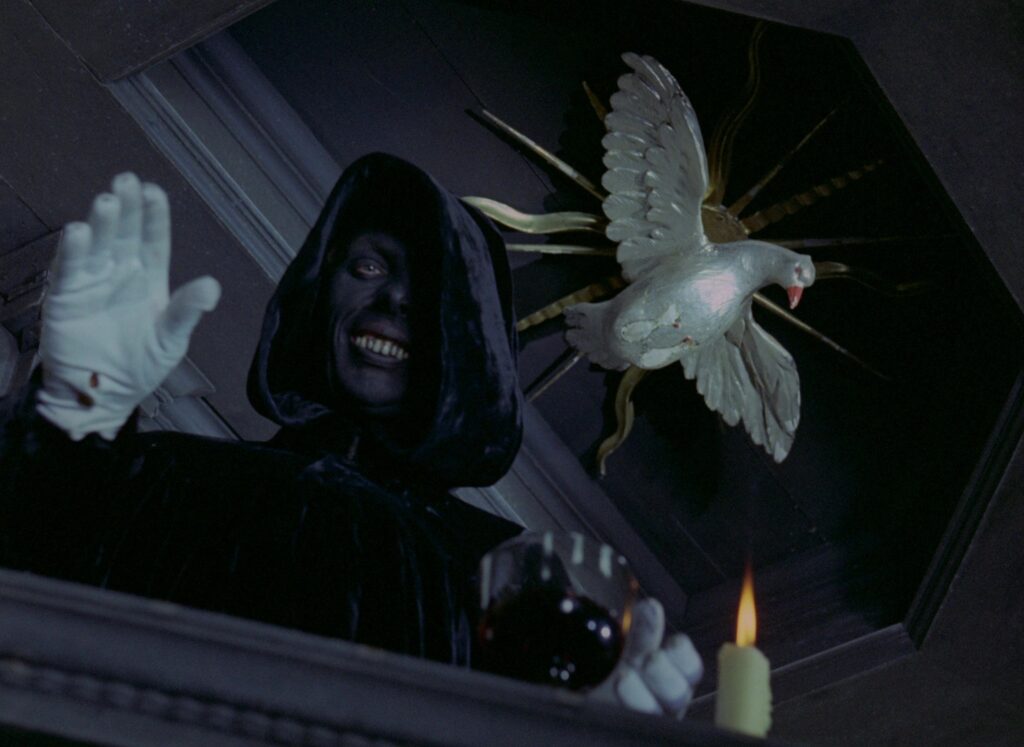
It’s based on a 1935 novel by Czech surrealist poet Vítězslav Nezval, and the film leans heavily into that surrealist, poetic tradition rather than telling a conventional story. Things happen because they feel true on a dream-logic level, not because they follow cause and effect.
Why Valerie and Her Week of Wonders (1970) Has Such a Strange, Lasting Pull
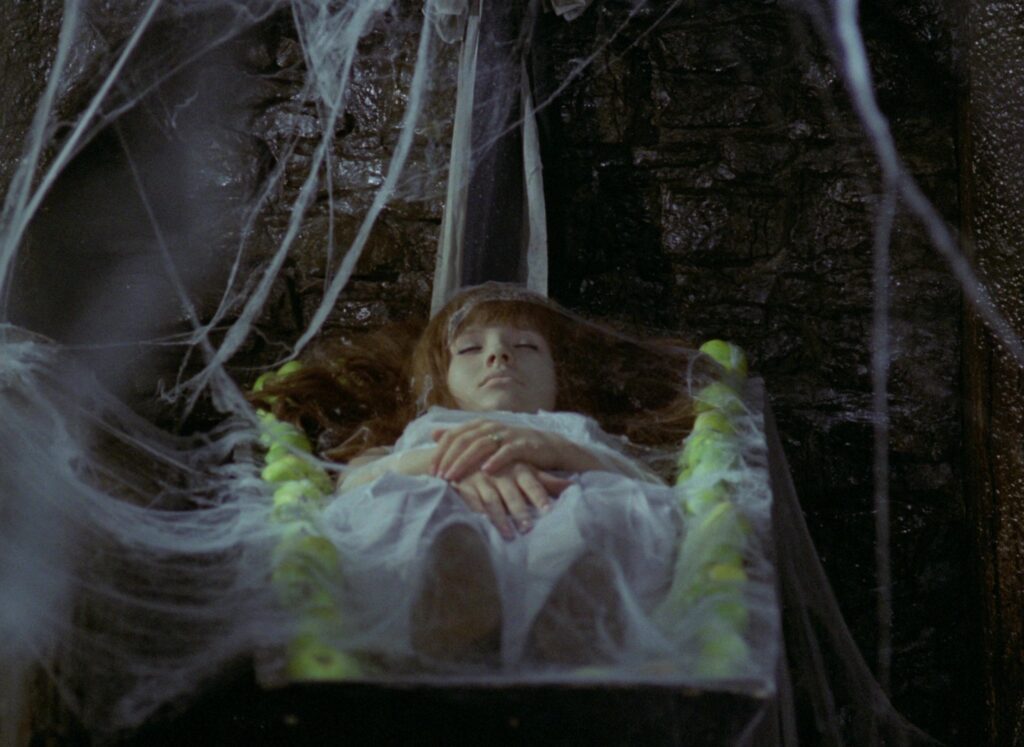
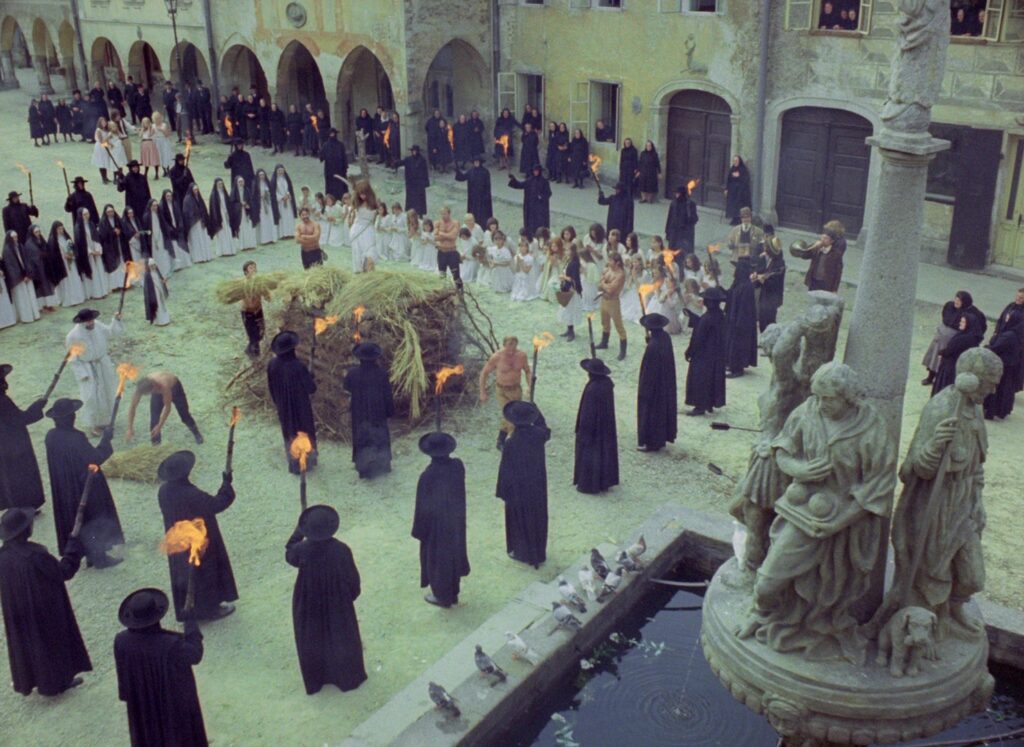
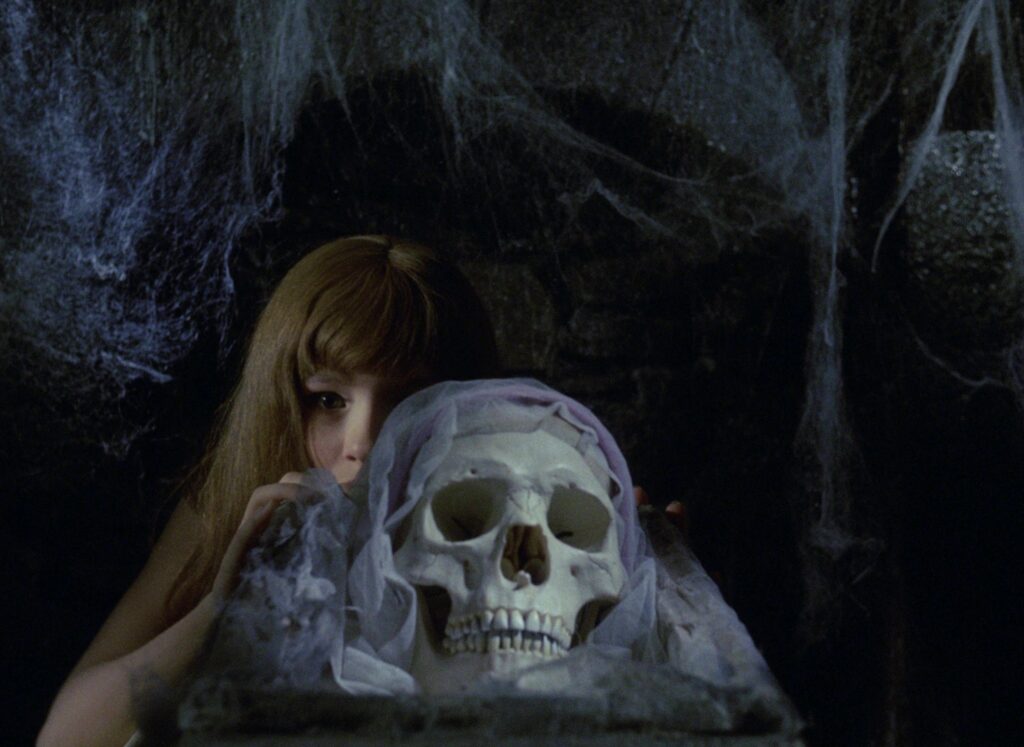
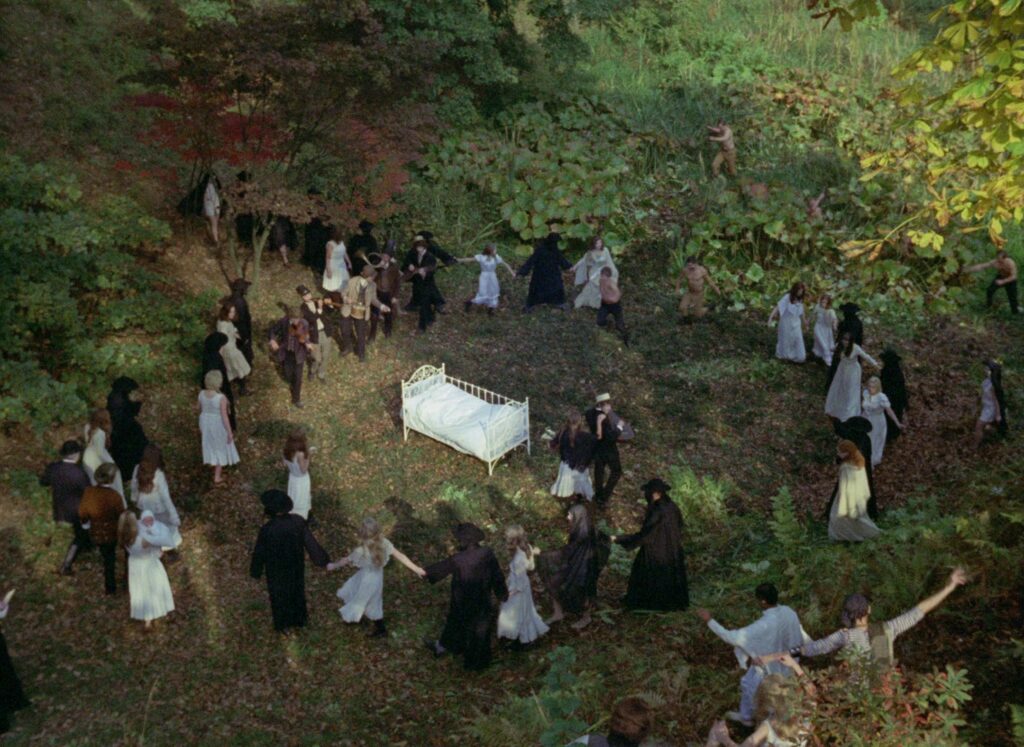
The visuals are unlike almost anything else from this era. Cinematographer Jan Čuřík shoots the Czech countryside — its forests, crumbling stone buildings, candlelit interiors — with a soft, golden, almost gauzy quality that makes the whole film feel like it’s lit by moonlight even in broad daylight. It’s gothic and pastoral and dreamy all at once, and it’s a major reason the film still gets referenced visually by photographers and filmmakers decades later.
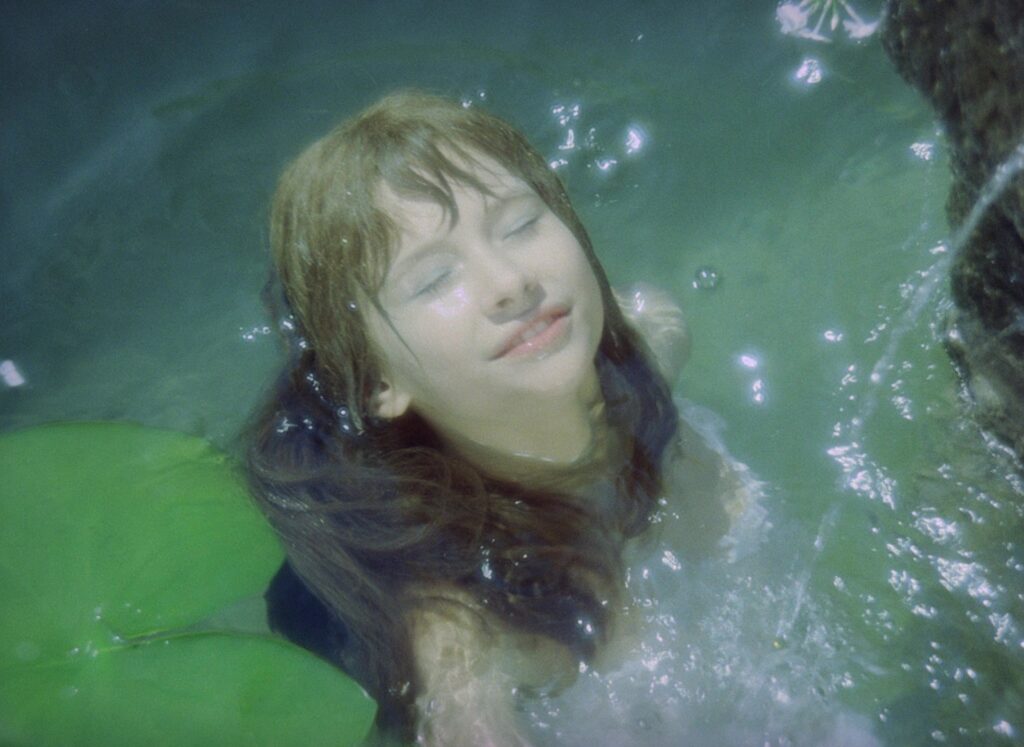
It draws from deep folklore and fairy-tale roots. Vampires, witches, masked rituals, transformation, decay — the film pulls from Central European folk tradition and gothic literature, filtering it through a hazy, symbolic lens rather than anything resembling a traditional horror structure. It’s less interested in scaring you and more interested in capturing the eerie, half-understood feeling of old fairy tales — the kind that existed before they got sanitized for children.
The score is haunting in the best way. Composers Luboš Fišer and Jan Klusák built a soundtrack that mixes choral, almost liturgical music with unsettling, dissonant tones — it adds enormously to the film’s dreamlike, ritualistic atmosphere.
It’s deeply tied to the Czech New Wave movement. This was a period of remarkable creative freedom and experimentation in Czechoslovak cinema during the 1960s, right before the Soviet crackdown following the Prague Spring tightened state control over filmmaking. Valerie came right at the tail end of that era, and it carries the surrealist, boundary-pushing spirit the movement was known for — directors like Jireš, Věra Chytilová, and Jiří Menzel were reshaping what Eastern European cinema could look and feel like.
It plays with identity and transformation in a genuinely unsettling way. Characters in the village aren’t always who they appear to be — the same actors take on shifting roles, relationships blur, and the film constantly destabilizes the idea of a fixed, reliable reality. It’s unsettling in a way that feels deliberately constructed, very much in line with surrealist tradition.
A Note on the Film’s Content
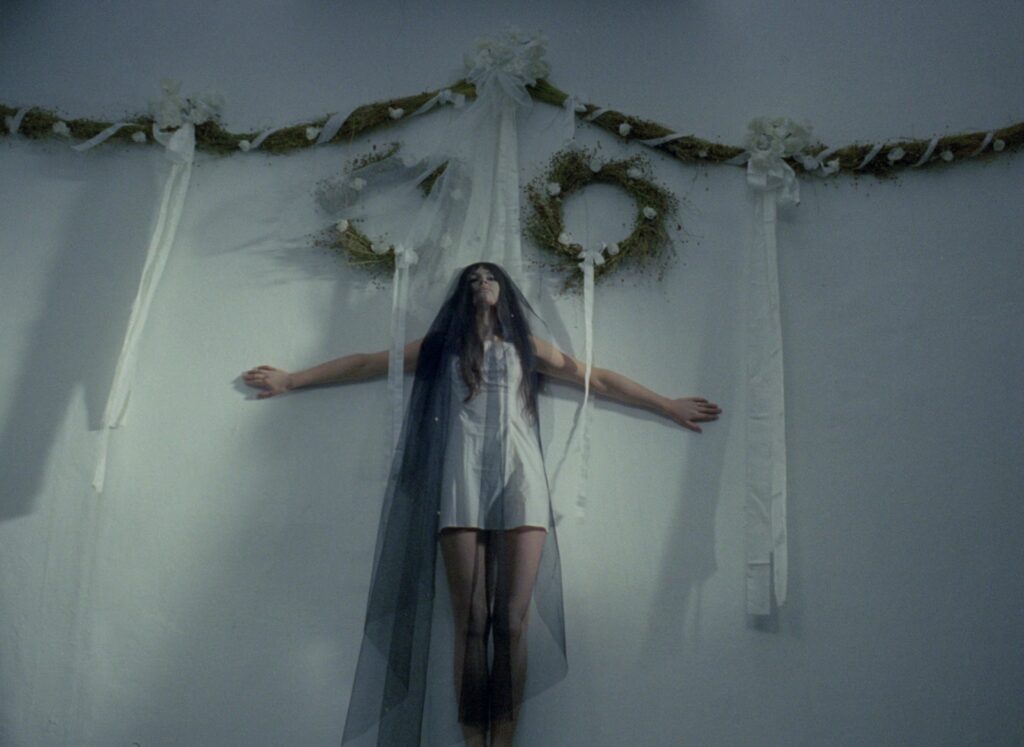
It’s worth being upfront about something: Valerie centers on a young teenage girl on the cusp of adulthood, and the film visually engages with themes of puberty, sexual awakening, and coming-of-age symbolism in ways that have made it a genuinely controversial and debated piece of cinema since its release. Some critics and viewers find this an uncomfortable, even troubling aspect of the film, regardless of its surrealist or symbolic intentions. It’s a film studied seriously in academic and arthouse film circles, but it’s also one that reasonably divides opinion, and it’s worth knowing that going in rather than being caught off guard.
The Reception
Upon release, Valerie and Her Week of Wonders found its audience primarily within arthouse and festival circuits, gaining a strong critical reputation over time as a key work of Czech surrealist cinema, even as it remained a fairly obscure title for international mainstream audiences for decades.
It gradually built a dedicated cult following, especially as restored prints and home media releases (notably through the Criterion Collection) introduced it to new generations of cinephiles interested in surrealism, folk horror, and Eastern European art cinema. Critics consistently praise its visual craftsmanship and its place within the broader Czech New Wave, even while engaging critically with its more uncomfortable thematic elements. The film also holds an excellent critics’ score on Rotten Tomatoes, reflecting its lasting reputation among critics and arthouse cinema enthusiasts.
The Legacy
Valerie has had a notable, somewhat under-the-radar influence on visual aesthetics in film, music videos, and fashion — its specific blend of gothic, pastoral, dreamlike imagery shows up in references from various dream-pop and folk-horror inspired media in the decades since. It’s frequently cited in discussions of folk horror as a precursor to the genre’s later, better-known entries.
It remains one of the most distinctive entries in Czech New Wave cinema and is studied as a significant work of European surrealist film — a strange, beautiful, and complicated piece of cinema history that doesn’t fit neatly into any single box.
Interested in exploring more surrealist cinema? Be sure to read our article on The Holy Mountain (1973), Alejandro Jodorowsky’s visually astonishing masterpiece filled with symbolism, mysticism, and dreamlike imagery.
Should You Watch It?
This one’s for a specific kind of viewer: someone drawn to slow, symbolic, dreamlike cinema with a strong arthouse and surrealist sensibility, and someone going in with awareness of its more contentious thematic content. It’s not a film for casual viewing or for someone looking for a clear story with a beginning, middle, and end.
If that sounds like your kind of film, Valerie and Her Week of Wonders offers a genuinely unique visual and atmospheric experience — one of the more singular pieces of fairy-tale surrealism in film history. Just go in informed, and watch it with the context of its era and intent in mind.





1 Response
[…] Today it holds a strong cult status and is widely studied in film schools. It’s not the kind of movie that gets a Rotten Tomatoes consensus because it genuinely defies conventional criticism — you either connect with it or you don’t. If you are fascinated by surrealist European and international cinema that blurs the boundaries of dream logic and dark folklore, explore our coverage of the iconic Czechoslovak classic Valerie and Her Week of Wonders (1970). […]