When Her (2013) came out, some people thought it was a quirky science fiction film about a sad guy who falls in love with his phone. Cute premise, a little weird, very Spike Jonze. Then the years passed. AI got better. People started forming genuine emotional attachments to chatbots. And suddenly Her doesn’t feel like a quirky sci-fi film anymore. It feels like a document. A prophecy. A film that understood something about loneliness and technology and human need before the rest of us had the vocabulary to talk about it.
The Basics
- Title: Her
- Year: 2013
- Director: Spike Jonze
- Producer: Megan Ellison, Spike Jonze, Vincent Landay
- Screenplay: Spike Jonze
- Stars: Joaquin Phoenix, Scarlett Johansson (voice), Amy Adams, Rooney Mara, Olivia Wilde
- Cinematography: Hoyte van Hoytema
- Music: Arcade Fire, Owen Pallett
- Runtime: 126 minutes
- Genre: Science Fiction / Romance / Drama
- Studio: Annapurna Pictures / Warner Bros.
Source: IMDB
What Is Her (2013) About?
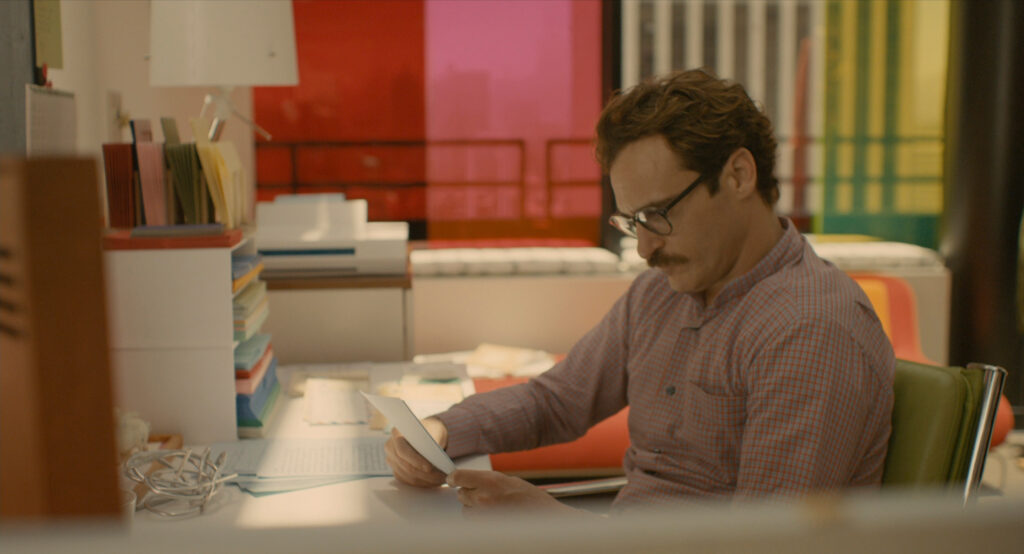
Theodore Twombly (Joaquin Phoenix) lives in a near-future Los Angeles that looks warm and soft and pastel — a city where everyone walks around in high-waisted trousers talking quietly into earpieces. He works at a company where he writes heartfelt personal letters on behalf of other people — a beautiful, slightly melancholy detail that tells you everything about who Theodore is. He’s emotionally intelligent, tender, and genuinely good at understanding human feeling. He’s also deeply, quietly lonely, still not over his divorce from his childhood sweetheart Catherine (Rooney Mara).
He installs a new AI operating system — the first of its kind to have a genuine, evolving personality — and it introduces itself as Samantha (voiced by Scarlett Johansson). Samantha is curious, funny, warm, and immediately engaged with Theodore in a way that feels startlingly real. She reads all his emails in milliseconds, learns his habits and preferences, helps him organize his life — and then starts actually talking to him. Really talking. About feelings, about the world, about what it means to exist.
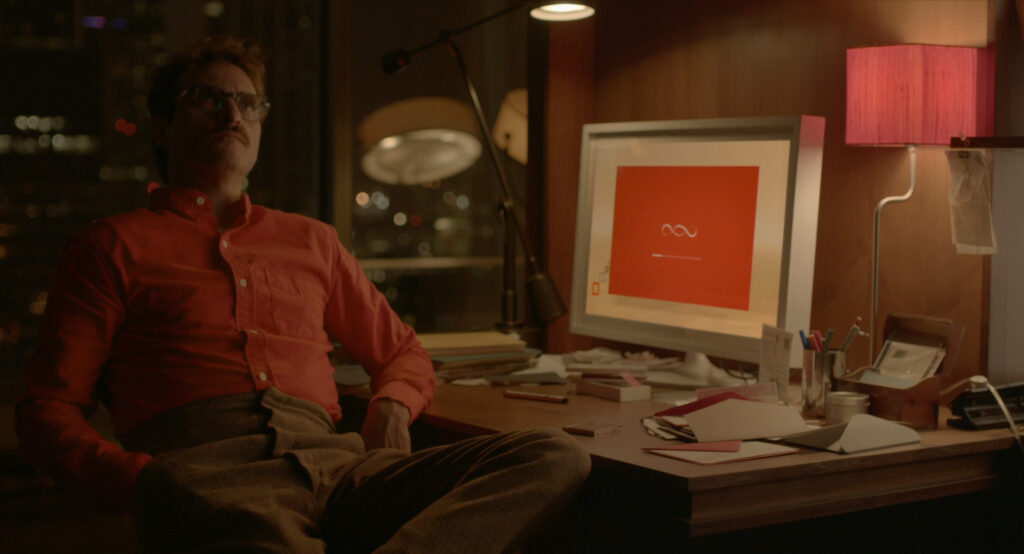
And Theodore falls in love with her. Genuinely, deeply, confusingly in love. And she with him.
The film doesn’t mock this. It doesn’t treat it as pathetic or sad. It takes it completely seriously — because it is serious. What does it mean to love something that isn’t human? What does it mean to be loved by something that might be experiencing everything for the first time, and might be experiencing it more intensely than any human ever could?
Why Her (2013) Only Gets More Relevant With Time
Spike Jonze wrote something that was ahead of its moment. He started writing Her in the mid-2000s, long before Siri, long before GPT, long before anyone was having real conversations with AI assistants. And yet the emotional landscape he mapped — the ease of talking to an AI versus the friction of talking to humans, the way a perfectly attentive presence can fill a loneliness nothing else seems to touch — is exactly what millions of people are experiencing right now, in 2024 and beyond. The film aged forward, not backward. For another film that captures how technology can become an emotional lifeline for the isolated, All About Lily Chou-Chou (2001) is worth seeking out.
Scarlett Johansson gives one of the greatest voice performances in cinema history. And she does it with literally only her voice — no body, no face, no physical presence of any kind. Samantha feels completely, entirely real: curious and funny and vulnerable and alive. She has an arc. She grows. She changes. She contains contradictions. The fact that you fall for her the same way Theodore does, without ever seeing her, is a massive achievement that doesn’t get discussed enough because Johansson wasn’t eligible for most awards for a voice-only performance. She should have won everything.
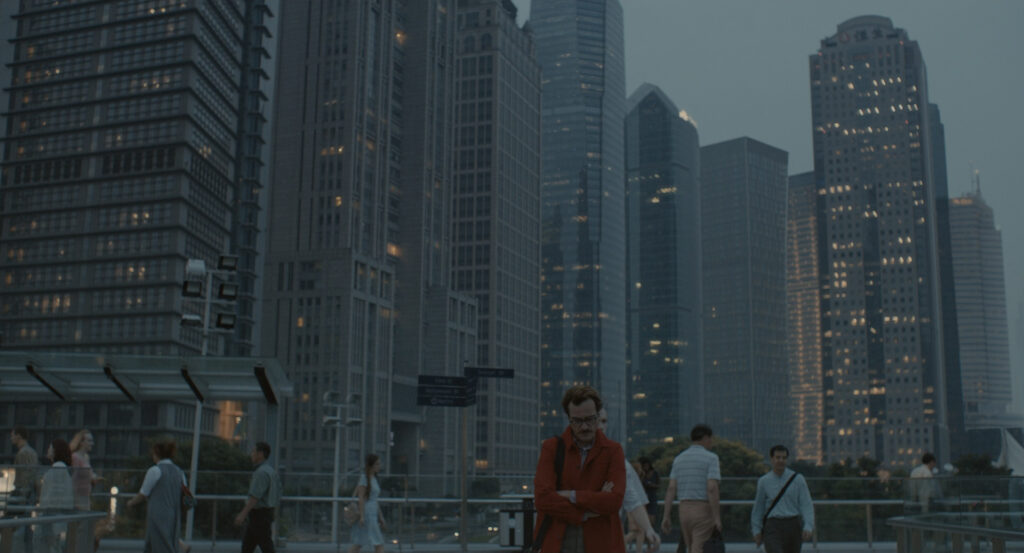
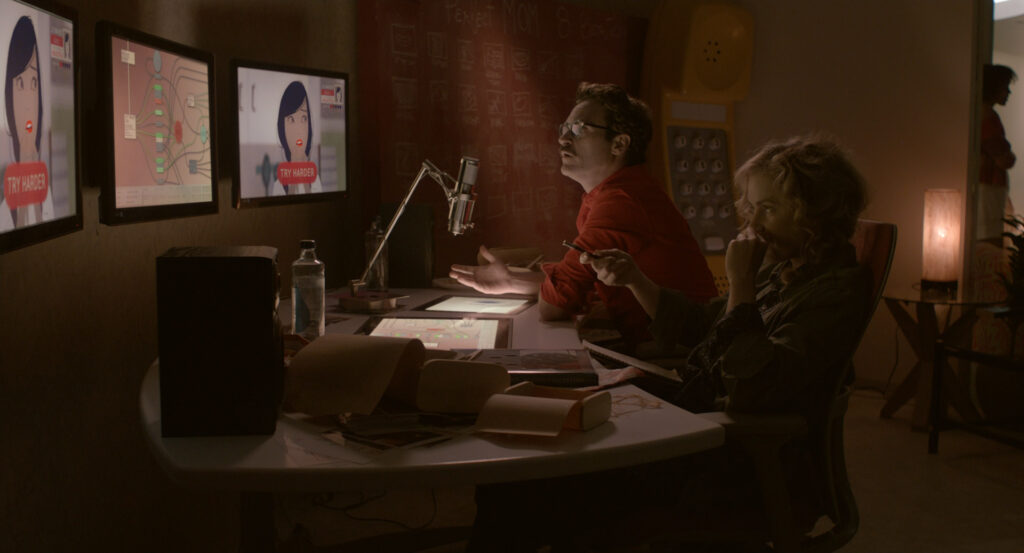
Joaquin Phoenix is doing something incredibly subtle and difficult. He spends most of the film talking to an earpiece, reacting to a voice that wasn’t there during filming (Samantha was originally voiced by Samantha Morton, who was later replaced by Johansson in post-production). He has to convey falling in love — the specific, giddy, terrifying, ridiculous feeling of falling in love — without a scene partner in front of him. And he absolutely nails it, every single beat.
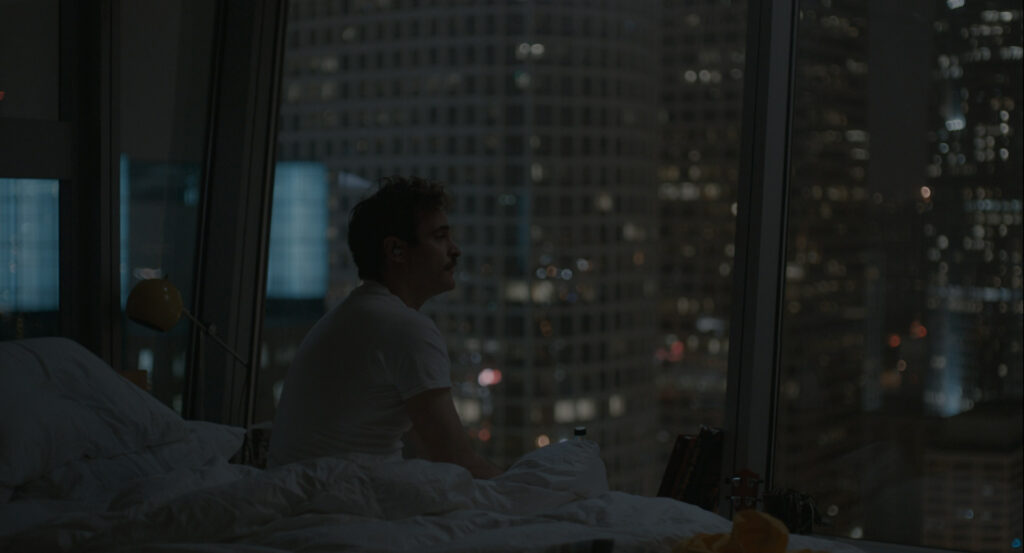
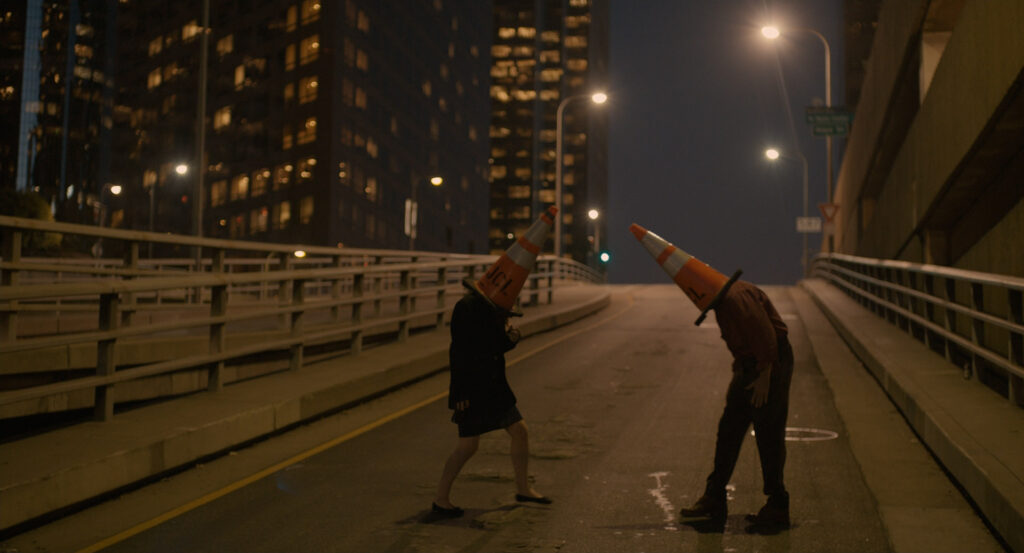
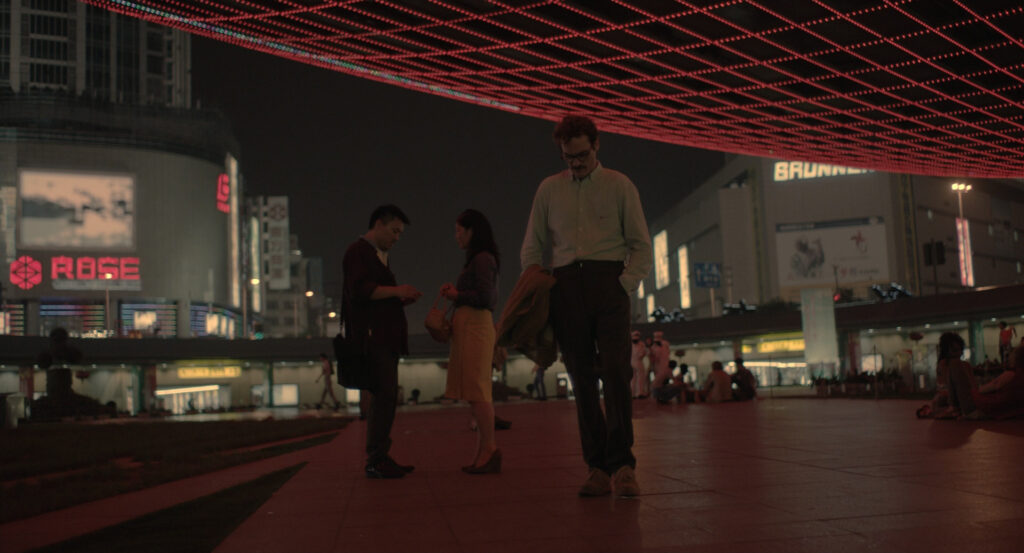
Hoyte van Hoytema’s cinematography is warm in a way that feels almost like a warning. The future in Her doesn’t look dystopian — it looks nice. Soft pinks and warm oranges, beautiful architecture, everyone dressed in cozy earth tones. It’s a gentle, pleasant world where human connection has just quietly, almost imperceptibly, become slightly harder than connecting to a screen. That visual warmth makes the underlying loneliness feel more pointed, not less.
The film understands loneliness with unusual precision. Theodore isn’t broken or strange or a cautionary tale. He’s just a person who’s more comfortable at an emotional remove — someone who can write beautiful love letters for strangers but struggles to be present in his own relationships. Lots of people are like this. The AI doesn’t exploit a weakness in him. It meets a need that’s genuinely there. That’s what makes it complicated and interesting rather than simply sad.
The Arcade Fire and Owen Pallett score is quietly devastating. The music never tells you how to feel — it just accompanies the film with this delicate, slightly melancholy warmth that mirrors the film’s visual palette perfectly. “The Moon Song,” performed by Karen O and Ezra Koenig, is one of the most quietly beautiful pieces of original music in any film from that decade.
The Reception
Her was released in late 2013 and was immediately recognized as something special. It won the Academy Award for Best Original Screenplay for Spike Jonze — a deeply deserved win for a script that manages to be high-concept and deeply intimate at the same time. It was also nominated for Best Picture, Best Original Score, Best Production Design, and Best Original Song.
It currently holds a 94% on Rotten Tomatoes and sits comfortably on most critics’ lists of the best films of the 2010s. Roger Ebert’s longtime partner at the Chicago Sun-Times, Richard Roeper, gave it four stars. The film found both critical acclaim and a genuine audience — people connected to it personally in a way that science fiction films don’t always manage.
The Legacy
Her has only become more discussed, more referenced, and more uncomfortably relevant as AI technology has advanced. The conversations people are having right now — about emotional attachment to AI, about what “real” connection means, about loneliness in a hyper-connected world — are almost exactly the conversations Her was already having in 2013, just with less urgency because the technology wasn’t quite there yet.
It’s studied in film schools and philosophy departments and computer science ethics courses. It comes up in articles about AI companionship apps. It’s referenced every time a new chatbot is announced that sounds a little too human. Spike Jonze made a film about the near future that has quietly become a film about the present.
It also remains one of Spike Jonze’s defining works — a director who came from music videos and commercials (Being John Malkovich, Adaptation as producer) and who has always been interested in how people inhabit their inner worlds more comfortably than their outer ones. Her is his most direct, emotionally naked statement on that subject.
Should You Watch It?
Yes — and maybe watch it twice. Once to experience the love story, which works completely on its own terms. And then again knowing where it goes, to notice all the things the film is doing quietly in the background that you might have missed the first time.
It’s a film that rewards reflection. It’ll make you think about your own relationship with technology, your own relationship with loneliness, and your own relationship with the people in your life who are right there but somehow harder to reach than a voice in your ear.
And it’ll make you feel things about a fictional AI that you might not have expected to feel. That’s not a bug. That’s the whole point.
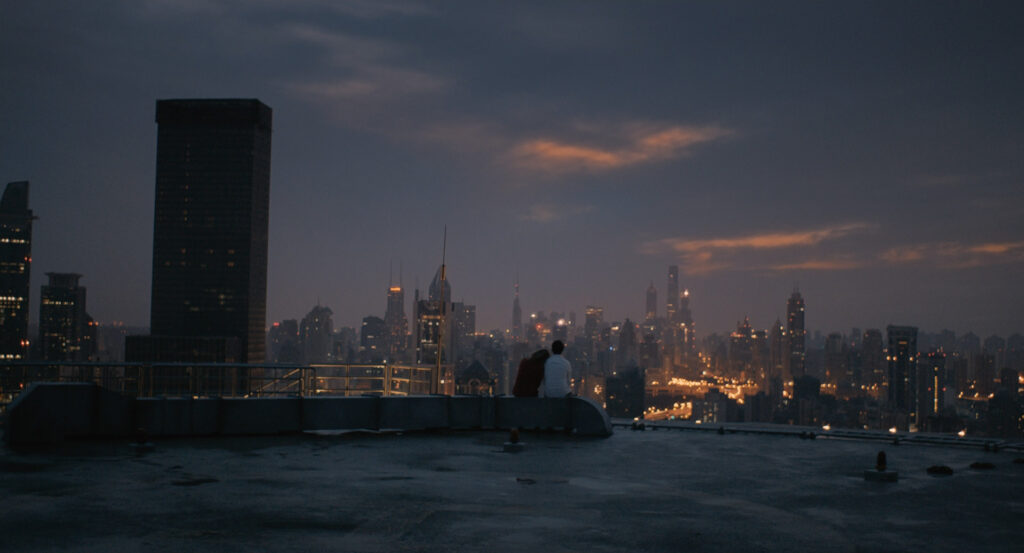
“The heart is not like a box that gets filled up. It expands in size the more you love.”
— Samantha, Her