
There aren’t many filmmakers who, at 80 years old, decide to make a deeply personal anthology film based entirely on their own actual dreams. But Akira Kurosawa wasn’t most filmmakers. Dreams (1990) is exactly what the title says — eight separate dream sequences, each one visually distinct, thematically rich, and ranging from quietly beautiful to genuinely haunting. It’s one of the most unique things ever made by one of cinema’s greatest directors, and it feels like a letter written directly from the inside of his mind.
The Basics
- Title: Dreams (夢 / Yume, also known as Akira Kurosawa’s Dreams)
- Year: 1990
- Director: Akira Kurosawa
- Producer: Hisao Kurosawa, Mike Y. Inoue
- Screenplay: Akira Kurosawa
- Stars: Akira Terao, Martin Scorsese, Mitsuko Baisho, Toshie Negishi, Mieko Harada
- Cinematography: Takao Saitō, Masaharu Ueda
- Music: Shinichirō Ikebe
- Runtime: 119 minutes
- Genre: Fantasy / Anthology / Drama
- Country: Japan / USA
- Studio: Warner Bros. / Kurosawa Production Co.
source: IMDB
What Is Dreams (1990) About?
Dreams is made up of eight separate, unconnected dream sequences, each one based on an actual dream Kurosawa claims to have had at different points in his life. A recurring figure — simply called “I” or “the Dreamer” — wanders through each one, acting as a witness or participant.
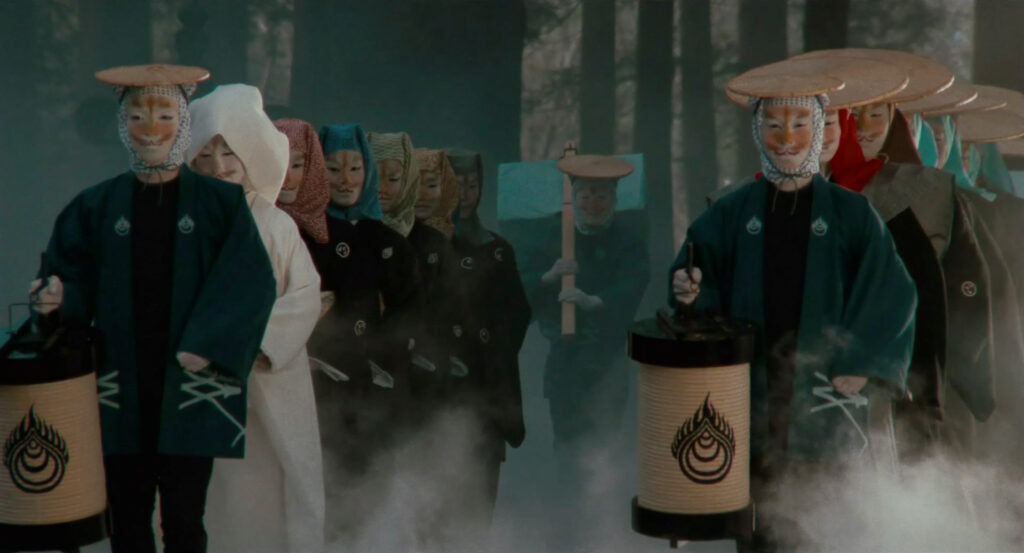
“Sunshine Through the Rain” — A young boy wanders into the forest on a day when the sun and rain fall at the same time, and witnesses something that fox spirits don’t want humans to see.
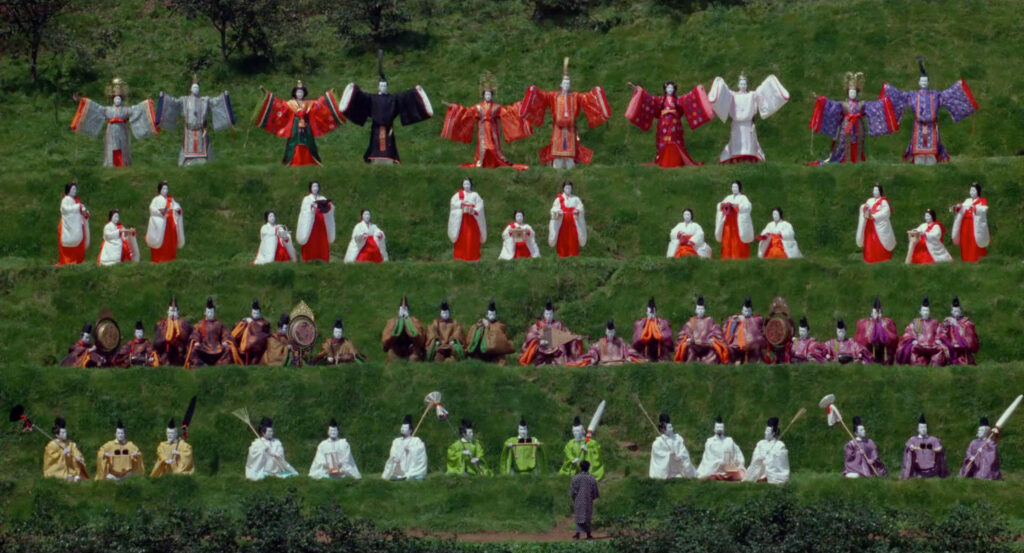
“The Peach Orchard” — A child wanders into a barren garden on Hinamatsuri (Doll Festival day), where the spirits of a lost peach orchard appear in a slow, breathtaking ceremonial dance.
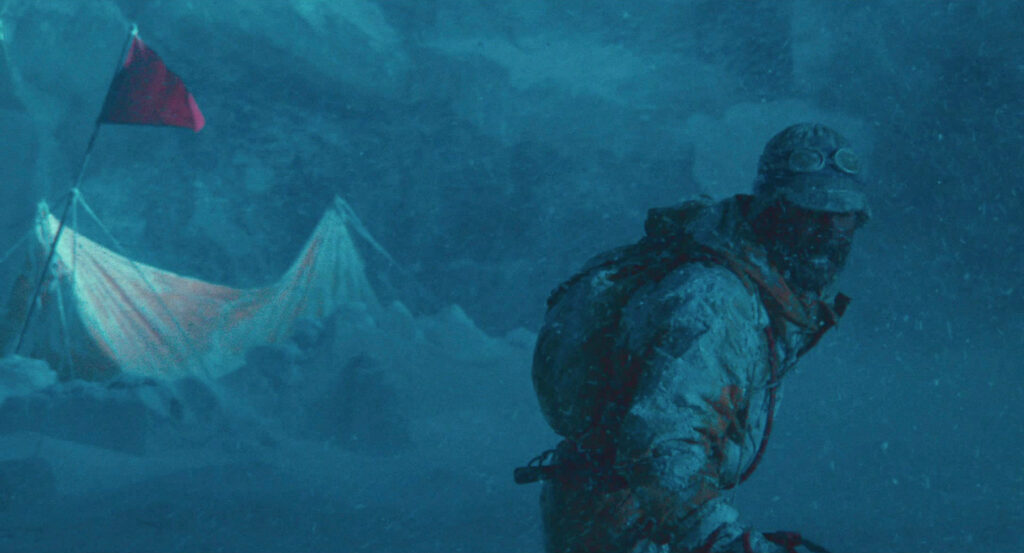
“The Blizzard” — Four mountaineers are caught in a deadly snowstorm, exhausted and on the verge of death, when a strange, seductive snow spirit arrives.
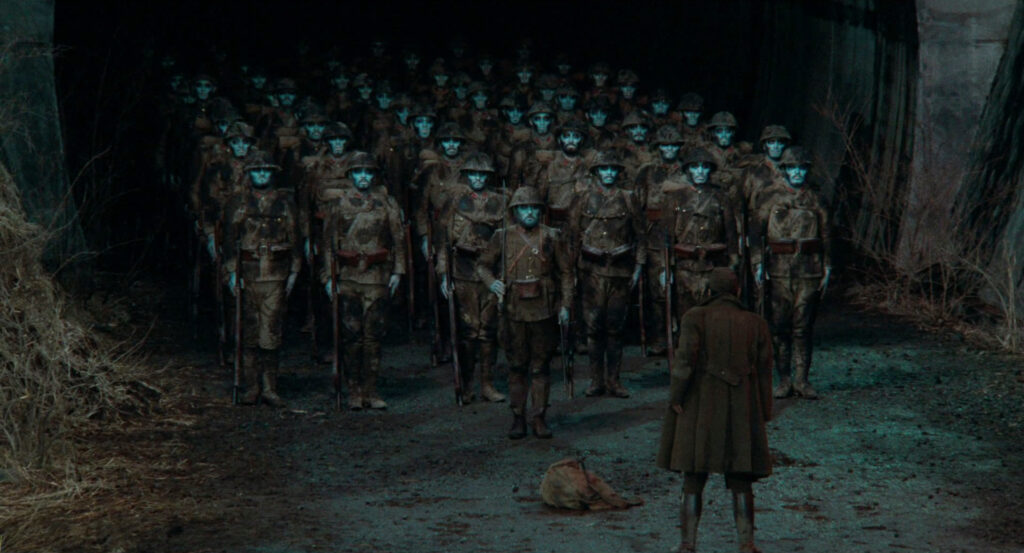
“The Tunnel” — A military officer walks through a dark tunnel and encounters the ghost of a soldier who died under his command — a haunting, guilt-ridden meditation on war and survival.
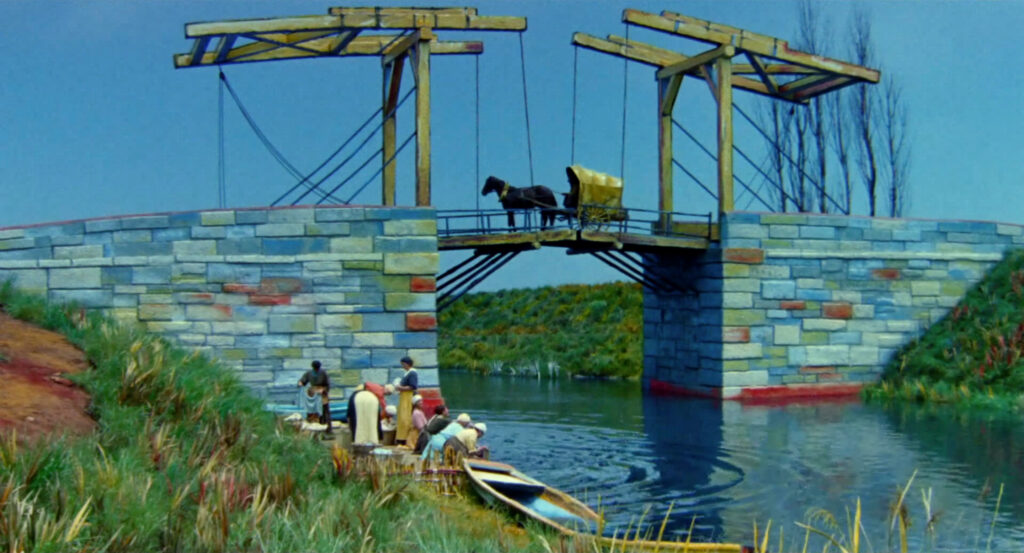
“Crows” — A young painter steps into the paintings of Vincent van Gogh and wanders through them, searching for the artist. Van Gogh himself is played, in a charming and memorable piece of casting, by Martin Scorsese.
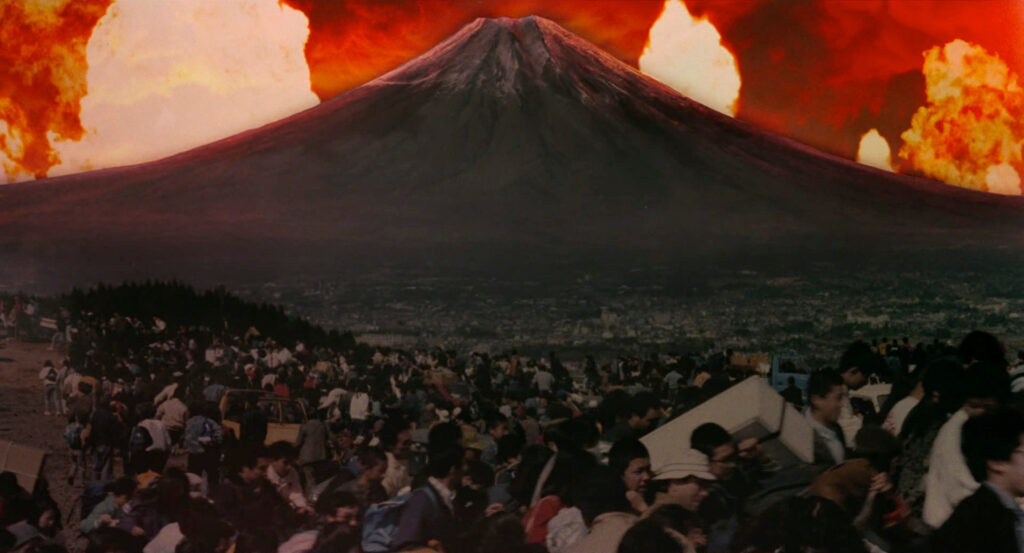
“Mount Fuji in Red” — Japan’s nuclear power plants have melted down. Mount Fuji is engulfed in colorful toxic clouds. Crowds of panicked people run toward the ocean with nowhere to go.
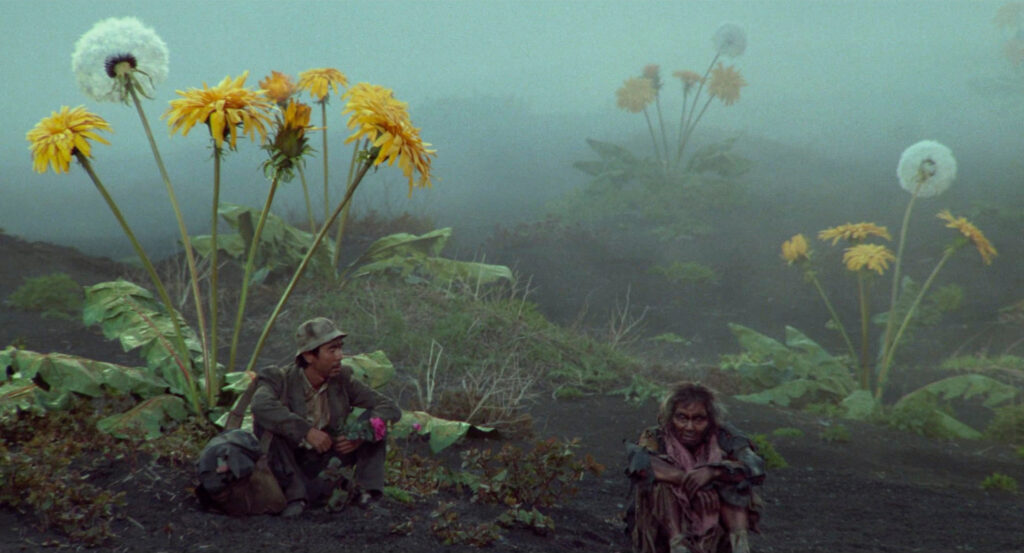
“The Weeping Demon” — A man wanders a post-nuclear wasteland where mutated humans survive in misery, guided by a one-horned demon who explains exactly how humanity brought this upon itself.
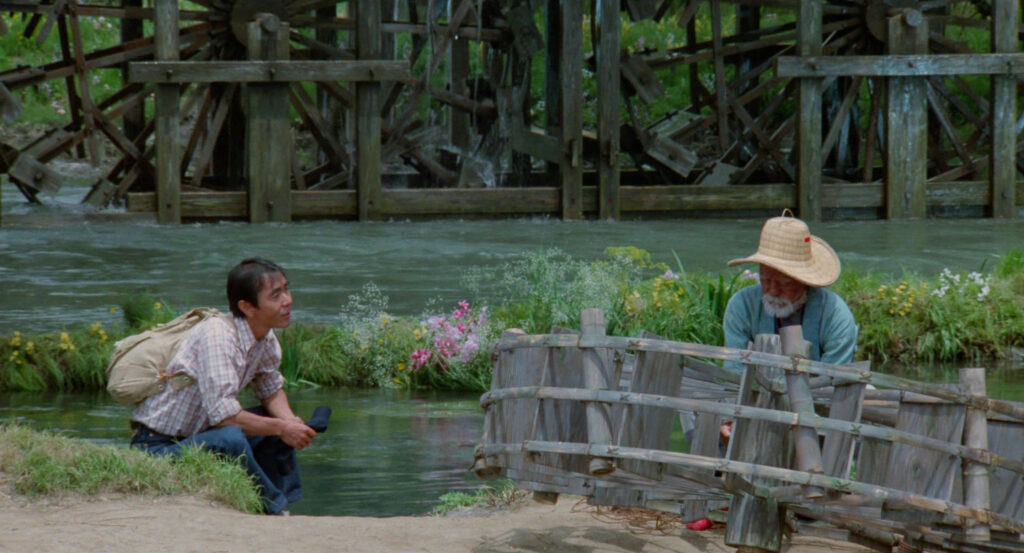
“Village of the Watermills” — The Dreamer arrives in a beautiful, preindustrial village by a river, where an old man explains simply and peacefully why they choose to live without modern technology.
Eight dreams. Eight moods. Eight completely different visual worlds.
Why Dreams (1990) Is So Special
No other filmmaker had the career and visual vocabulary to pull something like this off. By 1990, Kurosawa had already made Rashomon, Seven Samurai, Ikiru, Ran, and dozens of other films that changed cinema permanently. Dreams feels like the culmination of a lifetime of visual storytelling — every technique he’d developed over decades poured into these eight sequences, without the constraints of a conventional narrative.
Each segment has its own completely distinct visual identity. “The Peach Orchard” is pastel and ceremonial, like a living Japanese painting. “Mount Fuji in Red” is garish, nightmarish, almost overwhelming with color. “Village of the Watermills” is warm, golden, and almost impossibly peaceful. The film never stays in one visual register long enough to feel monotonous — each dream feels like waking up into a different world entirely.
The “Crows” segment is genuinely one of the most inventive sequences in Kurosawa’s entire career. The idea of a character literally walking into Van Gogh’s paintings — achieved through meticulous set construction and matte painting rather than digital effects — is pulled off so beautifully that it feels completely natural. And Martin Scorsese, a lifelong Kurosawa devotee, plays Van Gogh with this wild, restless energy that’s hard not to love.
The environmental themes hit differently now than they did in 1990. The nuclear nightmare segments — “Mount Fuji in Red” and “The Weeping Demon” — were already pointed and urgent when the film came out, but rewatching them today, they feel almost prophetic. Kurosawa was never subtle about his belief that humanity was destroying itself and the planet, and these segments are essentially a cinematic cry of grief and warning, wrapped in surrealist imagery.
The final segment, “Village of the Watermills,” is quietly devastating as a closing statement. After the chaos and horror of the preceding dream, arriving in this serene, simple village where people celebrate death as part of life feels like an exhale. It’s the most personal and philosophical note Kurosawa could have ended on — a vision of what he believed a good life might look like, free of technology, greed, and the noise of modern civilization.
The score by Shinichirō Ikebe perfectly matches the film’s shifting moods. Rather than a single unified soundtrack, the music shifts dramatically between segments — delicate and ceremonial in some, tense and overwhelming in others — serving each dream’s individual emotional world rather than imposing a single tone across the whole film.
The Reception
Dreams received a warm but somewhat divided critical response upon release. Many critics were deeply moved by its visual ambition and personal sincerity, while others found its more didactic segments — particularly the nuclear nightmare sequences — too overtly preachy or heavy-handed in their messaging.
Over time, the critical consensus has become considerably more favorable. The film is now widely regarded as one of Kurosawa’s more personal and underrated late works, frequently discussed alongside Ran (1985) and Rhapsody in August (1991) as evidence that his final creative period was still extraordinarily fertile. It holds strong acclaim among film enthusiasts and is particularly beloved in Japan, where Kurosawa’s cultural significance runs deep.
The Legacy
Dreams stands as one of the most intimate and revealing things Kurosawa ever made — a film where, rather than telling someone else’s story, he simply opened up his own subconscious and invited the audience in. It’s been studied as both a visual achievement and a document of Kurosawa’s personal philosophy: his reverence for nature, his grief over war, his deep anxiety about nuclear technology, and his belief in simplicity and human dignity.
The film also stands as a love letter to painting — particularly Japanese woodblock prints and Western Impressionism — and is frequently cited by cinematographers and visual artists as an example of how painterly composition can be achieved in motion pictures without losing the life and energy of cinema.
For another visually stunning Japanese classic steeped in folklore and painterly imagery, don’t miss our guide to Kwaidan (1964).
Should You Watch It?
Yes — but go in knowing it’s an anthology and let yourself respond differently to each segment. Some will grab you immediately; others might feel too slow or too on-the-nose. That’s okay. This isn’t a film that demands you love every single piece of it equally. It’s more like a collection of paintings by the same artist — some will resonate more personally than others.
If you’re already a Kurosawa fan, Dreams is essential and genuinely moving as a late-career self-portrait. If you’re new to him, it’s actually not a bad entry point either — each dream is short, self-contained, and visually spectacular enough to draw you in without needing prior knowledge of his work.
Watch it when you’re in a reflective mood. Let it breathe. And pay attention to what the old man says by the watermill at the very end — it’s basically Kurosawa telling you exactly how he wanted to live, and how he thought the world should be.
“What’s wrong with dying? If you’ve lived well, then death is something to celebrate.”
— The Old Man, Dreams









1 Response
[…] the greatest director of his era. Even Akira Kurosawa’s own meditation on the unexplainable, Dreams, carries a bit of that same reverence for the […]