There are horror movies that scare you. There are horror movies that disturb you. And then there’s Suspiria (1977) — a film that does both, but mainly just makes you sit there with your mouth open going “how does something this gorgeous also feel this evil?” It’s less a horror film in the traditional sense and more a sustained assault on your senses dressed up in the most insane color palette you’ve ever seen in your life. Dario Argento made something genuinely one-of-a-kind here, and over 45 years later nobody has quite managed to replicate it.
The Basics
- Title: Suspiria
- Year: 1977
- Director: Dario Argento
- Producer: Claudio Argento
- Screenplay: Dario Argento and Daria Nicolodi
- Stars: Jessica Harper, Stefania Casini, Flavio Bucci, Miguel Bosé, Joan Bennett, Alida Valli
- Cinematography: Luciano Tovoli
- Music: Goblin
- Runtime: 98 minutes
- Genre: Horror / Giallo / Supernatural
- Country: Italy
- Studio: Seda Spettacoli
source: IMDB
What Is Suspiria (1977) About?
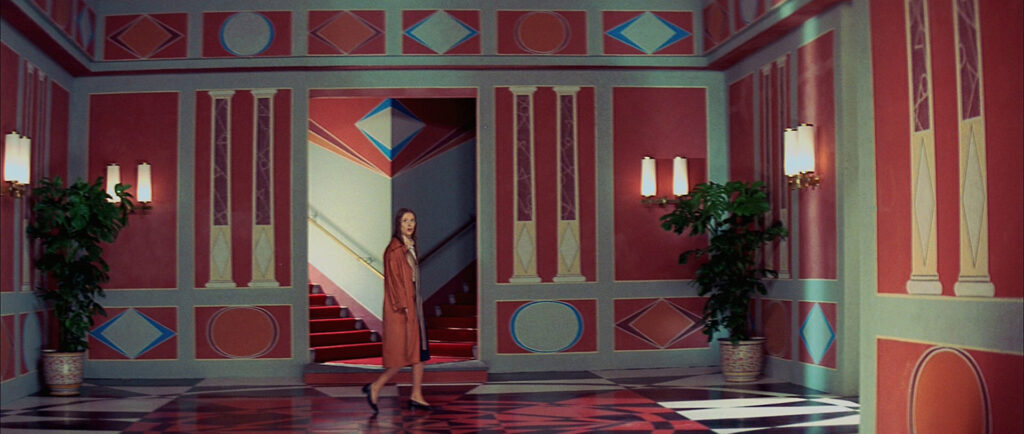
Suzy Bannion (Jessica Harper) is an American ballet student who arrives in Freiburg, Germany to attend the prestigious Tanz Dance Academy. She shows up in the middle of a stormy night, watches another student flee the school in a panic, and is turned away at the door. That fleeing student is found dead that same night — along with her friend — in one of the most elaborate and genuinely shocking murder sequences in horror cinema history.
Suzy enrolls anyway, because she’s come this far. But things quickly feel wrong. The food tastes strange. She keeps getting dizzy and sick. The staff are odd. Students keep disappearing or dying. There’s a strange smell coming from behind the walls. Maggots rain from the ceiling at one point (yes, really). And slowly, Suzy starts to piece together that the dance academy is hiding something ancient, occult, and deeply dangerous at its core.
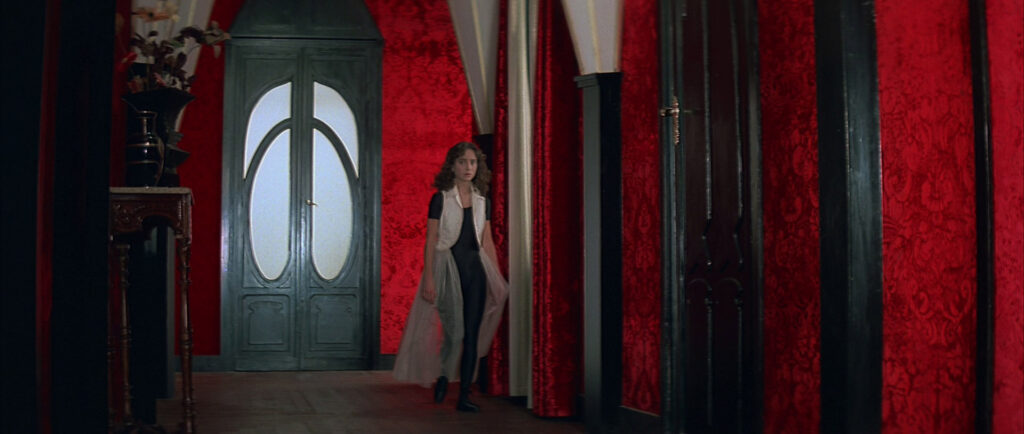
The plot is fairly simple, honestly — it’s almost secondary. Suspiria is first and foremost an experience. A nightmare you can’t logic your way out of.
Why Suspiria (1977) Is Unlike Anything Else
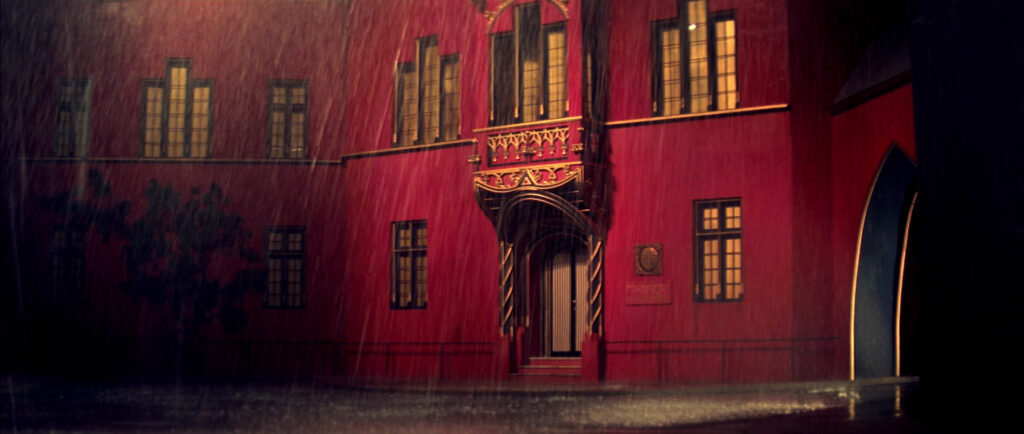
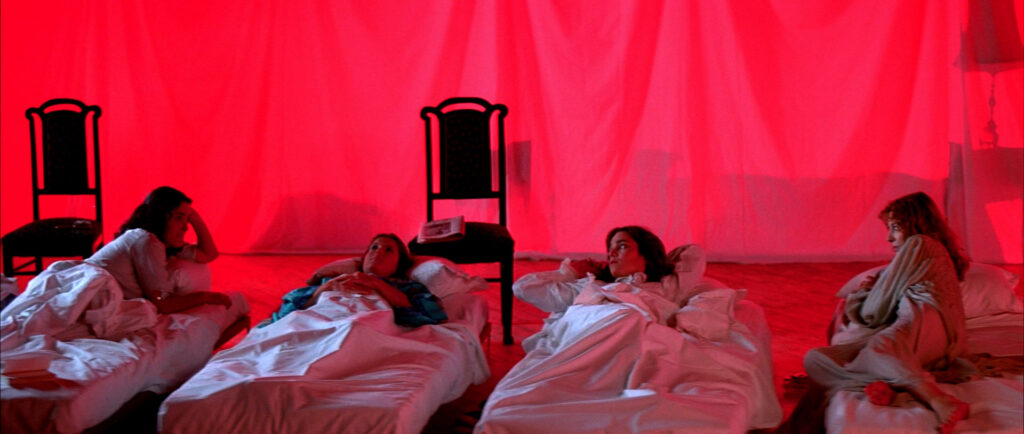
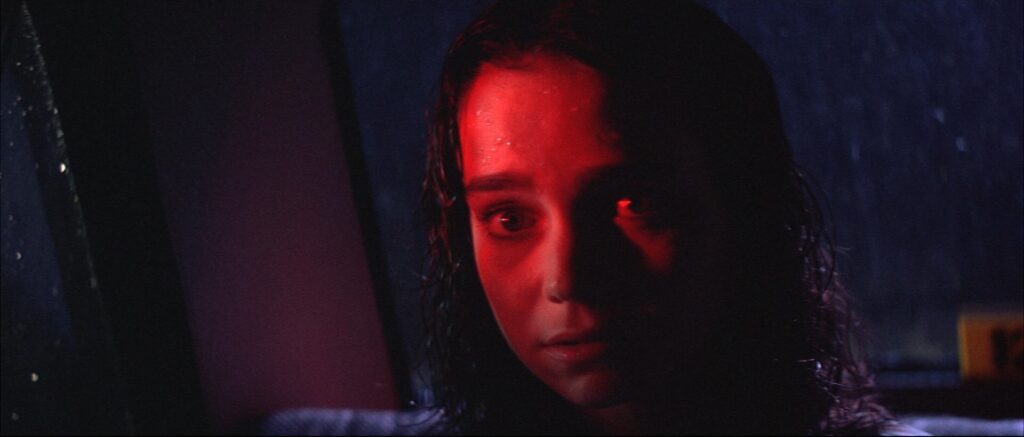
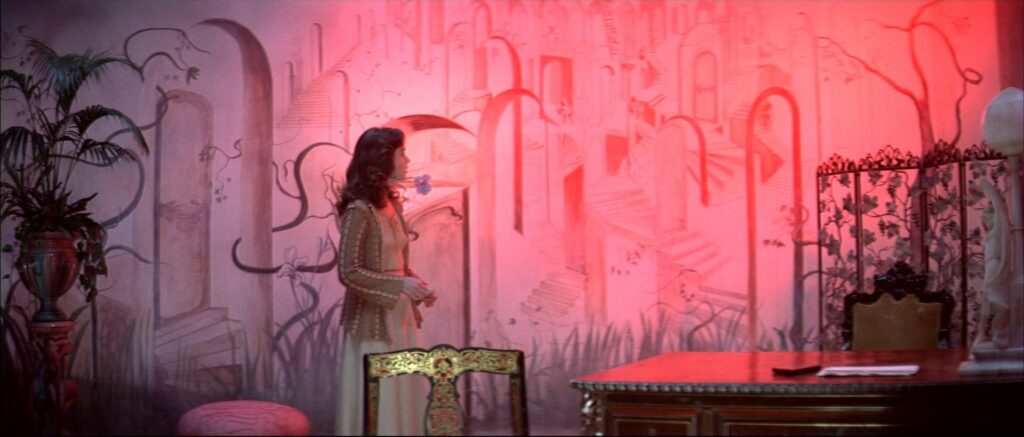
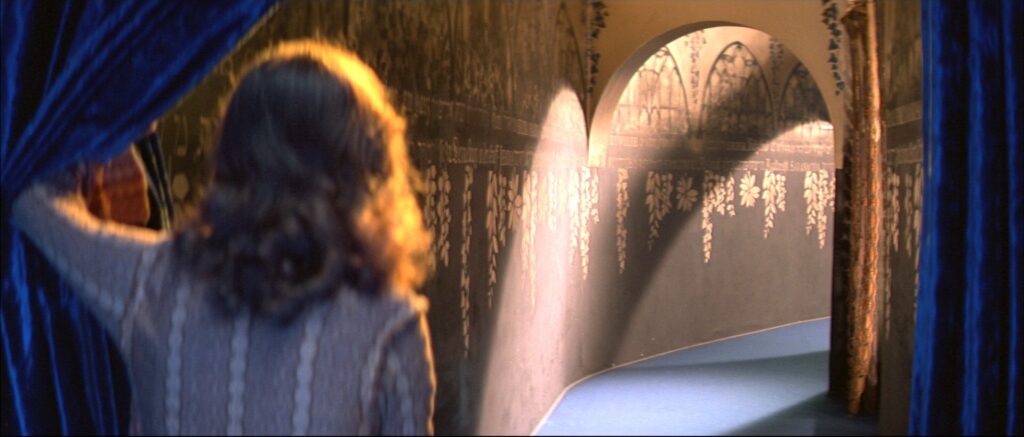
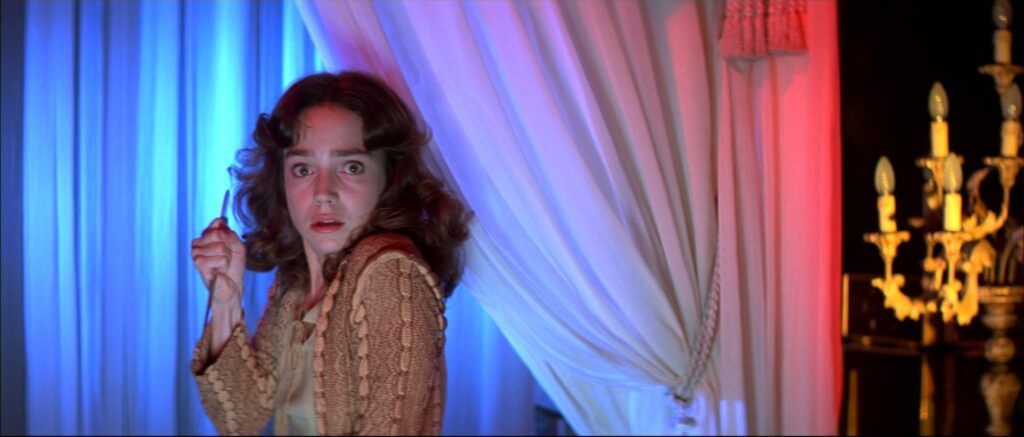
The color. My god, the color. Argento and cinematographer Luciano Tovoli made the decision to shoot the film using a rare, discontinued Technicolor process called IB (Imbibition) Technicolor — the same process used in Snow White and early Hollywood musicals — which produces colors that are supersaturated, almost hallucinatory. The reds are the reddest reds you’ve ever seen. The blues are electric. The greens glow. Nothing looks like real life, and that’s completely the point. Every frame is lit and colored to feel like the inside of a fairytale gone terribly wrong.
Goblin’s score is basically a horror movie unto itself. The Italian prog-rock band Goblin composed and performed the film’s soundtrack, and it’s one of the most iconic pieces of horror music ever created. It opens with whispered voices, a simple, creeping melody on bells and piano, and then gradually builds into something that sounds genuinely unhinged — heavy metal drums, distorted guitars, shrieking vocals, and a theme that loops and evolves throughout the film in a way that gets under your skin and stays there. Argento apparently had Goblin record the music before filming so he could play it on set while shooting, to put the cast and crew in the right headspace. It shows.
The opening sequence is one of the greatest in horror history. The first twenty minutes of Suspiria — from Suzy’s arrival at the airport through to the aftermath of the first murder — is essentially a horror short film in itself. Argento throws everything at you immediately: the music at full volume, the rain, the terror, the colors, the shocking violence. It tells you exactly what kind of film this is going to be, right from the start, with zero apology.
It’s deliberately and proudly illogical. Suspiria doesn’t follow the rules of a normal horror narrative — characters make inexplicable decisions, the rules of the world shift, the geography of the school is impossible, things happen because they feel right rather than because they make sense. Argento was drawing consciously from fairy tales and nightmare logic, not thriller craft. Once you accept that and stop trying to apply real-world logic to it, the film opens up completely.
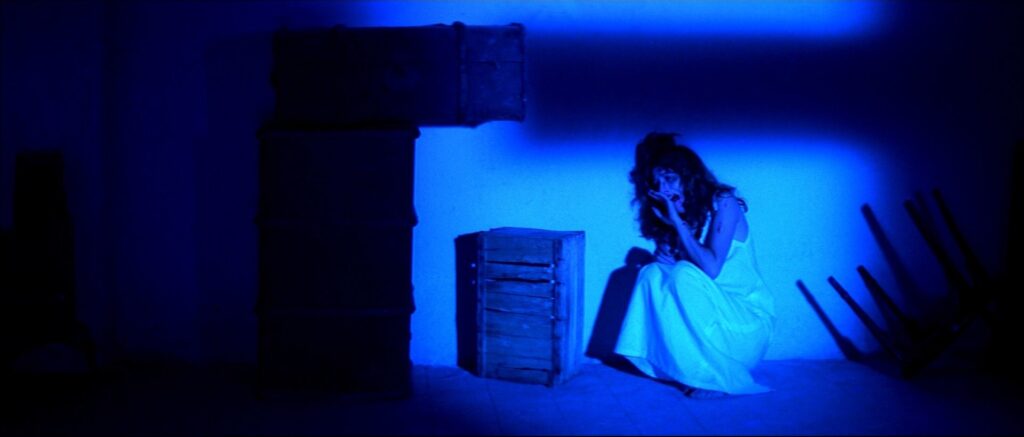
Jessica Harper is the perfect protagonist for this kind of film. She has this quality of wide-eyed, fragile determination — she’s scared but she keeps going, she notices things aren’t right but can’t quite put them together, and she’s easy to project onto without being passive. Her face communicates confusion and dread in a way that carries you through even the film’s most abstract stretches.
The Reception
Suspiria was a significant commercial success in Italy on its release in 1977 and quickly found an international audience drawn to its extreme visual style and reputation for intense, stylized horror. It became one of the defining works of the giallo genre — the Italian style of horror-thriller characterized by elaborate murder sequences, vivid visuals, and mystery plotting — and helped cement Dario Argento’s international reputation as one of horror’s great stylists.
Critically, its reception has only grown more enthusiastic over the decades. It holds a very strong critical reputation and consistently appears on lists of the greatest horror films ever made, including frequent appearances on Sight & Sound and other major critical polls. Roger Ebert famously described it as a film that works on a “primal, visceral” level rather than an intellectual one — which is about as accurate a description as you’ll find.
It was remade in 2018 by director Luca Guadagnino with Tilda Swinton and Dakota Johnson in a version that’s genuinely interesting and worth watching in its own right — but which takes the premise in such a completely different direction that it’s really its own separate thing entirely. The original remains the original.
The Legacy
Suspiria is one of those films that shows up constantly in discussions of horror, visual filmmaking, production design, and cinematography because it genuinely advanced what was thought possible in each of those areas. Its influence on horror aesthetics — the idea that a film can prioritize color, sound, and atmosphere over narrative coherence and still be completely effective — can be felt in everything from music videos to contemporary art house horror.
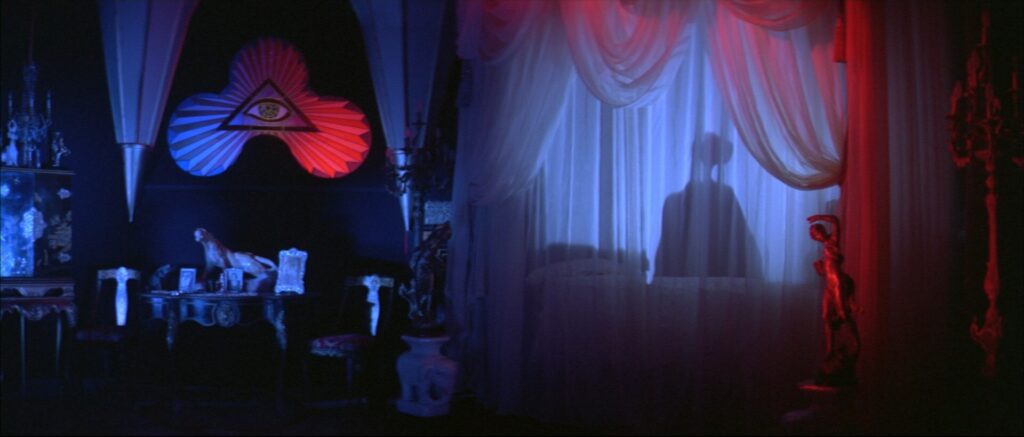
It also launched a loose trilogy from Argento known as the Three Mothers trilogy, followed by Inferno (1980) and The Mother of Tears (2007), both exploring the same mythology of three ancient witches. Suspiria is comfortably the strongest of the three and the one that’s become genuinely iconic.
Goblin’s soundtrack has taken on a life of its own entirely, performed live at screenings around the world and cited as an influence by musicians across genres for decades.
If you’re fascinated by horror films that prioritize bold visual style over conventional storytelling, don’t miss our guide to House (1977)—another unforgettable cult classic released the very same year.
Should You Watch It?
Absolutely yes. Even if you’re not usually into horror, Suspiria is worth watching as a purely visual and sensory experience. There is nothing that looks or sounds quite like it. It’s one of those films that reminds you what cinema can do when a filmmaker decides to throw conventional rules out the window and just commit fully to a vision, however strange and extreme that vision might be.
Watch it as loud and as dark as possible. Let the colors and the music take over. Don’t try to logic it out. Just go with it.
“Bad luck isn’t brought by broken mirrors, but by broken minds.”
— Miss Tanner, Suspiria