Here’s a piece of trivia that’ll make you want to watch this film immediately: Stanley Kubrick cited Funeral Parade of Roses as a direct influence on A Clockwork Orange. Kubrick, one of the most meticulous filmmakers who ever lived, watched this chaotic, rule-shattering Japanese underground film and took notes. That alone tells you everything you need to know about how genuinely ahead of its time this movie was.
The Basics
- Title: Funeral Parade of Roses (薔薇の葬列 / Bara no Sōretsu)
- Year: 1969
- Director: Toshio Matsumoto
- Producer: Koji Wakamatsu, Narimasa Fujimoto
- Screenplay: Toshio Matsumoto
- Stars: Pîtâ (Peter), Osamu Ogasawara, Yoshimi Jô, Emiko Azuma, Toyosaburo Uchiyama
- Cinematography: Tatsuo Suzuki
- Music: Various / experimental
- Runtime: 105 minutes
- Genre: Experimental / Drama / Underground Cinema
- Country: Japan
- Studio: ATG (Art Theatre Guild)
Source: IMDB
What Is Funeral Parade of Roses (1969) About?
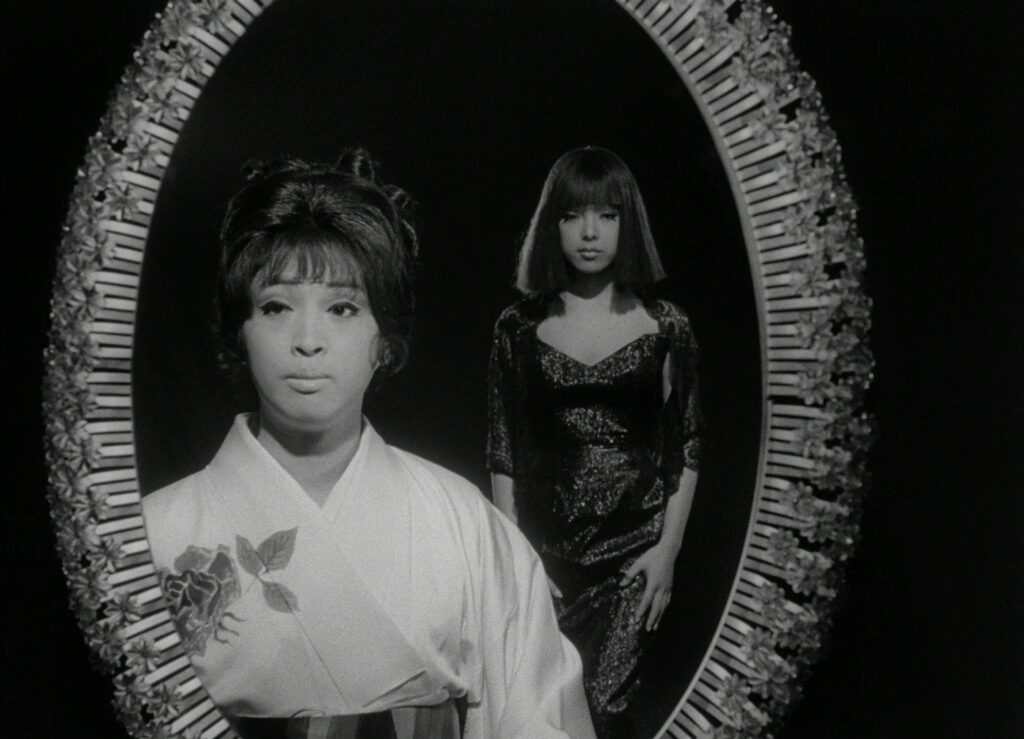
The film follows Eddie (played by the extraordinary Pîtâ, known simply as “Peter”), a young gay trans woman working as a hostess at a gay bar in late-1960s Tokyo called the Genet — named after the French writer Jean Genet, which already tells you the kind of cultural world this film is operating in. Eddie is beautiful, bold, and in the middle of a power struggle with the bar’s current mistress over the affection of their shared lover, the club’s owner.
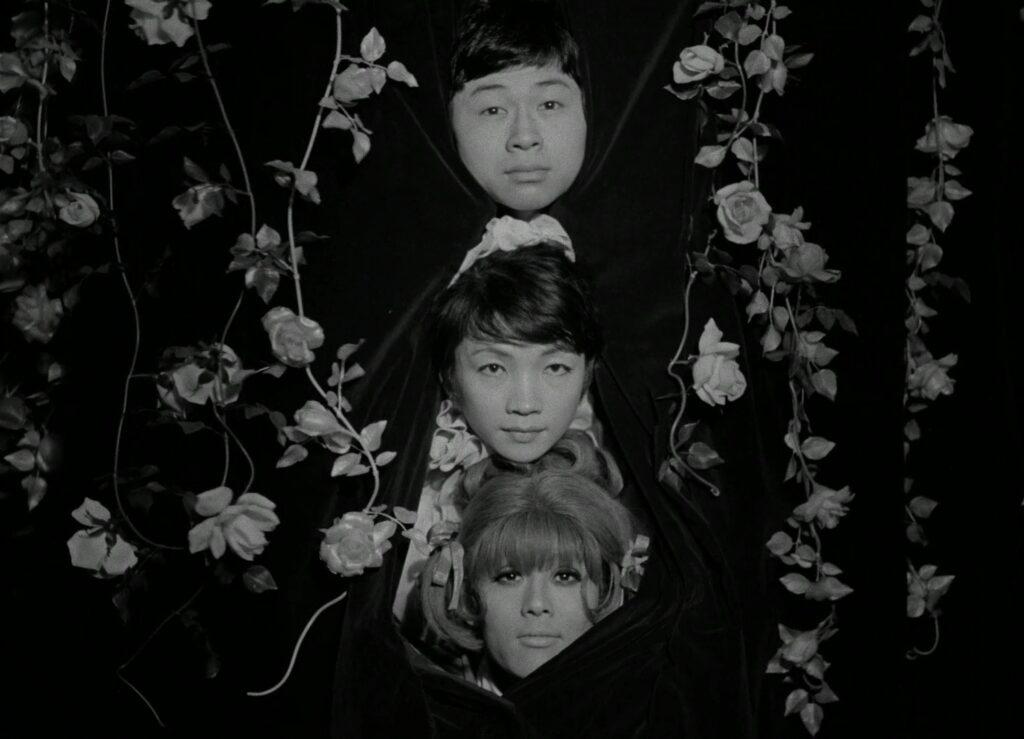
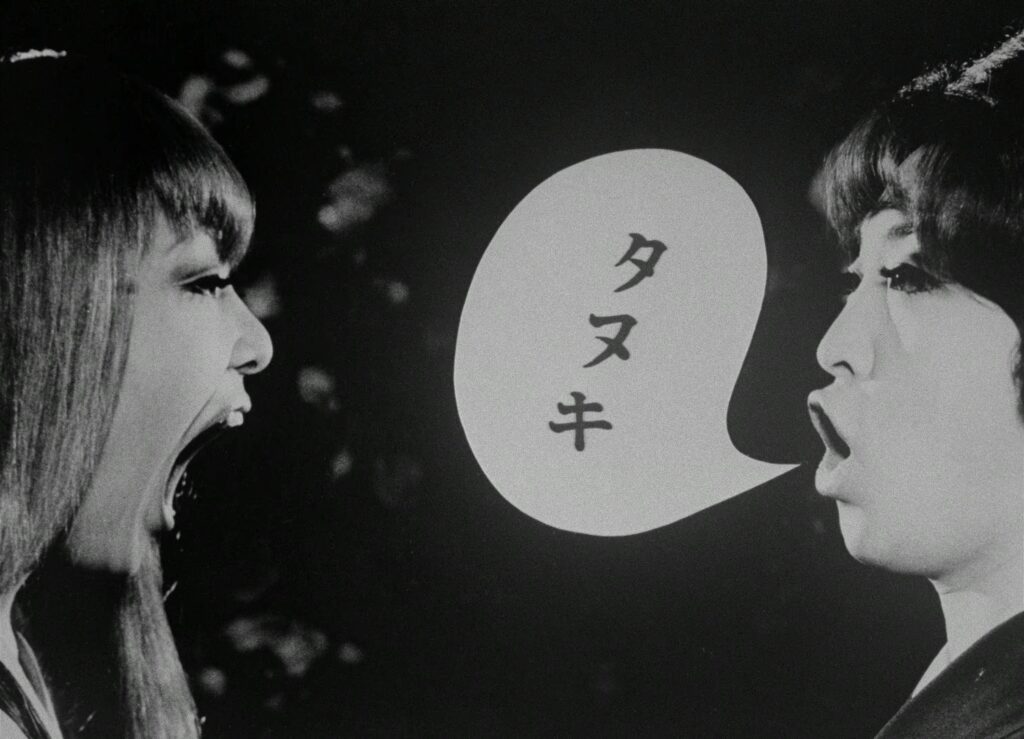
On the surface it sounds like a melodrama. But Funeral Parade of Roses is anything but conventional. Matsumoto tears the story apart and reassembles it out of order, interrupting scenes with documentary footage of the real Tokyo gay underground, sudden freeze frames, fourth-wall breaks where cast members are interviewed on camera about their own lives and identities, avant-garde filmmaking techniques borrowed from Godard and the French New Wave, and eventually a third-act revelation straight out of Oedipus Rex that reframes everything you’ve just watched.
It’s a film about identity, desire, violence, and what it means to exist outside the accepted boundaries of society — told in the most formally inventive way imaginable.
Why Funeral Parade of Roses (1969) Still Feels Radical
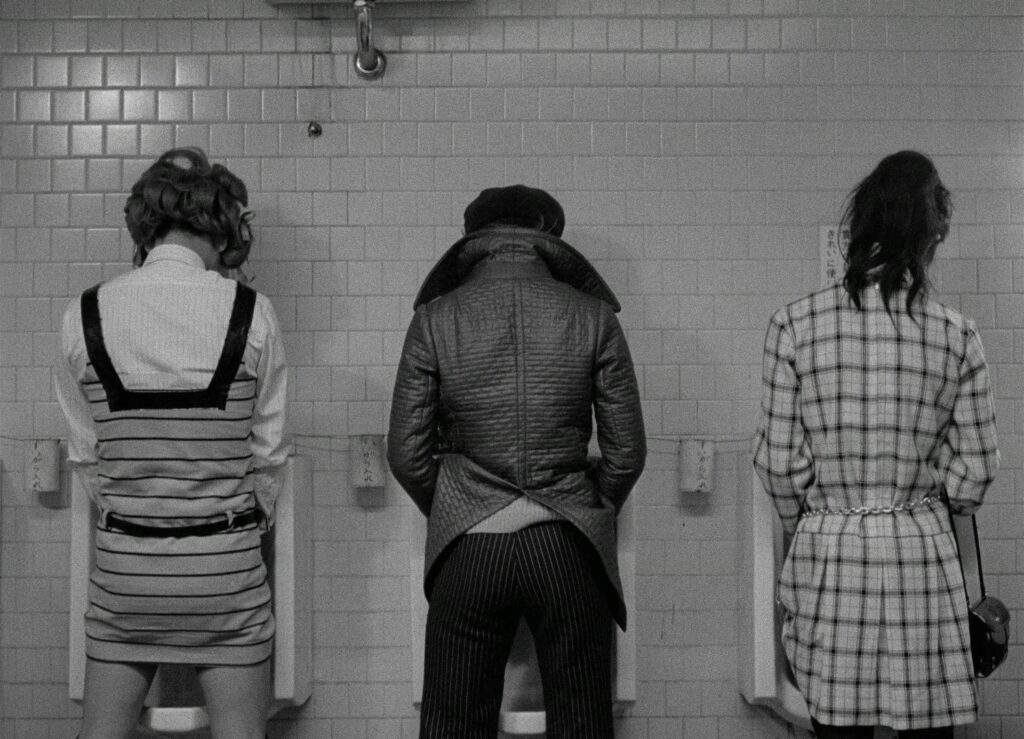
The casting was genuinely revolutionary for 1969. Pîtâ — the actor who plays Eddie — was a real figure in Tokyo’s gay underground scene, as were many of the film’s other cast members. Matsumoto didn’t cast straight actors in “queer roles” and didn’t treat gay and trans identity as a subject of pity, curiosity, or moral judgment. He simply put these people on screen and let them be fully human, complex, and alive. For a film made in 1969 — anywhere in the world, let alone Japan — that was extraordinary.
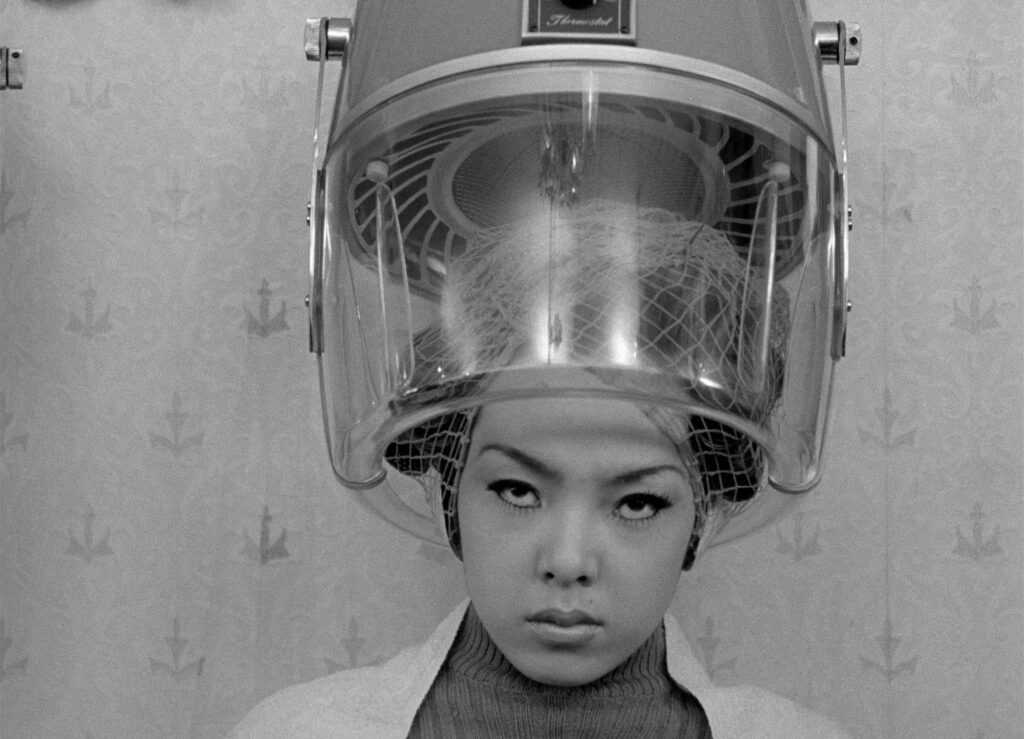
The form matches the content perfectly. The fragmented, non-linear structure isn’t just stylistic showing-off — it mirrors the fractured, underground, countercultural world the film inhabits. The characters exist on the margins of Japanese society, and the film itself exists on the margins of conventional cinema. The style and the story are saying the same thing.
The documentary interruptions are genuinely fascinating. Throughout the fictional narrative, Matsumoto cuts to what appear to be real interviews with cast members, real footage of Tokyo’s gay bars and countercultural spaces, real conversations about identity and life. The line between documentary and fiction blurs constantly, and that blur is the point — these are real people, real lives, and the fictional story Matsumoto is telling is built on and around that reality.
Pîtâ’s performance is astonishing. There’s a presence and naturalness to how he inhabits Eddie that feels completely modern — nothing about it reads as dated or theatrical in the way a lot of 1960s acting can. Eddie is funny, vulnerable, fierce, and heartbreaking, sometimes all in the same scene, and Pîtâ carries all of it with remarkable ease.
The Kubrick connection is real and significant. Kubrick watched Funeral Parade of Roses while developing A Clockwork Orange and was particularly drawn to its editing techniques, its use of music, and its visual energy. You can see traces of it if you watch both films back to back — the rapid editing, the confrontational framing, the way both films use style as a weapon. It’s a direct line of influence from Tokyo’s underground to one of Hollywood’s most iconic films.
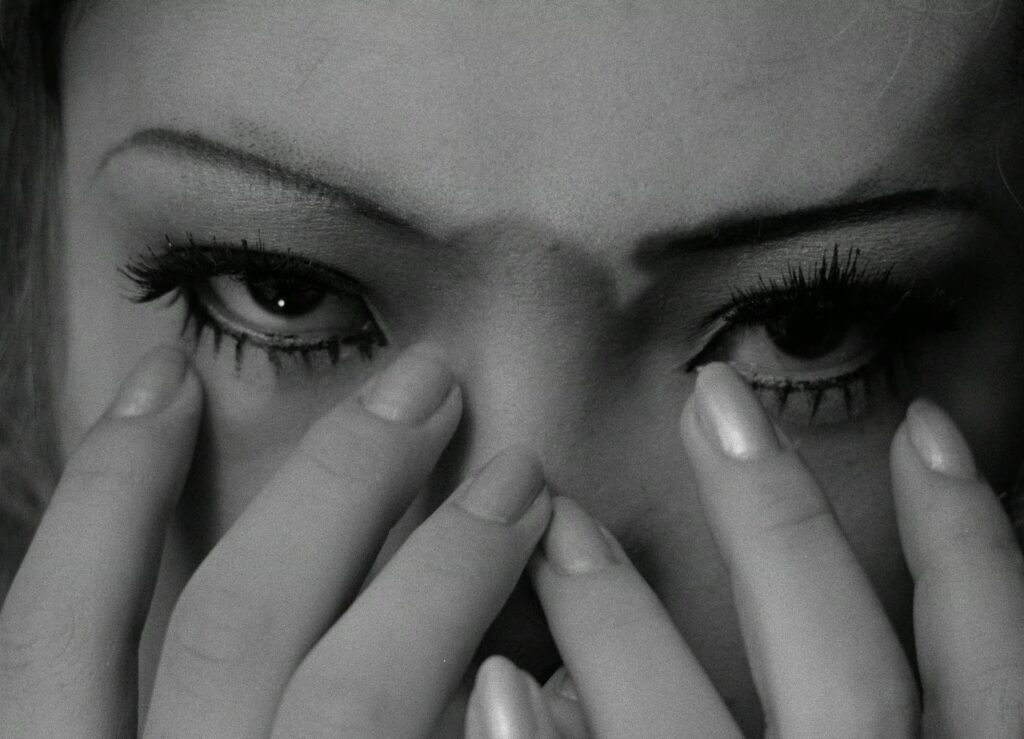
The ending hits like a truck. Without spoiling the specifics — the film builds toward a revelation that’s rooted in Greek tragedy, specifically Oedipus Rex, and Matsumoto executes it with a blunt, almost brutal directness that lands hard after over an hour of formally adventurous storytelling. It’s the moment where the film’s playfulness drops away and you understand the weight underneath everything.
The Reception
Funeral Parade of Roses was a product of the Art Theatre Guild (ATG), Japan’s most important independent film distribution network of the 1960s and 70s, which supported and distributed challenging, non-commercial Japanese cinema at a time when the major studios had little interest in experimental work. ATG was responsible for some of the most adventurous Japanese films of that era, and Funeral Parade of Roses is among its most celebrated titles.
The film was recognized immediately within Japanese underground cinema circles as a landmark work, though it remained largely unknown internationally for decades. Criterion Collection’s eventual restoration and release brought it to wider global audiences, and it has since been embraced by critics and cinephiles as one of the essential works of 1960s world cinema — a film that belongs in conversations not just about Japanese film but about the global experimental cinema movement of that decade, alongside Godard, Cassavetes, and the Czech New Wave.
The Legacy
Funeral Parade of Roses stands as one of the most important films in the history of Japanese queer cinema and experimental filmmaking simultaneously — two things that don’t always intersect so powerfully. It’s studied in film schools for its formal techniques as much as for its cultural significance, and the two are inseparable in this case.
It also represents a specific moment in Japanese cultural history — the late 1960s, a time of enormous political upheaval, student protests, and countercultural ferment — and captures the energy of that moment with an immediacy and authenticity that more polished, mainstream films of the era couldn’t touch.
Director Toshio Matsumoto went on to make other significant experimental works, but Funeral Parade of Roses remains his most celebrated and widely seen film by a considerable distance.
If you’re interested in Japanese films that completely reject conventional filmmaking, don’t miss our guide to House (1977)—another unforgettable cult classic that pushes cinematic experimentation in a wildly different direction.
Should You Watch It?
If you’re into experimental cinema, 1960s counterculture, formally adventurous filmmaking, or just films that feel genuinely alive and dangerous — yes, absolutely. This is the kind of film that reminds you that cinema, at its most radical, is capable of doing things no other art form can.
It’s not always easy viewing — the non-linear structure requires you to pay attention, and the film never holds your hand or explains itself. But it rewards patience and curiosity enormously.
And if you’re a fan of A Clockwork Orange and have never seen the film that partially inspired it? Consider this essential homework.
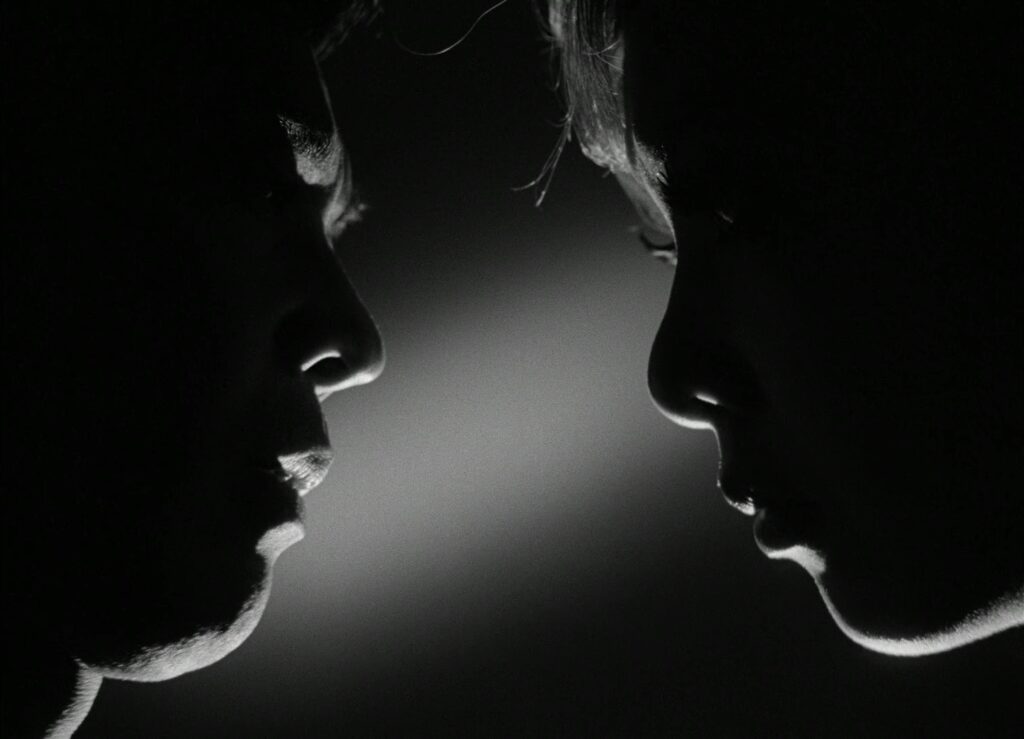
“I want to live as I am, not as others expect me to be.”
— Eddie, Funeral Parade of Roses