Picture a movie that looks like it was built inside a dollhouse, moves at the pace of a perfectly timed farce, and somehow still leaves you a little sad about the passage of time and the death of a civilization. That movie exists. It’s The Grand Budapest Hotel, and it’s probably the most purely enjoyable thing Wes Anderson has ever made.
The Basics
- Title: The Grand Budapest Hotel
- Year: 2014
- Director: Wes Anderson
- Producer: Wes Anderson, Scott Rudin, Steven Rales, Jeremy Dawson
- Screenplay: Wes Anderson (story by Wes Anderson and Hugo Guinness)
- Stars: Ralph Fiennes, Tony Revolori, Saoirse Ronan, F. Murray Abraham, Mathieu Amalric, Adrien Brody, Willem Dafoe, Jeff Goldblum, Harvey Keitel, Jude Law, Bill Murray, Edward Norton, Tilda Swinton
- Cinematography: Robert Yeoman
- Music: Alexandre Desplat
- Runtime: 99 minutes
- Genre: Comedy / Drama / Adventure
- Studio: American Empirical Pictures / Indian Paintbrush / Scott Rudin Productions / Fox Searchlight Pictures
Source: IMDB
The Grand Budapest Hotel Plot & Premise
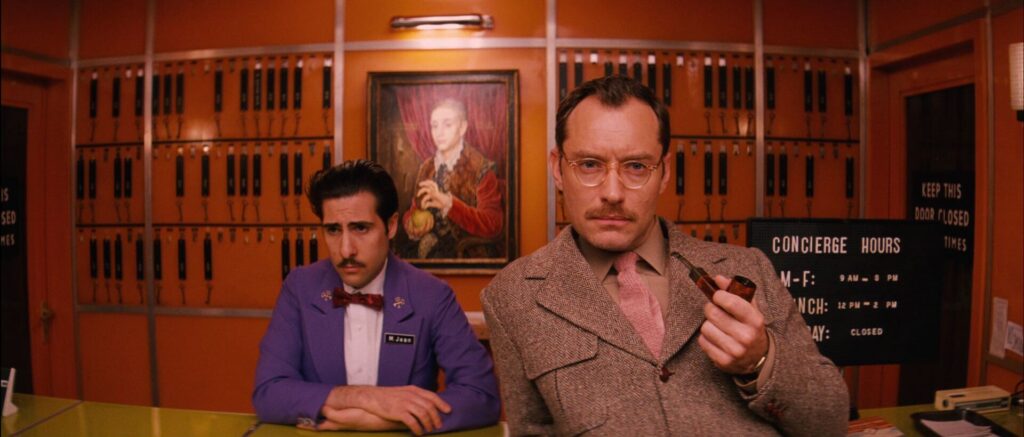
The film is structured as a story within a story within a story, which sounds more complicated than it plays out. The innermost layer is the main event: the fictional European country of Zubrowka, sometime in the 1930s. The Grand Budapest Hotel is the most magnificent establishment in the region, run by concierge M. Gustave H. (Ralph Fiennes) with an almost religious devotion to elegance, hospitality, and — not incidentally — the personal needs of his elderly female guests. All of them.
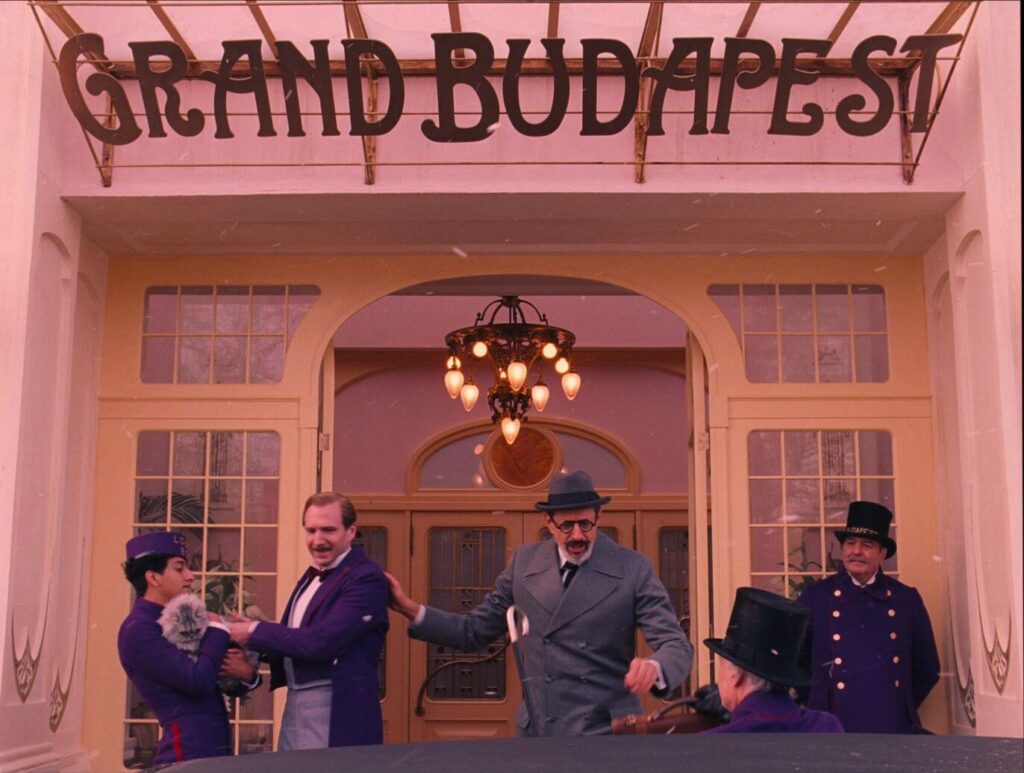
When one of those guests, the enormously wealthy Madame D. (Tilda Swinton, barely recognizable under elaborate aging makeup), dies under suspicious circumstances and leaves Gustave a priceless painting called Boy with Apple, her furious son Dmitri (Adrien Brody) and his terrifying henchman Jopling (Willem Dafoe) decide Gustave is a murderer and a thief.
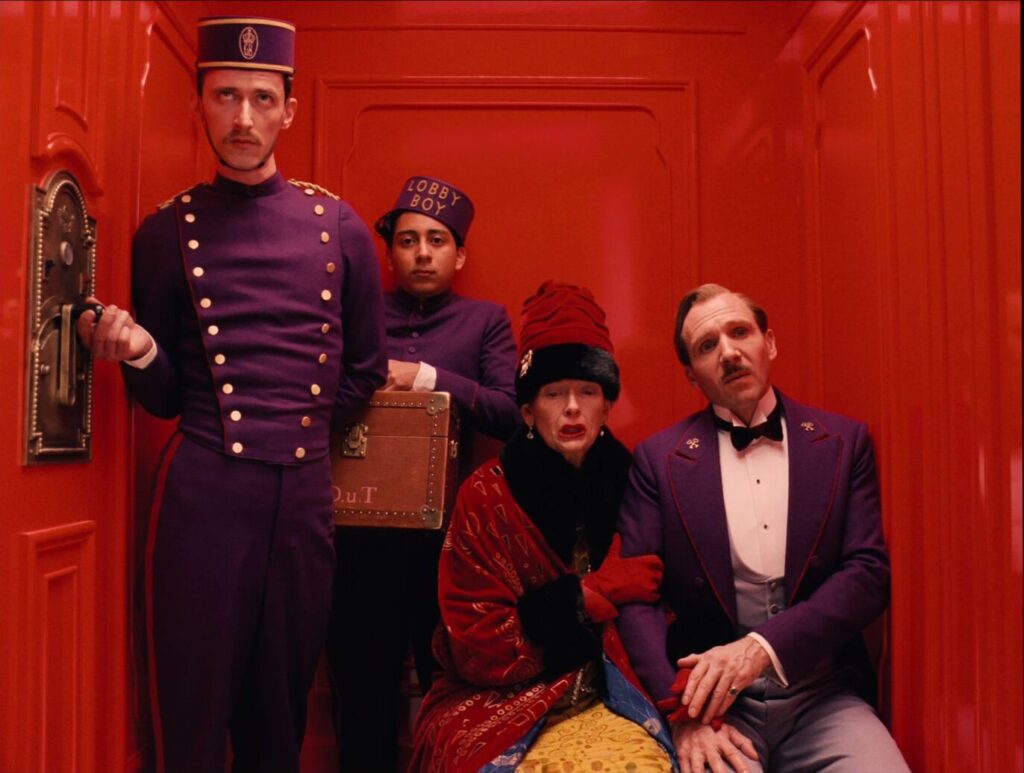
Gustave goes on the run, aided by his devoted lobby boy Zero Moustafa (Tony Revolori), and what follows is a comedy of errors involving prison breaks, ski chases, a secret society of concierges, a murder mystery, stolen paintings, and pastries.
Underneath the caper and the farce, there’s something closer to an elegy for a world that no longer exists.
What Makes The Grand Budapest Hotel So Irresistible
Ralph Fiennes is a revelation. Before this film, most people knew him as a serious dramatic actor — Voldemort, Amon Göth in Schindler’s List, the brooding lead in The English Patient. Then he shows up as M. Gustave and turns out to be one of the funniest, most charming screen presences of the decade. His comic timing is precise, his delivery of Anderson’s dialogue has a musicality to it, and underneath the wit there’s real warmth and dignity — which is what makes the film’s emotional undercurrent land. It’s one of the great comic performances in modern cinema, full stop.
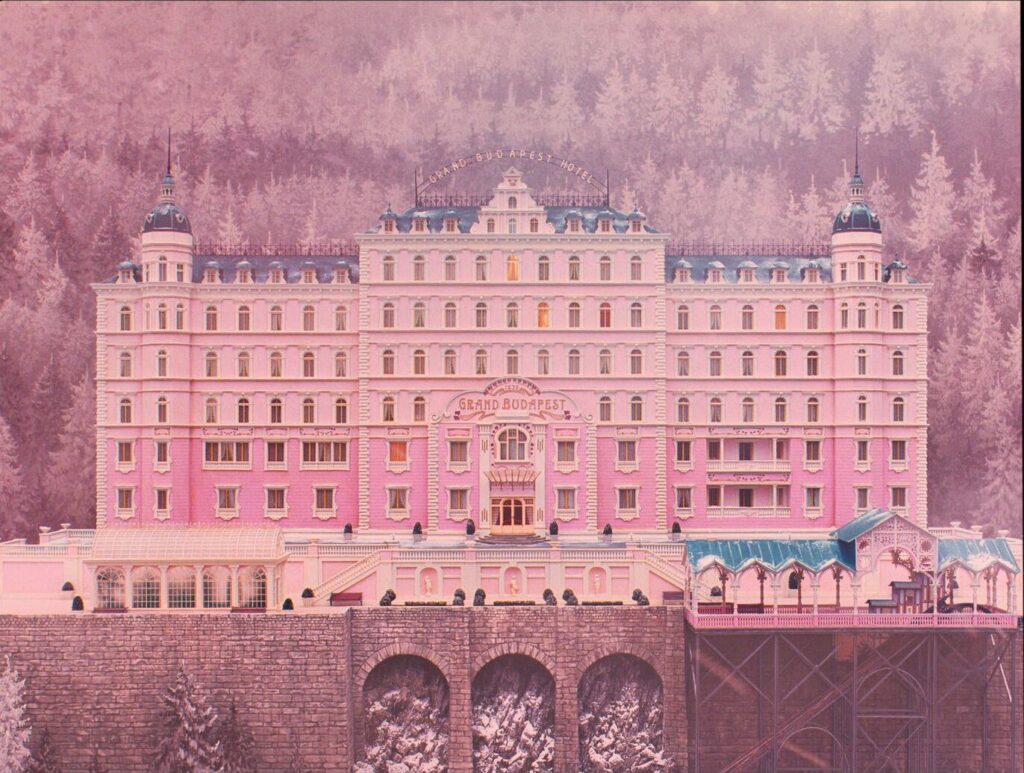
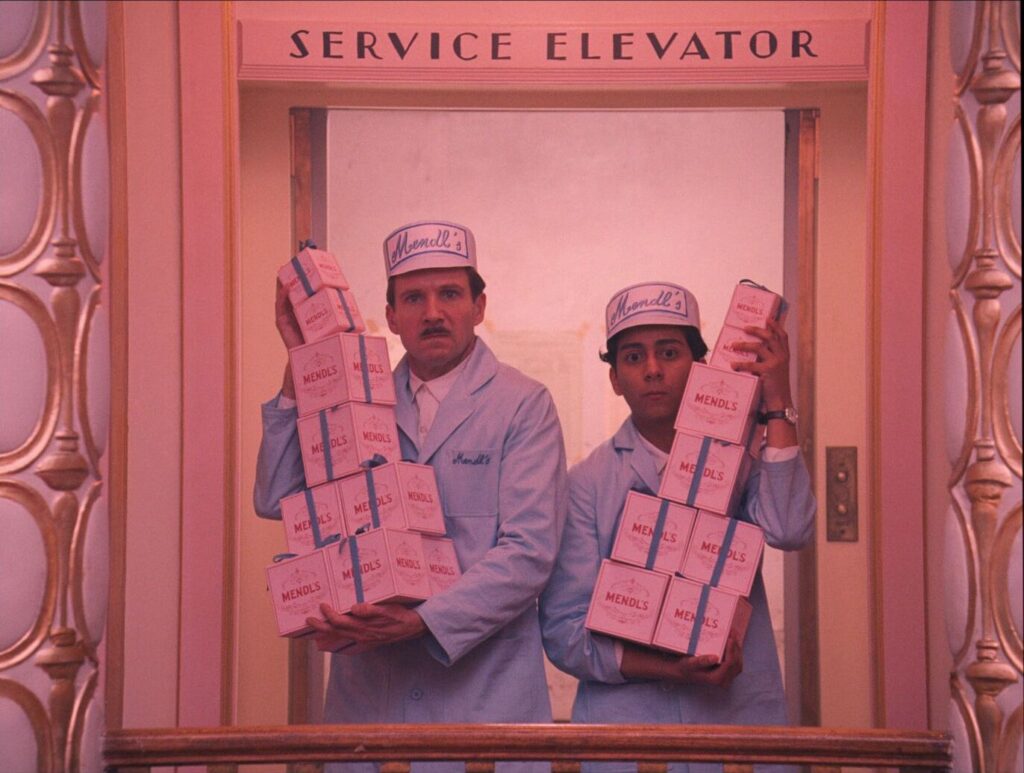
The visual design is Anderson operating at his peak. Every frame is symmetrical, color-coded, built like a tiny architectural model. The hotel itself is a triumph of production design — layers of pink and purple and gold, lobbies and lifts and corridors arranged with near-obsessive precision. The aspect ratio even shifts with the time period (1.33:1 for the ’30s sequences, 1.85:1 for the ’60s, 2.39:1 for the modern framing), the kind of detail only Anderson would think to include and only his fans would catch. If you love films that treat every frame like a painting, The Fall (2006) takes that idea even further.
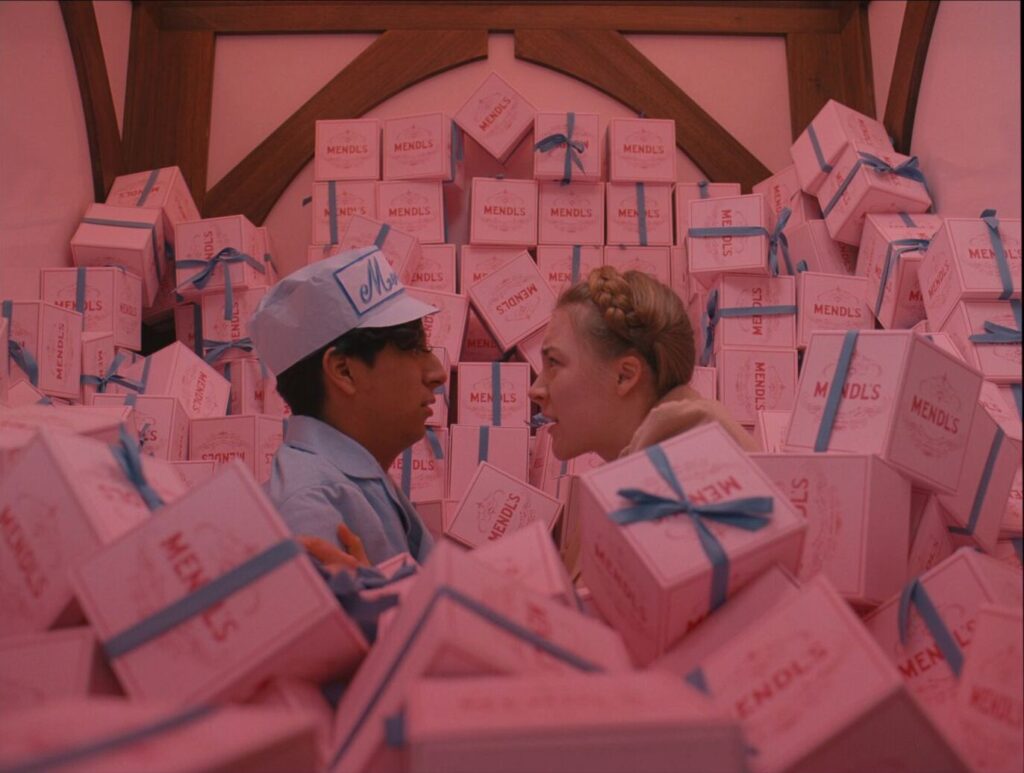
The ensemble is stacked, and everyone looks like they’re having a great time. Anderson’s regular company shows up in force — Bill Murray, Jeff Goldblum, Tilda Swinton, Owen Wilson, Willem Dafoe — alongside newcomers who fit right in. Adrien Brody plays Dmitri with a silky menace, Willem Dafoe’s Jopling is genuinely unsettling (a henchman who fights with his fingers), and Saoirse Ronan is Agatha, the pastry-shop love interest who steadies Zero. Even the smallest roles get played with visible commitment.
Alexandre Desplat’s score does real work. He built it around Eastern European folk instruments — zithers, balalaikas, cimbaloms — giving the film a sound that’s distinct and a little melancholy. It won the Oscar for Best Original Score, and it earns it: elegant, funny, and carrying a hint of the doom closing in around the story.
It’s funnier than it has any right to be. Anderson’s films can sometimes feel airless, beautiful to look at but emotionally sealed off. This one has more laughs per minute than almost any comedy from that year, and the humor comes from several directions at once — verbal wit, physical comedy, absurdist escalation, reaction shots timed to the second. The prison break sequence alone is a small masterclass in comic construction.
But there’s a real sadness underneath all of it. At its core, the film is about the end of a civilization — pre-World War II European elegance being consumed by fascism and violence, represented by the army in grey uniforms that appears on the horizon.
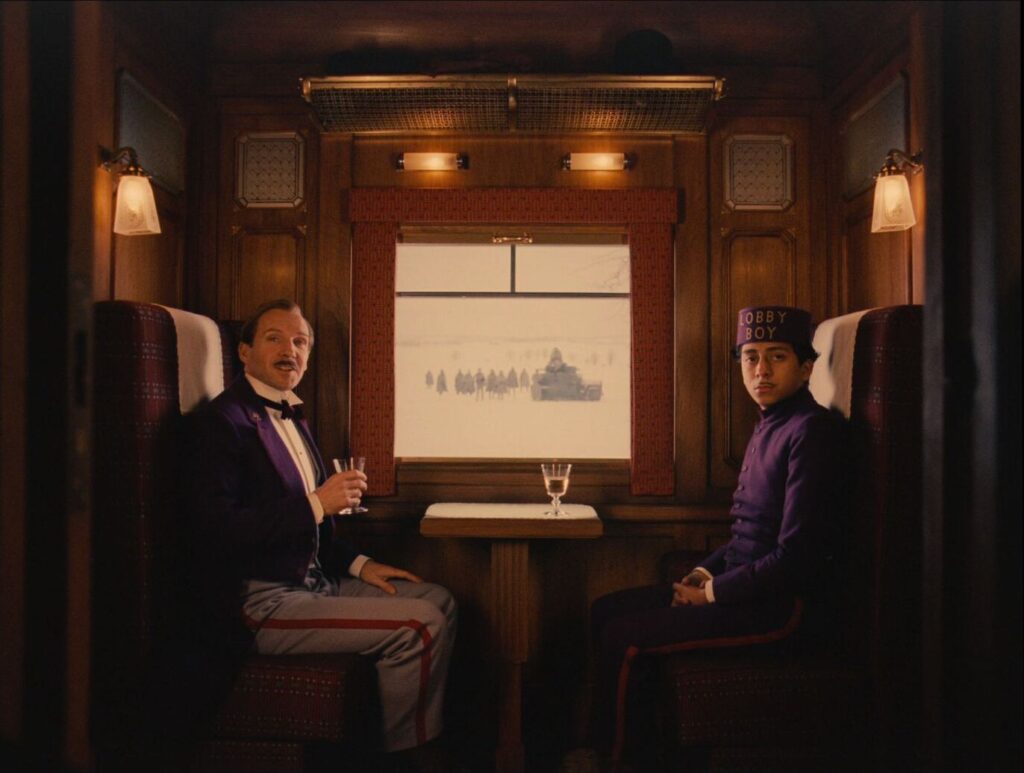
Gustave himself is a kind of fantasy figure: grace, civilization, an almost absurd commitment to doing things properly, standing plainly out of step with the world arriving to replace him. The comedy doesn’t cancel out the sadness. They’re allowed to sit next to each other.
Critical Reception & Academy Award Wins
The Grand Budapest Hotel landed as both a critical and commercial success, a rare combination for something this stylistically specific. It won four Academy Awards — Best Costume Design, Best Production Design, Best Original Score, and Best Makeup and Hairstyling — and picked up nominations for Best Picture, Best Director, Best Original Screenplay, and Best Cinematography, nine total, the most of any film that year.
It sits at 91% on Rotten Tomatoes and is generally counted among Anderson’s two or three best films, alongside Rushmore and The Royal Tenenbaums. It was also one of his biggest earners, taking in over $170 million worldwide on a budget of roughly $25 million.
Cultural Impact & The “Wes Anderson Aesthetic”
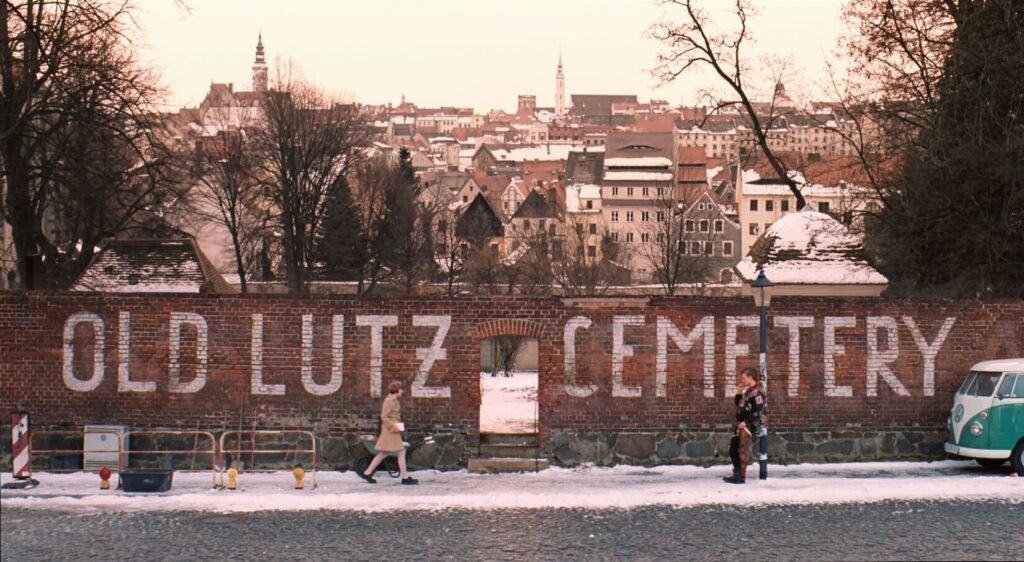
The film confirmed Wes Anderson as one of the most distinctive and genuinely beloved visual stylists working in mainstream film — distinctive enough that “Wes Anderson style” has become recognizable shorthand, spawning parodies, imitators, and a corner of TikTok devoted to real-life places that happen to look like they wandered out of one of his movies.
It also introduced Ralph Fiennes to a generation who mostly knew him as the villain in Harry Potter, and gave Tony Revolori a breakout as the quietly earnest Zero.
The invented world of Zubrowka — the Society of the Crossed Keys, the pastry shop Mendl’s, the hotel itself — has taken on a life of its own among fans, the kind of world that feels like it has an entire history behind it, one people keep wanting to explore further.
Is The Grand Budapest Hotel Worth Watching?
Yes, easily. This is one of the most purely fun films of the 2010s — the kind you put on when you want to feel good without switching your brain off entirely. It’s smart, funny, beautiful, and it moves fast enough that you’re never sitting around waiting for something to happen.
If you’ve bounced off Wes Anderson before because his films felt too precious or too slow, try this one. It’s his most kinetic, most plot-driven, most straightforwardly funny work, and probably the easiest entry point into his filmography. If you already love his films, this is the one where all his tendencies finally line up.
“You see, there are still faint glimmers of civilization left in this barbaric slaughterhouse that was once known as humanity. Indeed that is what we provide in our own modest, humble, insignificant… oh, fuck it.”
— M. Gustave H., The Grand Budapest Hotel