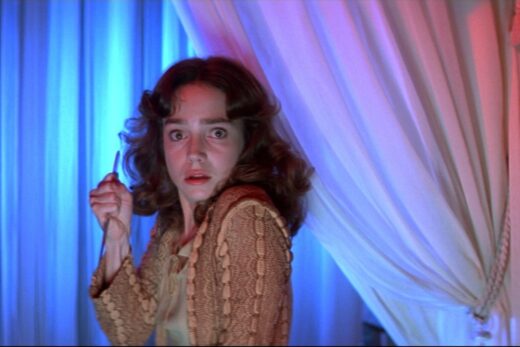
How do you describe Possession (1981) to someone who hasn’t seen it? It’s a horror film about a marriage falling apart in Cold War Berlin. It’s a body horror film. It’s an art film. It’s a psychological breakdown on screen. It’s Isabelle Adjani giving one of the most ferocious, physically committed performances in cinema history in a subway station scene that will live rent-free in your head for the rest of your life. It’s all of these things at once, and it shouldn’t work, and it absolutely does.
The Basics
- Title: Possession
- Year: 1981
- Director: Andrzej Żuławski
- Producer: Marie-Laure Reussner, Anatole Dauman
- Screenplay: Andrzej Żuławski, Frederic Tuten
- Stars: Isabelle Adjani, Sam Neill
- Cinematography: Bruno Nuytten
- Music: Andrzej Korzyński
- Runtime: 124 minutes
- Genre: Horror / Drama / Psychological
- Country: France / West Germany
- Studio: Gaumont / Marianne Productions
Source: IMDB
What Is Possession (1981) About?
⚠️ Heads up — this piece dives deep into what Possession actually is and how it ends. If you want to go in cold, watch it first.
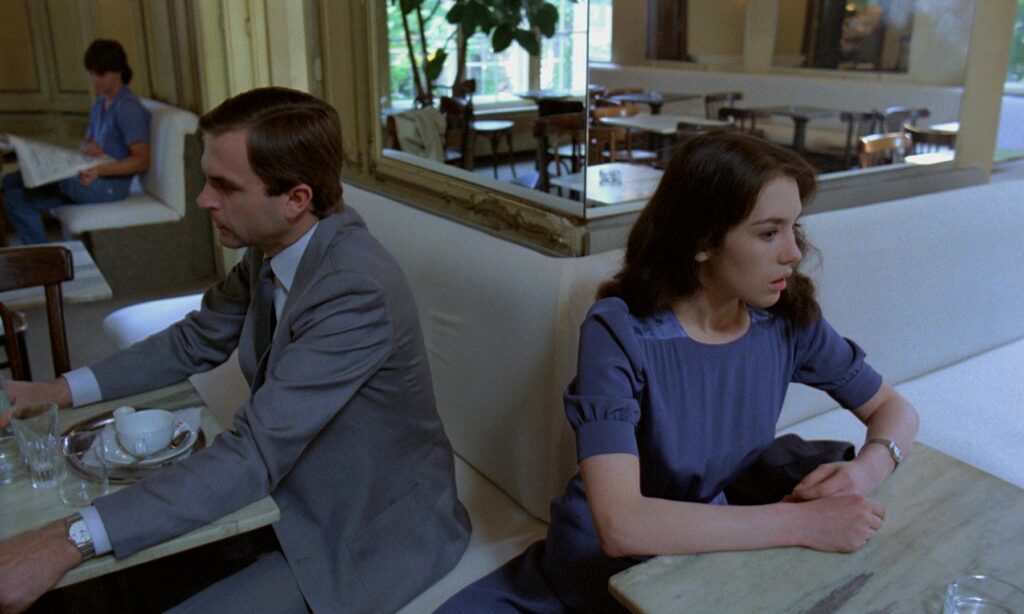
Mark (Sam Neill) returns to West Berlin after a mysterious overseas assignment — possibly spy work, the film is deliberately vague — to find that his wife Anna (Isabelle Adjani) wants a divorce. She’s cold, distant, barely present. She’s hiding something. Their young son Bob sits in the middle of it all, absorbing everything.
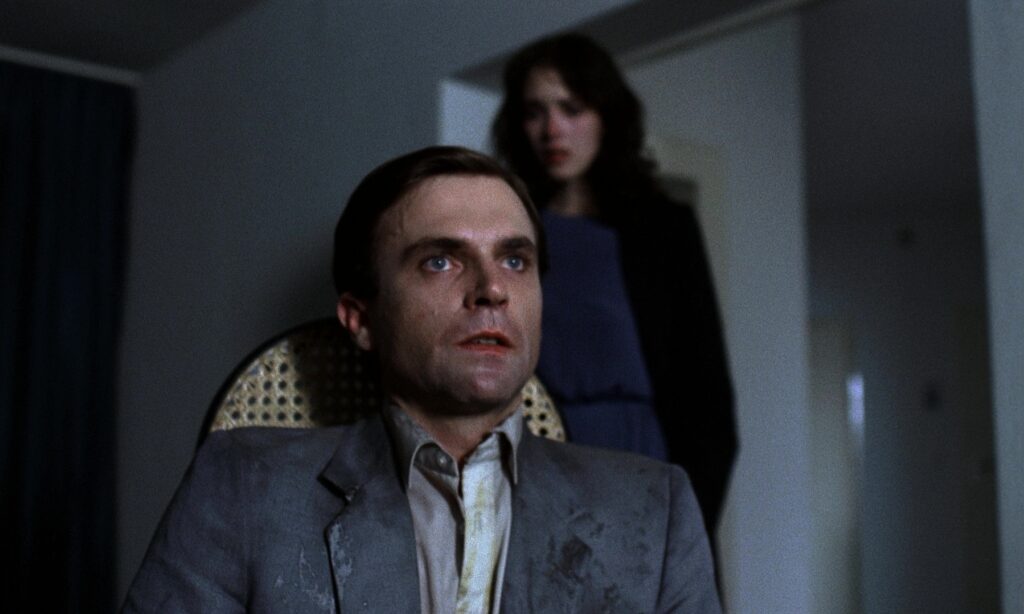
What follows is a savage, spiraling portrait of a marriage coming apart — the jealousy, the violence, the desperation, the way two people who once loved each other can become genuinely terrifying to one another. Mark tries to find out what Anna is hiding. He hires a detective. The detective ends up dead. And what Anna is hiding turns out to be something that exists well beyond the boundaries of a normal infidelity storyline.
Because Anna has a lover. And her lover is — to put it plainly — some kind of tentacled creature she’s been keeping in an apartment across town. She tends to it. She loves it. It grows. And as it grows, it begins to look more and more like Mark.
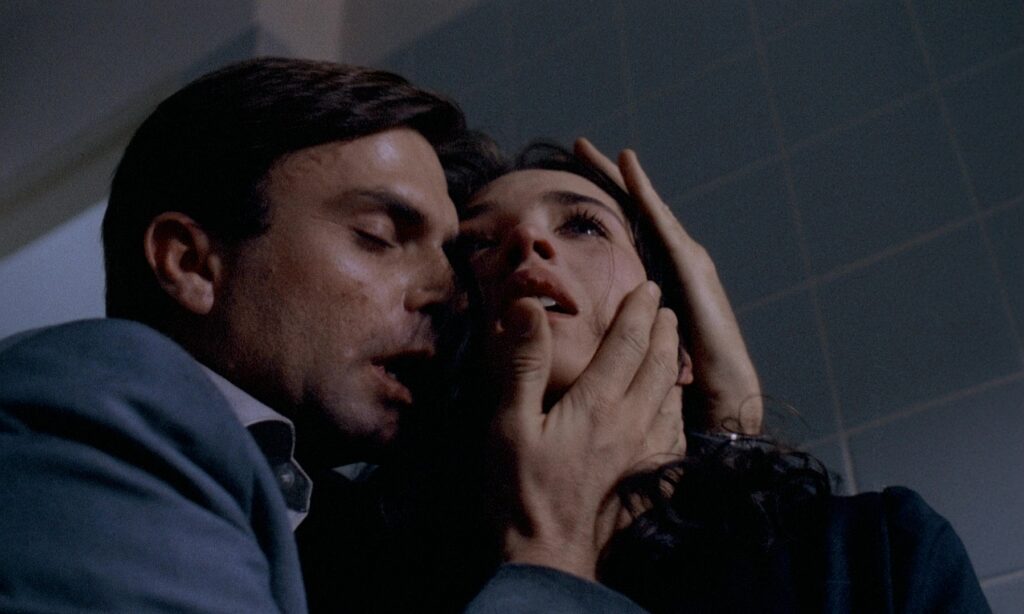
If that sounds completely insane: yes. It is. But it’s also completely coherent on a metaphorical level, once you understand that Żuławski made this film immediately after his own real-life divorce and essentially poured every ounce of his grief, rage, confusion, and heartbreak directly into it. The creature isn’t a monster in the traditional sense. It’s everything a failing marriage produces — the unnamed thing that grows between two people when love cracks and something darker takes its place.
Why Possession (1981) Is So Overwhelming
The subway scene. You will not forget the subway scene. Midway through the film, Adjani’s Anna has some kind of total breakdown in a Berlin subway station — a prolonged, physically catastrophic scene that involves screaming, convulsing, throwing herself against walls, bleeding, milk and eggs spilling everywhere, and a performance so raw and so committed that it looks less like acting and more like a genuine psychological event happening in real time. Adjani later said the scene was genuinely one of the most difficult things she’d ever done. It shows. It won her the Best Actress award at Cannes, alongside her role in Quartet the same year, and it remains one of the most talked-about single scenes in art horror.
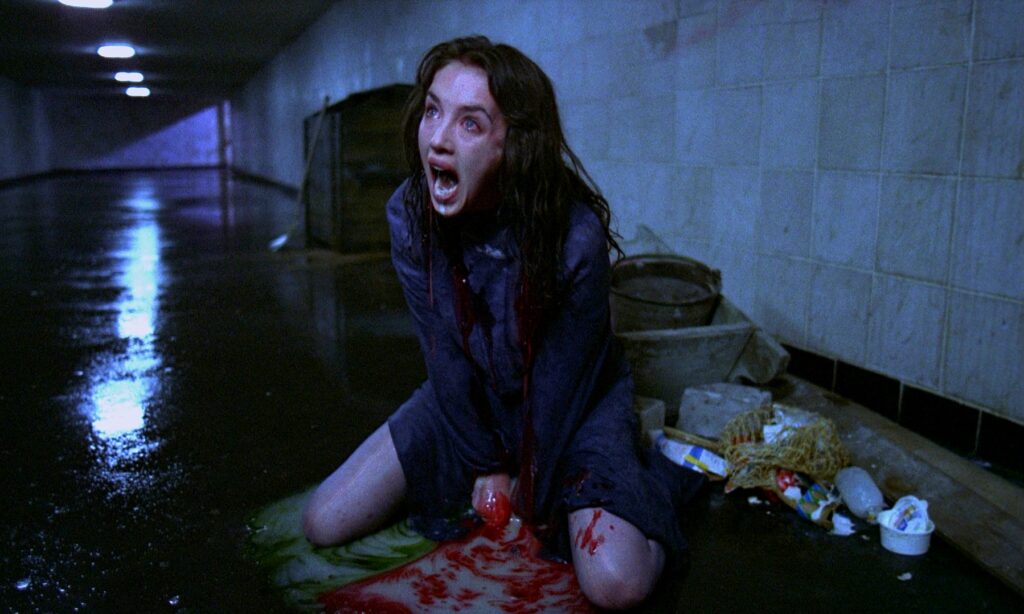
Isabelle Adjani is operating on another level entirely. The word that keeps coming up when people talk about this performance is “unhinged” — but that undersells what she’s doing. It’s not chaos for chaos’s sake. Every moment, however extreme, comes from a place of genuine emotional logic. You believe Anna completely even when what she’s doing is completely beyond belief. It’s one of the great screen performances of the 1980s, full stop.
Sam Neill matches her beat for beat. Neill — who most people know from Jurassic Park — does something remarkable here: he plays a man unraveling in real time, oscillating between aggression and helplessness and love and rage, and he never lets Mark become simply a victim or simply a villain. He’s a mess. He’s sometimes frightening. He’s also genuinely heartbroken. The film holds both things about him simultaneously.
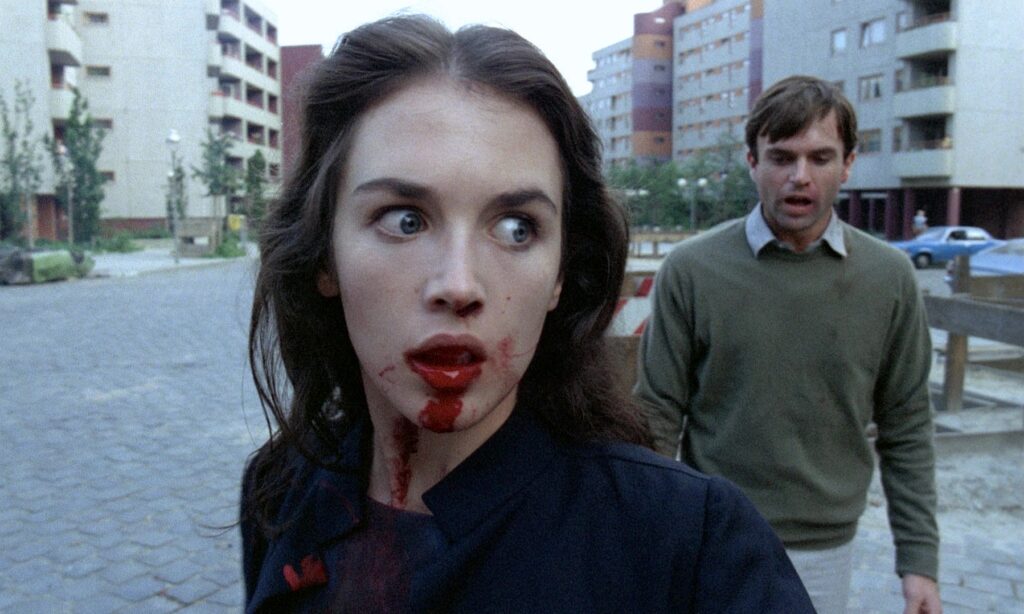
West Berlin is practically a character. Żuławski shoots the city — divided, walled, sitting in the middle of Cold War tension — with a claustrophobic intensity that mirrors the marriage at the film’s center. The Wall appears repeatedly in the background, cutting through the city the way the marriage has been cut through. The geography of the film is the geography of a relationship that has run out of room.
The body horror is genuinely effective and disgusting. The creature effects — done practically, because it’s 1981 — are legitimately gross and unsettling, and they escalate as the film progresses in a way that mirrors Anna’s increasing obsession and the thing’s increasing humanization. It’s not subtle. It’s not trying to be.
The film refuses to explain itself. What is the creature, exactly? Is it real or a manifestation of Anna’s madness? What do the doppelgängers that appear late in the film mean? What actually happened at the ending? Żuławski doesn’t answer these questions, and the film is stronger for it. Like the best horror, it operates on the logic of a dream — coherent emotionally even where it’s incoherent literally.
The Reception and the Censorship
Possession premiered at Cannes in 1981 where it won Best Actress for Isabelle Adjani and was one of the most talked-about films of the festival. Critically it was divisive — some found it overwhelming and brilliant, others found it excessive and baffling — but its extremity guaranteed it attention.
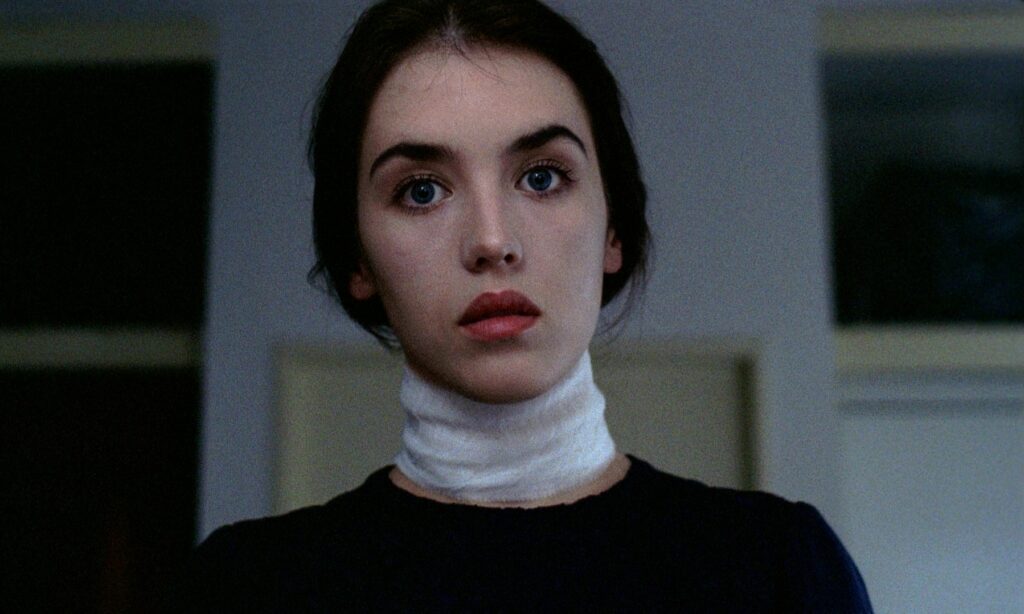
Its distribution history is complicated. In the United States, the film was cut by over 20 minutes for its American release, removing much of the psychological complexity and leaving mostly the horror elements — a butchering that explains why many American viewers who encountered it in the ’80s came away confused. The full cut is what you want, and it’s the only version widely available today.
In the UK it was banned outright as a “video nasty” — the British government’s notorious classification of films deemed too extreme for home viewing, which included Evil Dead, Suspiria, and dozens of others. The ban was eventually lifted and the film has since been properly restored and released.
Today it holds strong critical acclaim among horror and art film enthusiasts and is widely considered one of the defining works of the art horror genre — a film that takes the most extreme formal and emotional risks and somehow gets away with all of them.
The Legacy
Possession has become a major touchstone in discussions of art horror — alongside Dario Argento’s Suspiria (1977), The Wicker Man, and Don’t Look Now — as a film that refuses the separation between “serious cinema” and “genre cinema” and insists on occupying both spaces at once.
Its influence is felt in a wide range of later filmmakers drawn to horror as emotional extremity rather than simple fright — directors like Darren Aronofsky (Black Swan, mother!) clearly share DNA with what Żuławski was doing here. The idea that a body horror film could be primarily about the body horror of a failing relationship — that the monster is the marriage — is an idea that has proven enormously generative.
Andrzej Żuławski — a Polish director working in exile after his previous film was banned in Poland — never achieved mainstream recognition but remained a fierce, uncompromising voice in European cinema until his death in 2016. Possession is almost certainly the film he’ll be remembered for.
Should You Watch It?
With some genuine caveats — yes. The film contains sequences of intense violence, disturbing body horror, and emotional extremity that aren’t for everyone, and it asks you to stay with two characters who are frequently difficult to be in a room with. It’s not comfort viewing. It’s not even enjoyable in the conventional sense of the word.
But if you’re drawn to films that treat genre as a vehicle for genuine psychological and emotional depth — if you want horror that means something, that comes from somewhere real, that uses its formal extremity in service of actual ideas — Possession is essential. It’s the kind of film that exists because one person had to make it, that couldn’t have been made by committee or compromise, and that leaves a mark on everyone who actually sits with it.
Just make sure you watch the full uncut version. And clear your evening after.
“I believe in nothing. But I am afraid.”
— Mark, Possession