There are films that tell you a woman is intelligent, talented, and underestimated. And then there are films that actually show you — through every frame, every glance, every quiet scene — what it feels like to be that woman, trapped in a gilded life that fits her badly and slowly becoming aware of it. Charulata (1964) is the second kind. It’s Satyajit Ray’s most intimate and emotionally precise film, and it’s been sitting near the top of world cinema for sixty years for very good reason.
The Basics
- Title: Charulata (চারুলতা)
- Year: 1964
- Director: Satyajit Ray
- Producer: R.D. Bansal
- Screenplay: Satyajit Ray, based on the novella Nastanirh (“The Broken Nest”) by Rabindranath Tagore
- Stars: Soumitra Chatterjee, Madhabi Mukherjee, Sailen Mukherjee, Shyamal Ghosal
- Cinematography: Subrata Mitra
- Music: Satyajit Ray
- Runtime: 117 minutes
- Genre: Drama / Romance
- Country: India
- Studio: R.D.B. & Co.
Source: IMDB
What Is Charulata (1964) About?
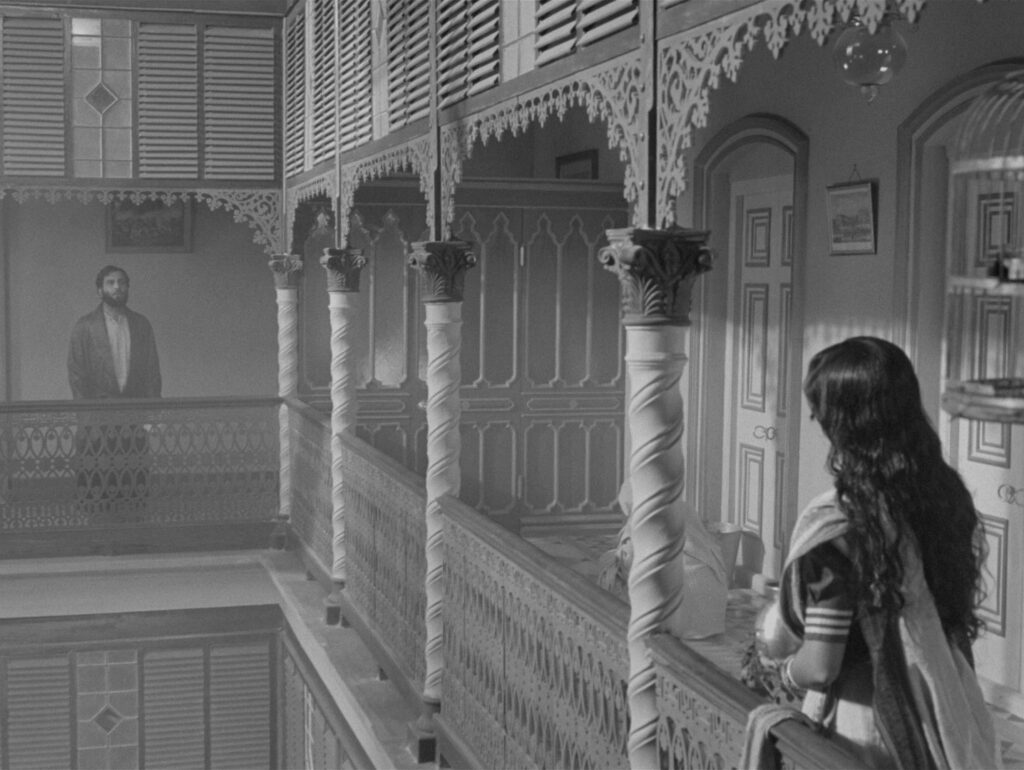
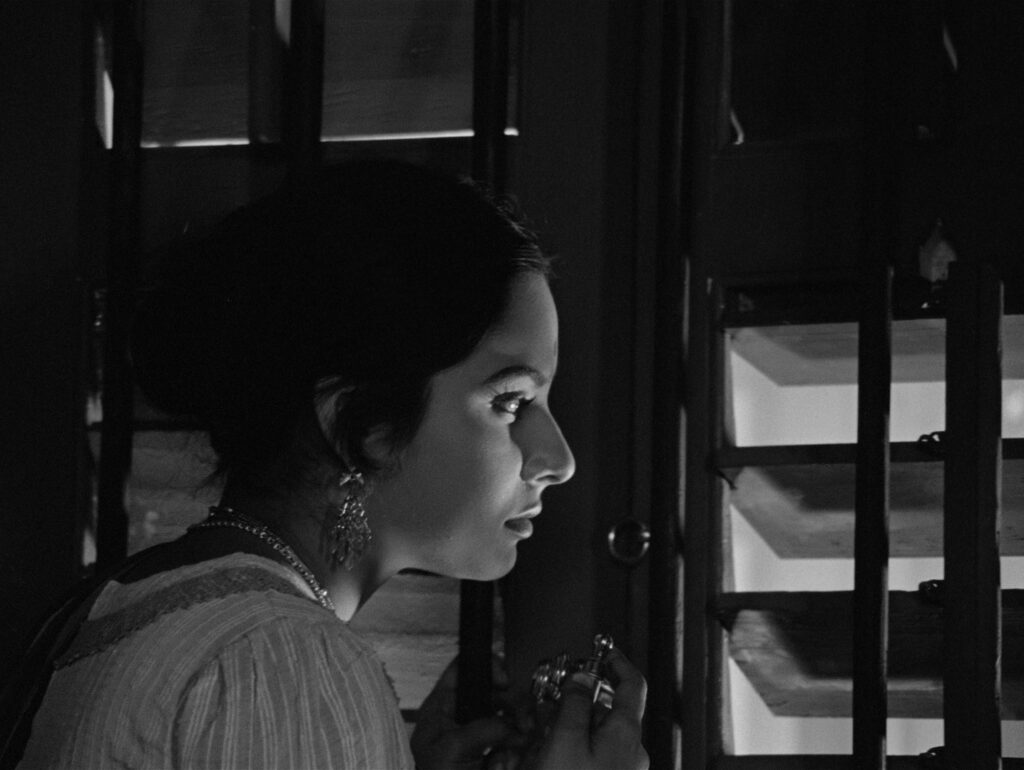
Calcutta, 1879. Charulata (Madhabi Mukherjee) is the wife of Bhupati (Sailen Mukherjee), a wealthy, well-meaning Bengali intellectual who runs a political newspaper and is consumed almost entirely by his work and his ideals. He loves Charulata in his way — but he’s barely there. She spends her days alone in their large house, reading, embroidering, watching the street through a window with opera binoculars, waiting for something she can’t quite name.
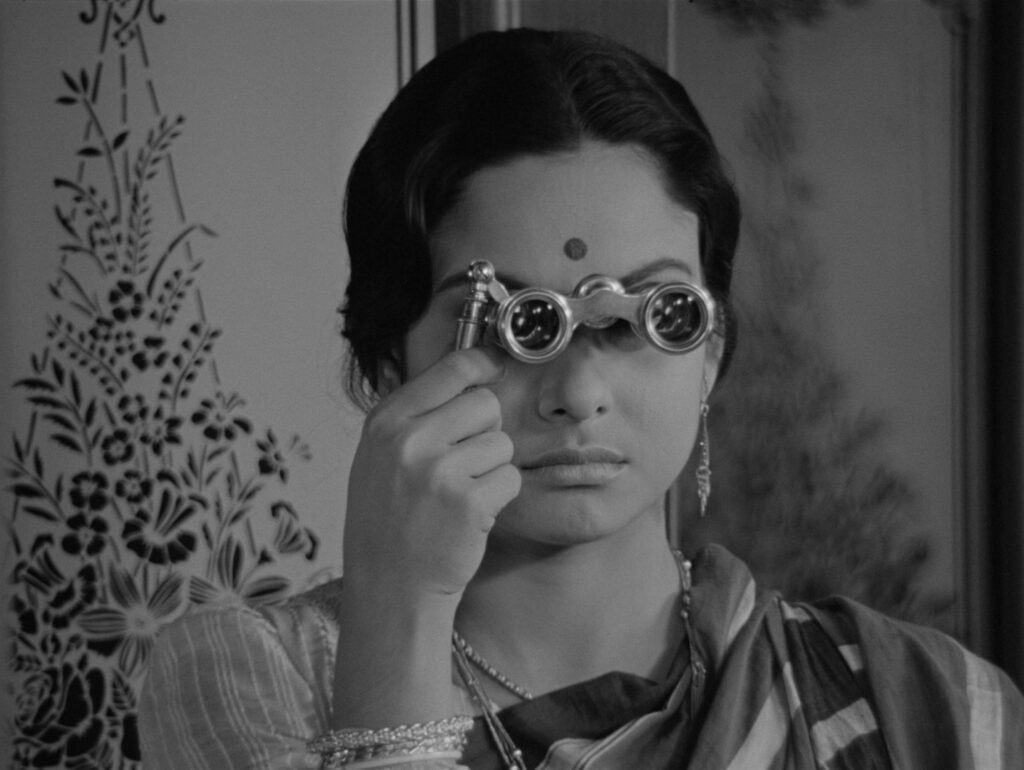
Bhupati, noticing his wife’s loneliness but not really understanding it, invites his charming, literary young cousin Amal (Soumitra Chatterjee) to come and stay, hoping he’ll be company for Charulata. He is — spectacularly. Amal is witty, passionate about literature, and genuinely interested in Charulata as a person, in her thoughts and her writing and her inner life. He encourages her to write. She discovers she’s brilliant at it.
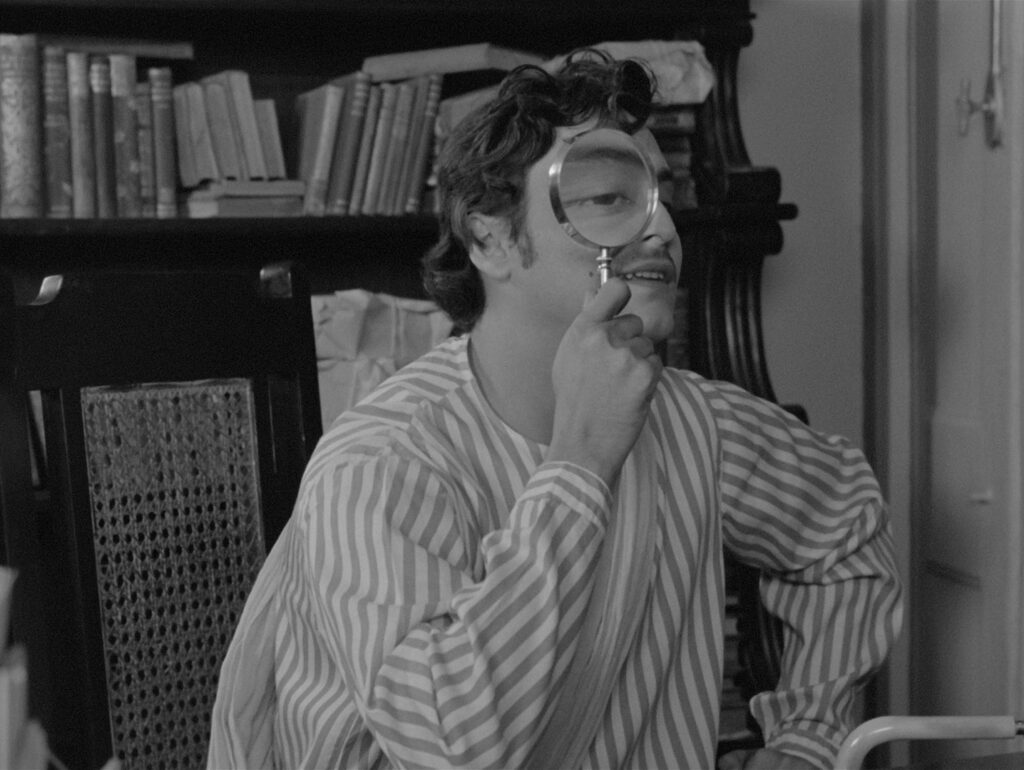
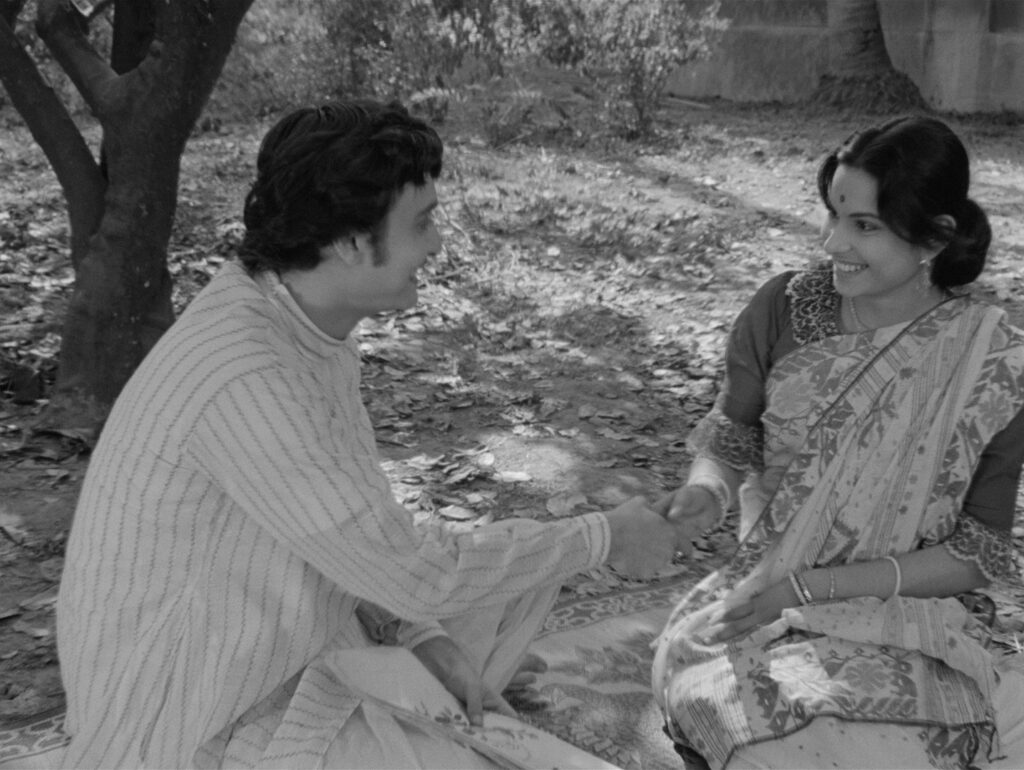
And somewhere in the middle of all this intellectual companionship, something more complicated begins to grow. Charulata isn’t sure what she feels. Amal isn’t sure either. Neither of them crosses a line explicitly. But something is happening — quietly, slowly, achingly — and the film watches it with perfect, devastating attention.
What Makes Charulata (1964) Satyajit Ray’s Masterpiece
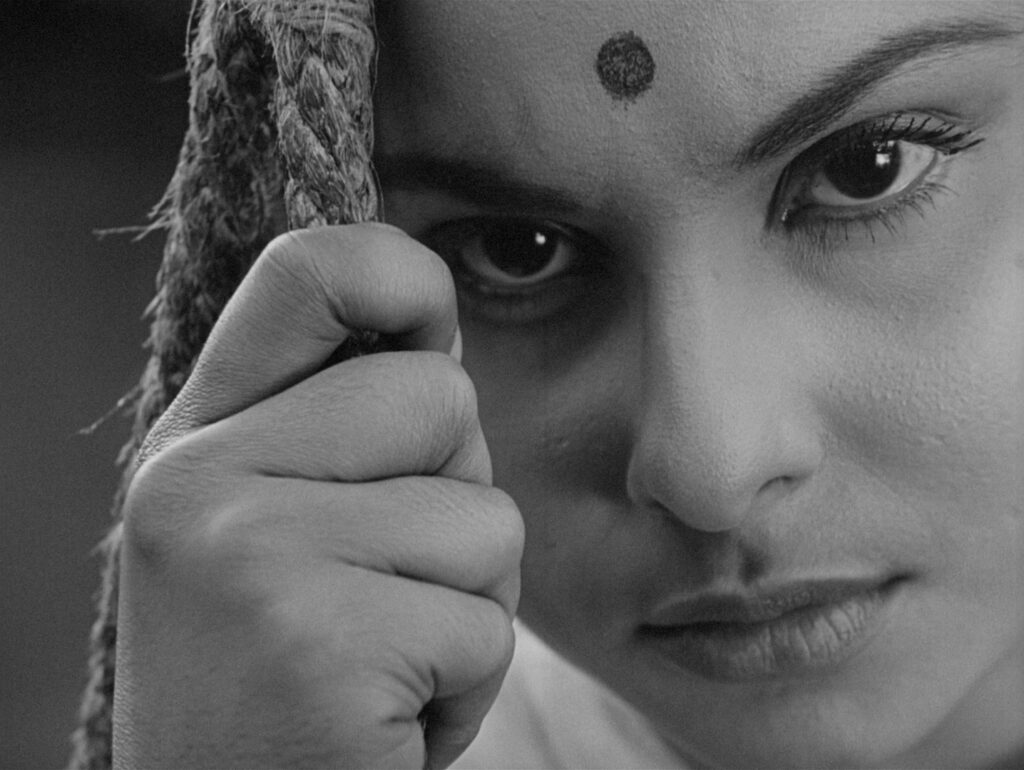
Madhabi Mukherjee’s performance is a masterclass in restraint. Charulata never makes a big speech. She rarely raises her voice. But her face — the way she looks at Amal when he’s not looking, the way she looks away when he is, the way joy and confusion and longing move through her expression in the same moment — is one of the great physical performances in cinema. Ray famously said Charulata was his most satisfying film precisely because of what Mukherjee brought to it. Watch her in the swing scene in the garden, singing to herself, and try not to feel your heart shift.
Subrata Mitra’s cinematography is doing something extraordinary with light and interior space. The film is shot almost entirely inside the house or in its garden, and Mitra uses natural light and shadow to map Charulata’s emotional world onto the physical space around her. The opening sequence — wordless, almost entirely visual — shows Charulata moving through the empty house, looking out windows, observing the street, watching her husband at his desk, being seen by no one. Much like the quiet, atmospheric visual storytelling found in Paris, Texas (1984), this sequence tells you everything about her world in under five minutes without a single line of dialogue.
Ray composed the music himself. The score draws from Rabindra Sangeet — the songs of Rabindranath Tagore, on whose novella the film is based — and it’s woven into the film with an intimacy that reflects Charulata’s own relationship with Bengali literature and music. It’s not background music. It’s part of the emotional language the film speaks.
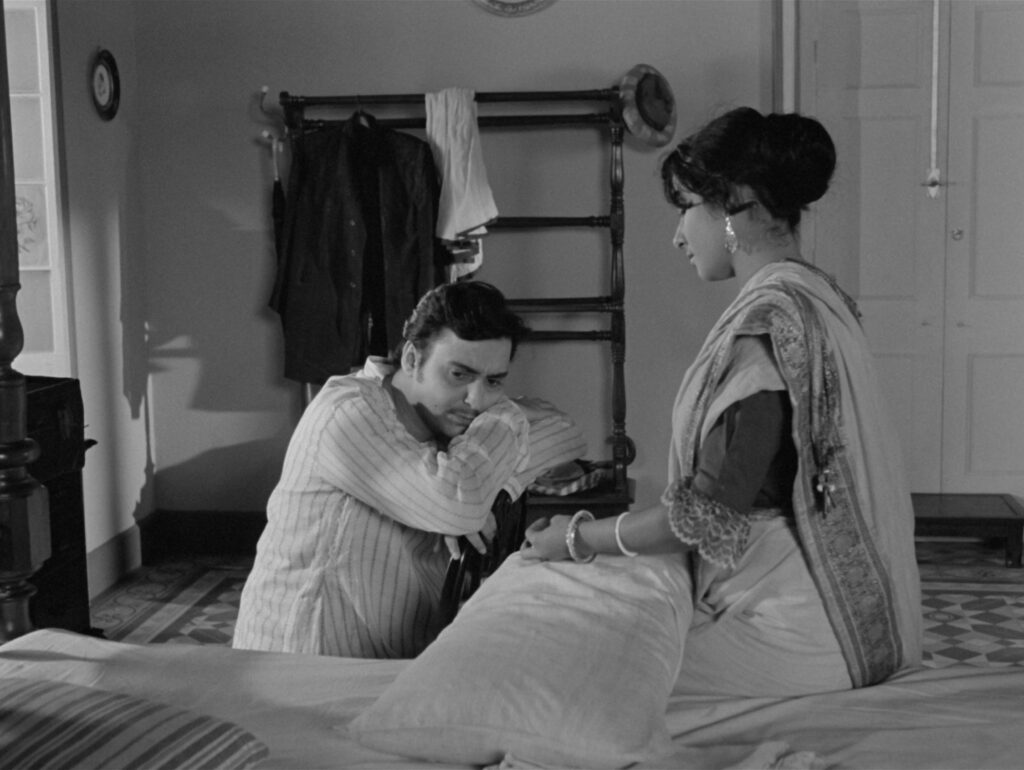
The film is a precise, affectionate critique of 19th century Bengali liberalism. Bhupati is not a bad man — and this is crucial. He’s educated, progressive for his time, genuinely believes in women’s intellectual capacity. But his liberalism is abstract. He applies it to his newspaper, to politics, to ideas — but not to the woman sleeping in the same house as him, who has been starving for genuine engagement this whole time. Ray isn’t making a villain. He’s making something more uncomfortable: a good man whose blind spots have real consequences for the person closest to him.
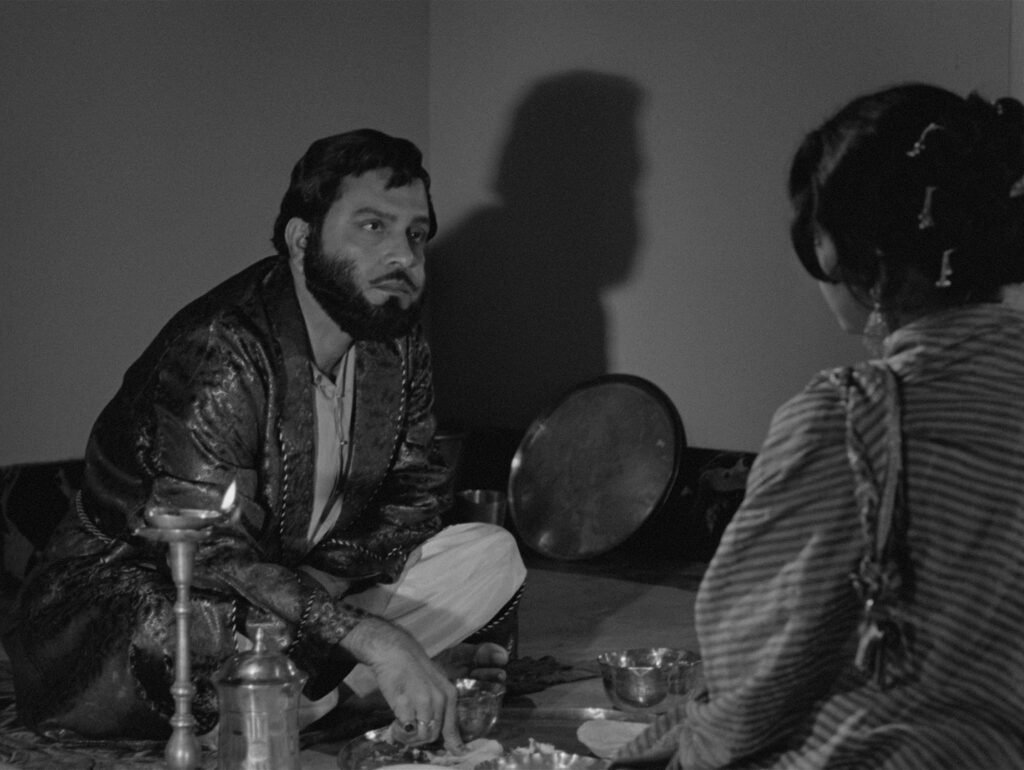
The relationship between Charulata and Amal is handled with incredible delicacy. Nothing explicit happens. The film doesn’t need it to. Ray understood that the most devastating romantic tension is the kind that lives entirely in glances and pauses and the things that almost get said. The film trusts the intelligence of its audience completely — it doesn’t underline anything, doesn’t push you toward a clear emotional instruction. It just shows, and lets you feel what you feel. If you love the ache of unspoken longing, this shares the same emotional DNA as In the Mood for Love (2000).
The ending is one of the most perfectly calibrated in Ray’s entire filmography. Without spoiling the specifics — the final image of the film, a freeze frame, captures the film’s central ambiguity at the exact right moment. It doesn’t resolve. It holds the tension between what has been broken and what might still be repaired, and leaves you sitting with both possibilities at once. It’s a genuinely great ending in every sense.
The Reception
Charulata premiered at the Berlin International Film Festival in 1965, where it won the Silver Bear for Best Director for Satyajit Ray. It was embraced immediately by international critics as one of Ray’s finest achievements and one of the essential works of world cinema.
Ray himself repeatedly said that Charulata was his most personally satisfying film — the one he felt came closest to achieving exactly what he set out to do, with minimal compromise between intention and execution.
It holds strong critical acclaim that has never wavered in sixty years. It appears consistently on polls of the greatest films ever made and the greatest films of Indian cinema — often at the very top of both lists simultaneously. François Truffaut, Akira Kurosawa, and Martin Scorsese have all cited Ray as a major influence, and Charulata is frequently the film critics reach for when making the case for Ray’s greatness.
The Legacy
Charulata holds a specific and irreplaceable place in the history of cinema — as possibly the finest literary adaptation Ray ever made, as a landmark of Indian cinema’s international presence, and as one of the most sensitive and insightful films ever made about female interiority and the particular, suffocating loneliness of a brilliant woman in a world that doesn’t know what to do with her.
It’s studied widely in film schools, in gender studies contexts, and in South Asian literature departments — because the Tagore novella and Ray’s adaptation form one of those rare cases where source material and adaptation enhance each other rather than competing.
The film also represents the peak of Ray’s long collaboration with cinematographer Subrata Mitra — one of the great director-cinematographer partnerships in cinema history — and remains the most celebrated example of what they achieved together.
Should You Watch It?
If you’re the kind of person who loves slow, precise, emotionally intelligent cinema — films that trust you to feel things without being told what to feel — absolutely yes. Charulata is the kind of film that rewards full attention and repays it with enormous feeling.
It asks nothing more of you than patience and willingness to sit with a woman whose inner life is vast and underserved. And in return it gives you one of the great performances, one of the great cinematographic achievements, and one of the great quietly devastating emotional experiences in all of cinema.
Start with the opening sequence. Let the film come to you. And notice everything her eyes do.
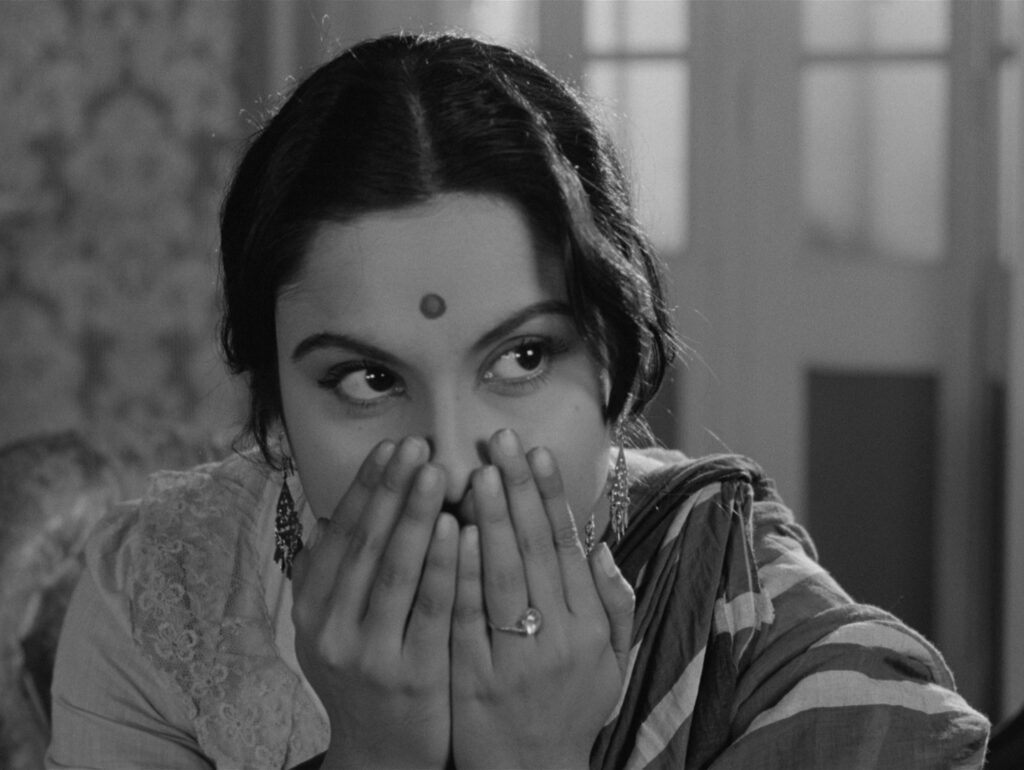
“You write well. You should write more.”
— Amal, Charulata (1964)