Let’s be upfront about something: Stalker (1979) is not an easy watch. It’s nearly three hours long. Very little happens, in the conventional sense. There are long stretches where three men just walk through a landscape and talk. And it is, without question, one of the most important and awe-inspiring films ever made. If you have the patience for it — and you should try to find that patience — Stalker will do something to you that very few films can. It’ll make you feel genuinely small in front of something vast and unknowable, and somehow that feeling is a gift.
The Basics
- Title: Stalker (Сталкер)
- Year: 1979
- Director: Andrei Tarkovsky
- Producer: Alexandra Demidova
- Screenplay: Arkady Strugatsky and Boris Strugatsky, based on their novel Roadside Picnic
- Stars: Alexander Kaidanovsky, Anatoly Solonitsyn, Nikolai Grinko
- Cinematography: Alexander Knyazhinsky
- Music: Eduard Artemyev
- Runtime: 163 minutes
- Genre: Science Fiction / Drama / Philosophical
- Country: Soviet Union
- Studio: Mosfilm
Source: IMDB
What Is Stalker (1979) About?
Somewhere in an unnamed country, there exists a place called the Zone — a mysterious, heavily guarded area that appeared after some unexplained event, possibly an alien visitation, possibly something else entirely. The government has sealed it off. Nobody is allowed in.
At the center of the Zone is rumored to be a Room — a place where your deepest, most sincere wish will be granted.
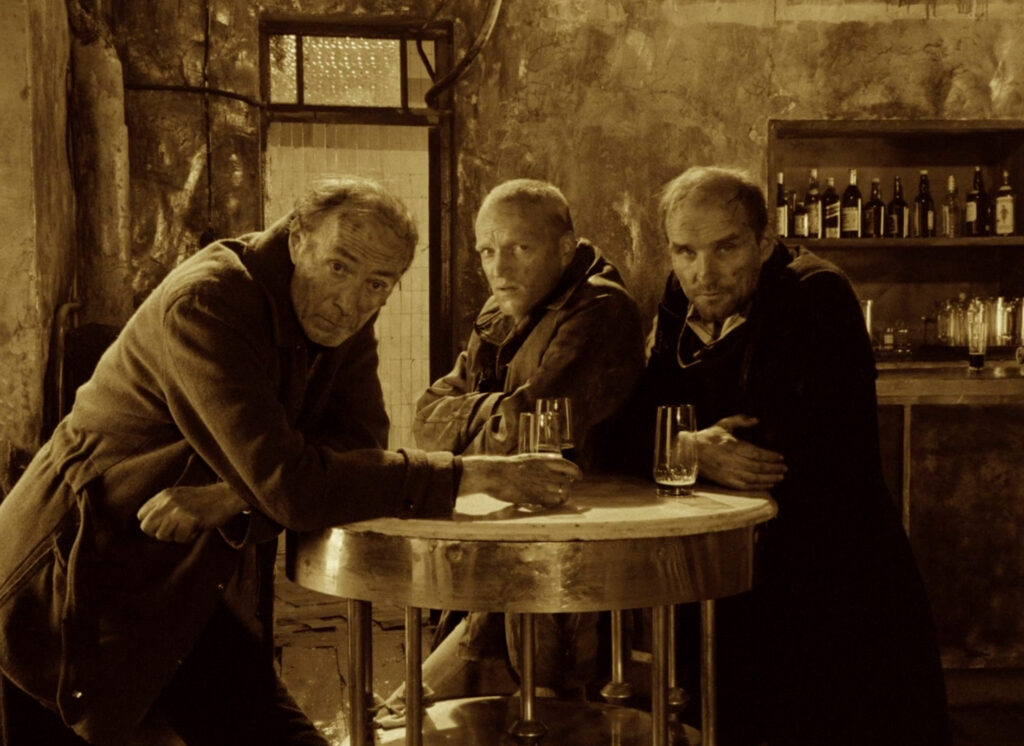
A man known only as the Stalker (Alexander Kaidanovsky) makes his living as a guide, illegally smuggling people through the Zone to the Room. Today he’s taking two clients: the Writer (Anatoly Solonitsyn), who hopes to find inspiration, and the Professor (Nikolai Grinko), who has his own unstated reasons. Together they slip past the military checkpoint and enter the Zone.
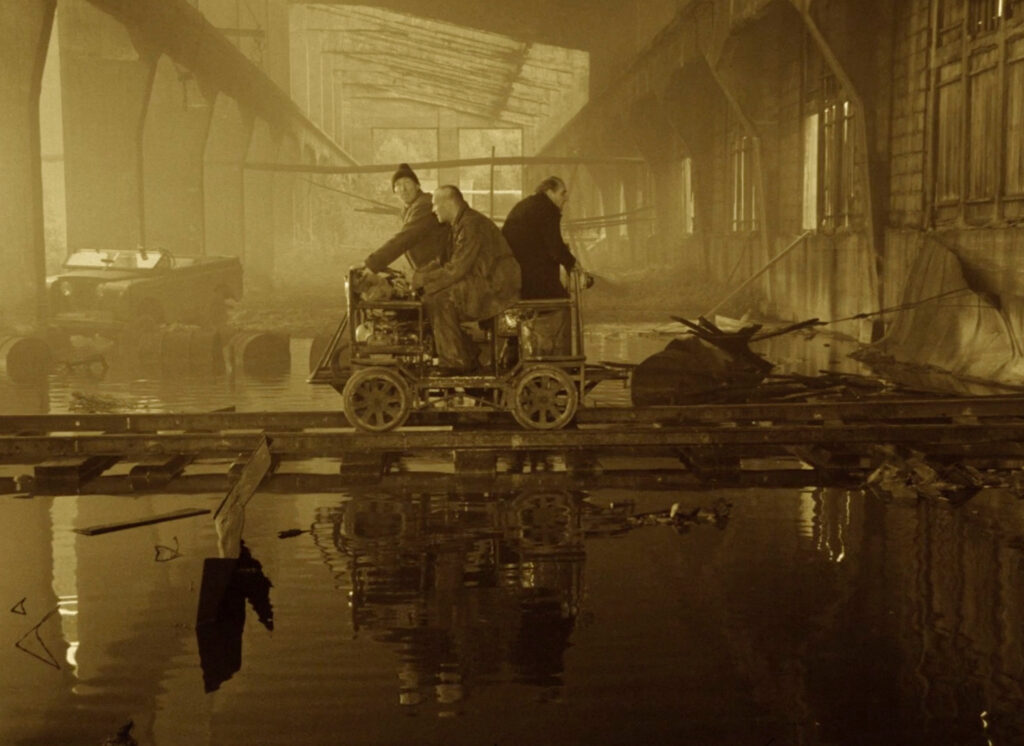
And then the film becomes something completely different from what you might expect.
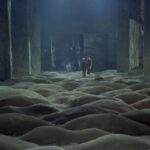
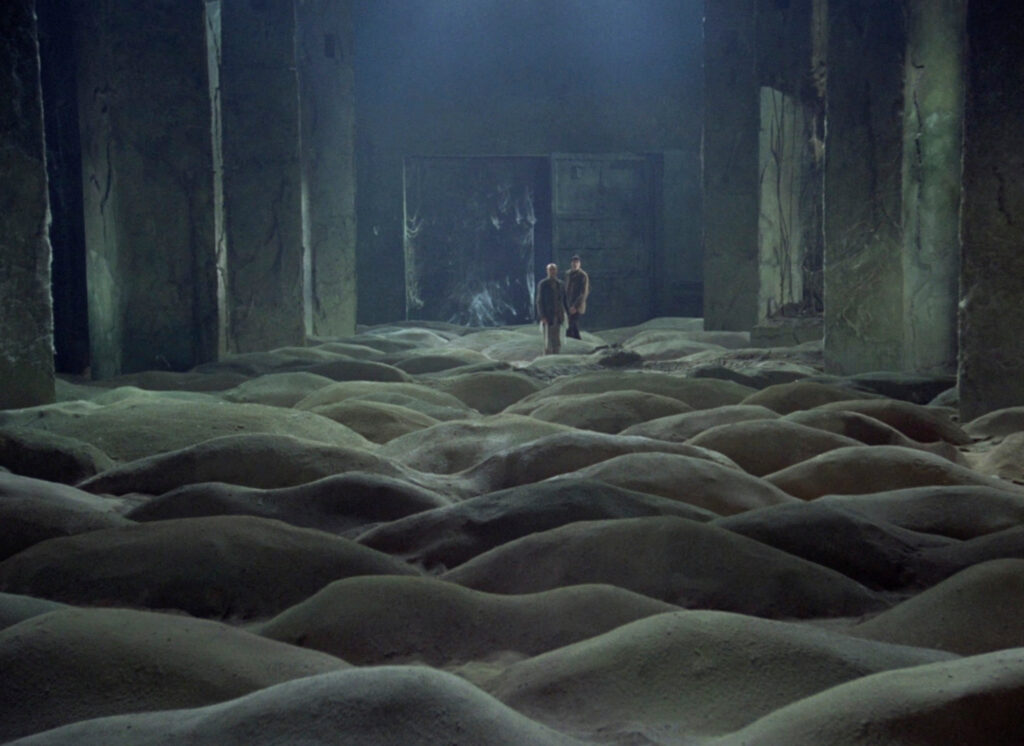
The Zone isn’t a CGI spectacle. It isn’t full of monsters or dangers you can shoot your way through. It’s quiet. Overgrown. Hauntingly beautiful. Its rules are invisible and inconsistent — paths that were safe yesterday might kill you today, and the Stalker navigates it by throwing bolts ahead of him to test the ground, following intuition rather than logic. The Zone, the Stalker explains, responds to your inner state. It’s as much psychological as physical.
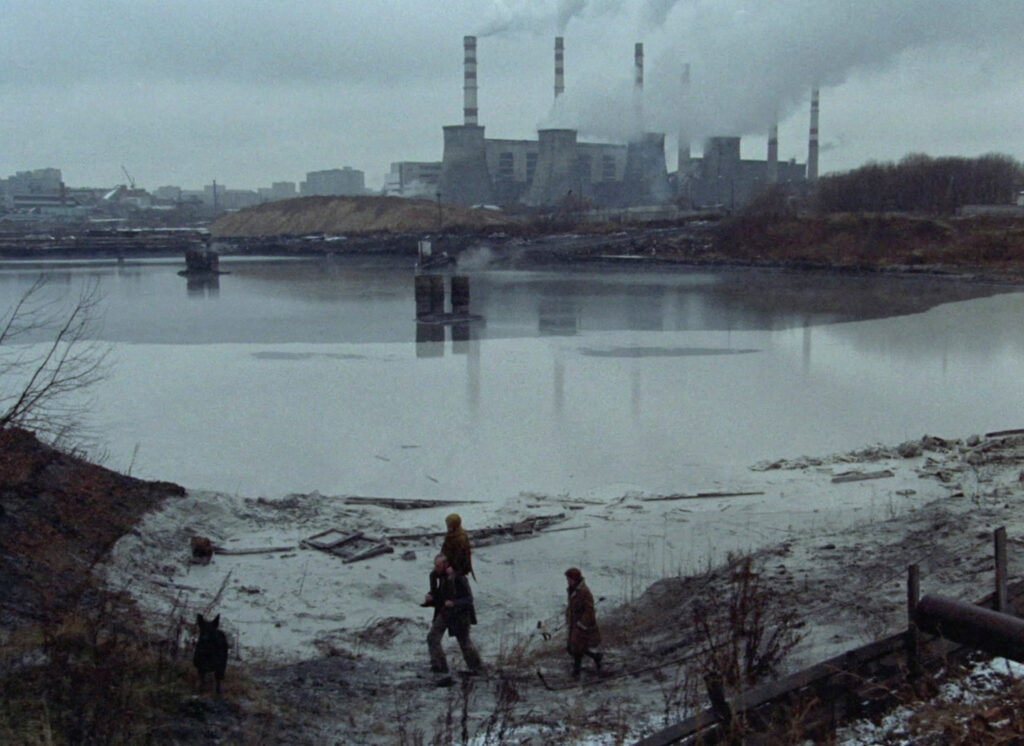
Most of the film is simply these three men walking, waiting, and talking — arguing about faith, art, science, desire, and whether any of them actually deserve to have their wishes granted. By the time they reach the Room, the film has already done most of its real work on you.
Why Tarkovsky’s Stalker Is a Sci-Fi Masterpiece
Tarkovsky wasn’t making a science fiction film — he was making a film about faith. He famously said he wasn’t interested in the source novel’s more action-oriented premise and stripped away most of its plot to get at something deeper. The Zone becomes a space where three different worldviews — the Stalker’s spiritual belief, the Writer’s cynicism, the Professor’s rationalism — are tested against each other and against something they can’t fully understand or control. It’s a film about what we actually want when we get what we say we want. And it’s a film about the necessity of hope, even when hope seems irrational.
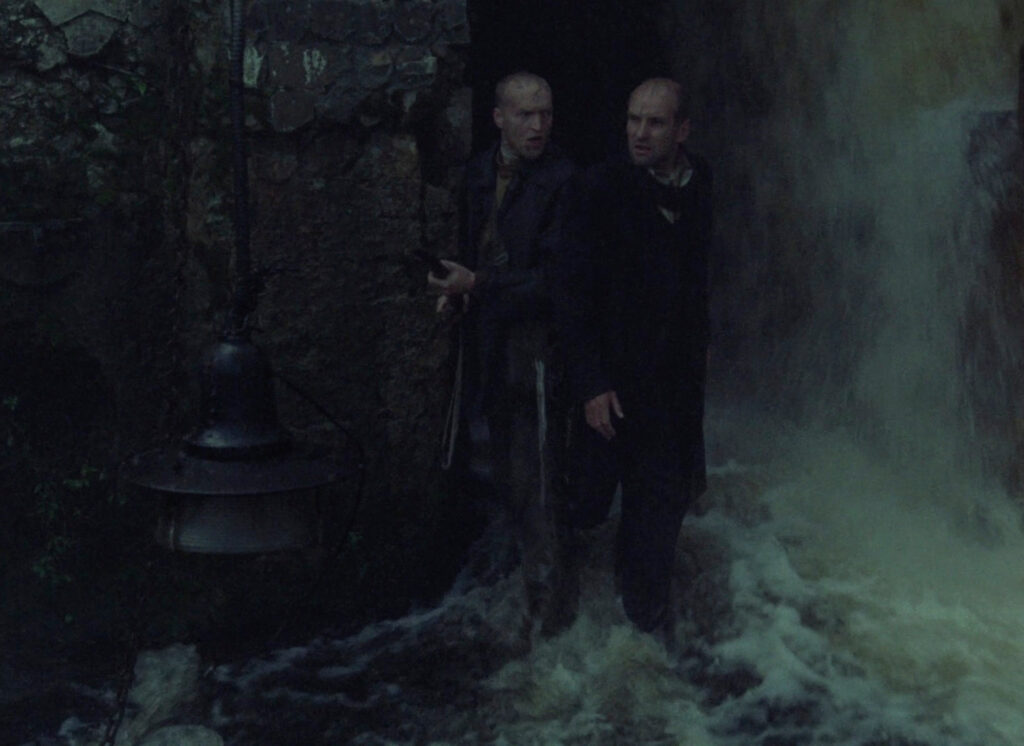
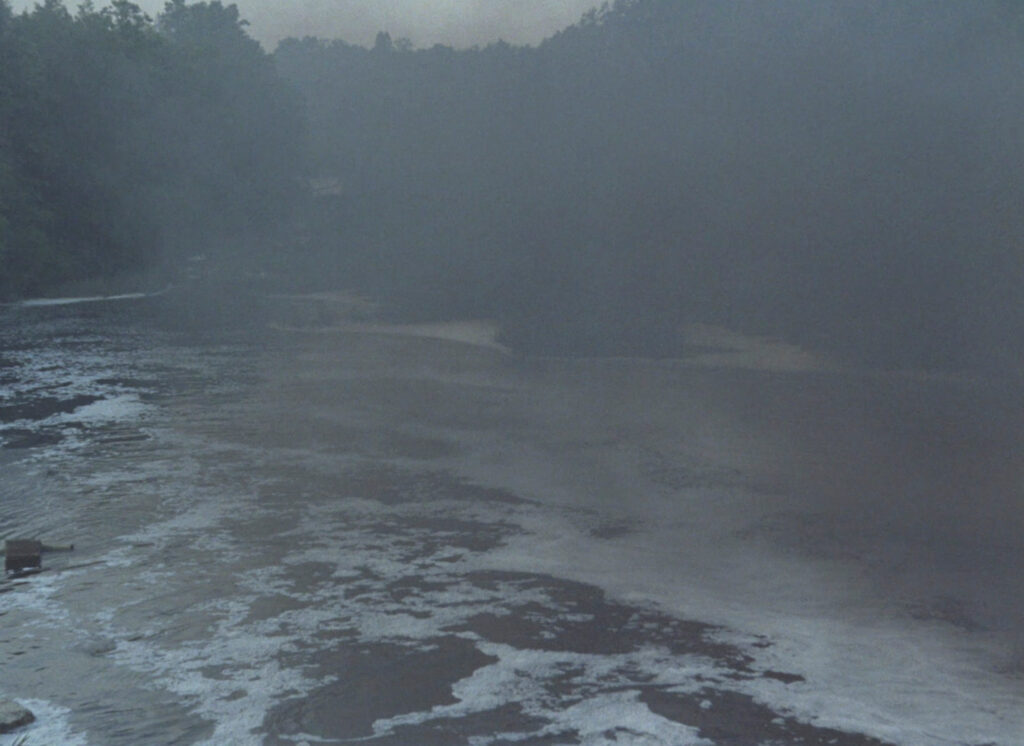
The cinematography is unlike anything else. Tarkovsky and cinematographer Alexander Knyazhinsky — working together after a previous version of the film was destroyed in a lab accident, forcing them to reshoot the entire film — shot the Zone in desaturated, almost monochromatic color with long, long takes that let landscapes breathe and exist for minutes at a time without cutting. Water runs constantly — over tracks, through rooms, past objects. Moss grows on everything. A dog appears and simply follows them. The Zone feels genuinely alive in a way that purely visual effects could never achieve.
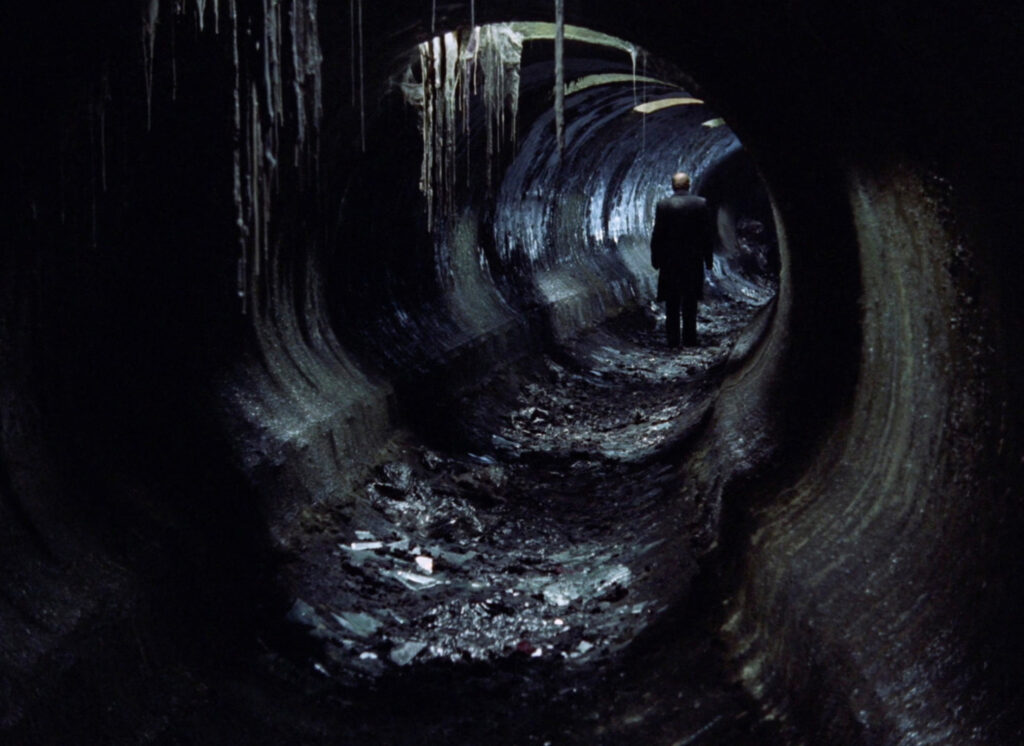
The pacing is the film’s argument, not its flaw. People who bounce off Stalker often cite the slowness as the problem. But Tarkovsky is using slowness as a philosophical statement — in a world of noise and speed and distraction, the Zone demands that you stop, wait, pay attention, and approach carefully. The film asks you to do the same thing. Its length and patience aren’t obstacles to the experience. They are the experience.
The three characters are deliberately archetypal. The Stalker, the Writer, the Professor — no real names, just roles. They represent three different relationships to meaning: faith, art, and science. None of them is presented as simply right or wrong. The film holds all three in tension and ultimately suggests that the Stalker’s blind, almost irrational faith — in the Zone, in hope, in the possibility of human goodness — might be the most difficult and most necessary position of all.
The production itself was a tragedy. Tarkovsky and several members of the crew — including his wife and Anatoly Solonitsyn, who played the Writer — developed serious illnesses, and multiple people connected to the film’s production died of cancer in the years following, potentially linked to the heavily polluted industrial site in Estonia where the Zone sequences were filmed. Tarkovsky himself died of lung cancer in 1986. The film was made under conditions that gave it a kind of real-world weight that’s impossible to separate from the finished work.
The ending refuses to resolve anything. After everything — the journey, the debates, the Room, the return — the film closes on an image that is both mundane and miraculous, both hopeful and devastatingly ambiguous. It’s an ending that people have been interpreting and arguing about for 45 years, and the argument itself is part of what the film leaves you with.
The Reception
Stalker premiered in the Soviet Union in 1979 to a somewhat muted initial reception — Soviet authorities were suspicious of Tarkovsky throughout his career, viewing his films as too abstract, too spiritual, and insufficiently ideologically committed. The film eventually found its audience internationally through festival screenings and its growing reputation among serious cinephiles.
Over the decades, its critical standing has only grown. It consistently appears on polls of the greatest films ever made — including Sight & Sound’s prestigious decennial list, where it has ranked among the top films of all time across multiple surveys. It’s considered one of the defining works of world cinema and one of Andrei Tarkovsky’s two or three supreme achievements alongside Andrei Rublev and Mirror.
The Legacy
Stalker is one of those films that exists in a category by itself — not just as a great film but as a kind of cultural object, something that people return to repeatedly throughout their lives and find different things in each time depending on where they are. It’s been cited as an influence by filmmakers as varied as Christopher Nolan, Lars von Trier, and Ingmar Bergman, who called Tarkovsky the greatest director of his era. Even Akira Kurosawa’s own meditation on the unexplainable, Dreams, carries a bit of that same reverence for the unknowable.
The concept of “the Zone” has become almost its own cultural shorthand — referenced in video games (S.T.A.L.K.E.R. being the most obvious), literature, and art as a space where the normal rules don’t apply and something unknowable operates.
The film is also increasingly discussed in the context of Tarkovsky’s spiritual beliefs — he was a deeply religious man making films in an officially atheist state — and Stalker is often read as his most direct meditation on faith, hope, and the human need to believe in something larger than ourselves, even when that belief is irrational.
Is Stalker (1979) Worth Watching?
If you have three hours, patience, and the willingness to meet the film on its own terms — absolutely yes. Don’t watch it on a laptop with notifications on. Don’t watch it tired. Give it a dedicated evening, a good screen, and your full attention. It will ask a lot of you.
And it will give back more than you expect.
Stalker is the kind of film that doesn’t just stay with you after you watch it. It changes slightly what it means, every time you think about it. That’s an extraordinarily rare thing for any work of art to do — and it’s reason enough to seek it out.
“The Zone is a very complicated system of traps, and they’re all deadly. I don’t know what happens here in the absence of people, but the moment someone appears, everything starts in motion. Old traps disappear and new ones emerge. Safe spots become impassable. Now your path is easy, now it’s hopelessly involved. That’s the Zone.”
— The Stalker, Stalker